Monday, 5 November 2012

Parents Worry After Malala Attack

Parents Worry After Malala Attack

Schoolgirls in Peshawar pray for Malala. Credit: Ashfaq Yusufzai/IPS.
PESHAWAR, Pakistan, Nov 5 2012 (IPS) - Young schoolgirls seemed undeterred by the attempt to kill Malala Yousafzai, but parents in northern Pakistan are becoming increasingly concerned over their children going to school.
The outlawed Tehreek Taliban Pakistan shot and injured Malala Yousafzai, a 15-year-old girl student outside her school in her native Swat district last month. She is making rapid recovery from a brain injury in a UK hospital, but the incident has left a deep impact.
“My wife and I are very concerned about the security of our children because Taliban militants are now looking for soft targets like schoolgirls,” Zawar Hussain, a government official whose three daughters study at University Model School, the biggest girls school in Khyber Pakhtunkhwa (KP) province of Pakistan told IPS.
The Taliban have attacked schoolgirls in various parts of the Khyber Pakhtunkhwa and the Federally Administered Areas before. But the Malala incident has set alarm bells going and people now want better security at schools.
“We have asked the school principal to call an emergency parents-teachers meeting to take measures to enhance security for students in view of Malala’s episode,” Hussain told IPS.
Before Malala, a major attack on the Government Girls Degree College in Lund Khwar in Mardan district in March last year had left 35 students injured in a grim reminder that the Taliban are still active in Khyber Pakhtunkhwa (KP) and in the adjacent Federally Administered Tribal Areas (FATA).
In October last year militants attacked a school van in Peshawar, the capital of KP province, killing four children and a driver.
Girls education became a prime target of the Taliban who sneaked into FATA after dismissal of their government in Kabul by U.S.-led forces towards the end of 2001. They extended their campaign against education to the adjacent KP in 2005.
The militants argue that educating women is in breach of Islam. About 800 school buildings have been blown up in KP and FATA. That campaign continues.
“We are ready to pay extra but we want a safe environment in schools,” said 35-year-old shopkeeper Muhammad Rehan. Gripped with fear for his two daughters, he said the Taliban were now spreading out from Swat.
“Taliban know that girls are an easy target to spread terror,” he said. Elsewhere the Taliban may have to confront security forces, he said.
Sarhad Public School on University Road in Peshawar has put in place a system where students are asked to leave in queues and to not touch any suspicious object.
“We have drafted guidelines for our students after Malala’s attack. The students have been instructed to inform the class teacher if they spot any suspicious persons near the school,” principal Nadeem Ahmed said.
“We have restricted the students’ movements and have warned against leaving school in droves because the attackers want to kill or injure as many as they can.”
Other schools will follow the suit, he said, because parents are pressuring principals to improve security.
“My mother insists that I stay home but I am not afraid,” Palwasha Bibi, a third grader at the Ashraf Memorial School in Canal Town, Peshawar, told IPS. “She (my mother) loves me and wants to see me happy and alive. Her concerns are genuine but we have to take safeguard measures instead of staying away from school.”
Some classmates had been advised by parents to wear veils as part of precautionary measures to avoid being attacked, she said. “The Taliban won’t harm veiled students.”
Education Minister Sardar Hussain Babak told IPS that posting of police at all of the 30,000 schools in the province was not possible but that coordination among parents and teachers was being strengthened to thwart Taliban attempts to scare away students.
“We have started a strategy to arm the schools’ watchmen and increase coordination among schools’ administration and police,” he said. “In some districts we have imparted training to guards.”
Parking of vehicles near schools has been restricted, he said. Police have been directed to keep an eye on the suspicious people near big girls’ schools.
Deputy director for education Ghulam Farooq said they had issued immediate instructions to all schools to make elaborate arrangements for security especially at the time when the students leave school at the end of the day.
“We are carrying out inspections to see the security measures. In case of any laxity, the principals or head teachers of the concerned school will be held responsible and they will face action,” he told IPS.

Summary of News on Thursday, 01 Nov.

Summary of News on Thursday, 01 Nov.
Casualty reports were released on the past month of October (note that these measures only cover reported and announced deaths): 88 civilians were killed, and 110 more injured...56 of the government forces were killed (25 government army, 31 governmental police), and 154 injured (62 government army, 92 governmental police).
 
A young man, eighteen years old, was found dead with stab wounds in neighborhood streets in the west of Basra. Another man was found dead with gunshot wounds in the open in the east of Mosul. A car carrying four passengers flipped over several times on a highway in the south of Ad-Diwaniyah, injuring them all. A man in his forties committed suicide jumping off of a mosque's minaret in the west of An- Nasiriyah. A girl in her twenties committed suicide shooting herself in the north of Hillah.
 
A man shot and killed his own father in the north of An-Nasiriyah. A child was injured by a stunning grenade thrown into a wedding ceremony in north of Basra. An explosive device, installed in a civilian's car in the east of Fallujah, went off, killing him on the spot. Another explosive device exploded near a civilian in the center of Ar- Ramadi and severely injured him. A third explosive device planted on the side of the road in a neighborhood in the east of Mosul exploded as a civilian car passed by, injuring the one civilian.
 
An explosive device installed beneath the personal car of one of the governmental police went off as he was traveling on a highway in the west of Ar- Ramadi, injuring him severely.


HEYET Net
 

Summary of News on Wednesday, 31 Oct

Summary of News on Wednesday, 31 Oct
Reports reveal that birth defects continue to rise in Iraq.
Two road company workers were killed in the south of Mosul as gunmen fired on them from their cars. Four people were killed and two others injured in separate traffic incidents in the northwest of As-Sulaymaniyah and in the south of Maysan province.
 
Fighters attacked a governmental police checkpoint in the west of Mosul, resulting in a firefight that killed one of the governmental police, after which the fighters escaped. Another of the governmental police was killed in a similar attack in the south of Mosul. Another governmental police checkpoint was attacked in the northeast of Baquba, and four of the governmental police were killed on the spot.
 
After each of these three attacks the attackers managed to escape and thegovernment forces raided dozens of homes in the area in search for them.
 
Two explosive devices targeted the governmental police in the Al-Anbar province: The first went off between a passing patrol in the west of Ar-Ramadi, killing one of them and injuring two others. The second targeted the car of an officer (ranked “captain”) of the governmental police in the west of Ar-Ramadi, injuring him severely. Another explosive device installed under the car of one of the governmental police exploded on the highway in the south of Al-Anbar province, wounding him with various injuries.
 
Fighters attacked the home of two of the governmental police (brothers) in the east of Ar-Ramadi. The two of the governmental police were severely injured, and their third brother was captured. The fighters, four gunmen, were found and detained and the third brother was found as well.
 
 
HEYET Net

Summary of News on Tuesday, 30 Oct

Summary of News on Tuesday, 30 Oct
Gunmen intercepted a junior high student on his way to school in the North of Kirkuk, kidnapping him and taking him away to an unknown destination.
 
Forces of the government army carried out raids and searches in houses in the south of Baghdad, and detained seventeen people without giving any charges or justifications, taking them away to unknown destinations.


HEYET Net

Summary of News on Monday, 29 Oct


Today was the last day of Eid Al-Adha. Four people from one family were killed in a serious traffic incident in the north of An-Nasiriyah, and a fifth was injured. Two more were killed and another injured in a separate traffic incident in the northwest of Baquba. A third traffic incident killed one more person and injured three others in the south of Fallujah. A massive fire broke out in a market area in the center of Samawah.
 
The elder of a tribe was assassinated, as men traveling in a civilian car opened fire on him with silenced weapons, killing him on the spot in the west of Ar-Ramadi.
 
Seven mortar shells fell at noon in the south of Tikrit, targeting houses and damaging them, but without casualties. In the east of Tikrit an explosive device exploded beneath a fuel tank, injuring a civilian.
 
Fighters traveling in a civilian car opened fire on a governmental police checkpoint last night in the west of Mosul, killing one of them and injuring two others, and escaping. An explosive device targeted a government army patrol in the west of Ar-Ramadi, wounding two of them with varying degrees of injury.
 
An explosive device went off near the home of an official of the “Patriotic Union of Kurdistan” in the east of Tikrit, injuring one of the government police who was nearby.


HEYET Net

Summary of News on Sunday, 28 Oct

Summary of News on Sunday, 28 Oct

For the third day of Eid Al-Adha, nothing has changed in the spike of violence. Rampant attacks and explosions targeting civilians continue to plague the nation, Baghdad especially.
 
Two children in Hillah suffered burn injuries from a fire started by playing with fireworks. Two car bombs exploded outside a hospital gate in the east of Baghdad, killing at least seven civilians and injuring twenty others. In the north of Baghdad, another car bomb exploded in a courtyard, killing, in the area, at least ten civilians and wounding twenty-eight others. An explosive device went off in the south of Baghdad, killing two and injuring four others. Two mortar shells fell in a village in the northeast of Baquba, injuring two of its innocent inhabitants and damaging a number of houses.
 
The Deputy Director of Hygiene Department was severely injured in the east ofBaghdad, after a hail of bullets fired by unidentified gunmen hit him in his car. An employee of the “Iraqi Red Crescent Society” was severely injured as an explosive device went off beneath his car in the north of Kut.
 
Fighters attacked a governmental police checkpoint in the northeast of Baquba,killing two of them, and injuring three others, including an officer, and escaping the area. Another checkpoint was attacked in the west of Mosul, killing one of the governmental police and injuring two others.


HEYET Net

Summary of News on Saturday, 27 Oct

Summary of News on Saturday, 27 Oct
Today is the second day of Eid Al-Adha. It is meant to be a day of peace, but instead violence against civilians became unnaturally high this day.
Gunmen opened fire with automatic weapons from their car on the owner of a car sales place in his office in the northeast of Baquba, killing him on the spot and getting away. A car bomb exploded in a popular market area in the northeast of Baghdad, killing at least five civilians and injuring fifteen more. An explosive device planted on a highway in the north of Baghdad went off beneath a passing bus carrying Iranian visitors, killing six of them and injuring fourteen more. Another car bomb exploded in the east of Tikrit, killing two civilians and injuring ten others. And another exploded near a car repair shop in the northeast of Baquba, injuring four civilians.
 
A chain of coordinated attacks was carried out against people of the Shabak in the north of Mosul, killing five of them and wounding ten others. Gunmen stormed one house and killed a man, his wife and his son. An explosive device went off inside another home injuring six of its family members, among them children. Another house was stormed, and a mother and son were killed, and four others wounded.
 
 
HEYET Net
 

Sunday, 4 November 2012

Who pocketed Gaddafi’s billions?

Who pocketed Gaddafi’s billions?

Global Research, November 03, 2012
Voice of Russia

by Andrei Ontikov
NATO’s military campaign in Libya is remarkable, among other things, for the following two reasons.
First – the damage that the air raids by the Western anti-Gaddafi alliance caused to Libya is estimated to be 7 times bigger than the damage which bombing by the Nazis caused in Europe during WWII.
Second – Muammar Gaddafi and his associates had, in total, $ 150 bln on bank accounts in various parts of the world. After the beginning of the Libyan revolution, the West froze these accounts. Now, this money has disappeared somewhere.
Russian expert in Eastern affairs Anatoly Egorin tries to analyze these two cases in his recently published book, titled “The Ousting of Muammar Gaddafi. A Libyan Diary. 2011-2012.”
Speaking about the damage which Western bombing attacks caused to Libya, one may probably say that every war causes damage. This is true, but the amount of damage can be greater or smaller. It may be doubted that the ousting of Gaddafi, however tyrannical he might have been, was really worth the damage which NATO bombs caused to Libya – to say nothing of the fact that introducing a no-fly zone over a country and then bombing it is, to put it mildly, not very consistent.
However, the sum which Gaddafi and his associates had in bank accounts, and which the West, in fact, has stolen – $ 150 bln – might have been enough to reconstruct the Libyan infrastructure after the damage caused by the bombs – if not fully, then, at least, partially. But now, that money has disappeared. Why and where? Here is what Anatoly Egorin says:
“The West most likely decided right after the very start of the anti-Gaddafi rebellion in Libya to do whatever possible to prevent Gaddafi from staying in power. His and his associates’ bank accounts were immediately frozen. Or, it would be probably better to say that it was only officially announced that they were frozen, but in reality they were stolen. Nobody can say for sure precisely who stole this money and where it is now. There is only some vague information that it was allegedly pocketed by the bankers themselves and that these bankers allegedly tried to launder this money in offshore zones. Attempts to find this money are now under way, but I doubt that it will ever be found.”
“However,” Mr. Egorin continues, “it would be wrong to say that only the West has stolen the money of the former Libyan regime. It is known that those people who fought against Gaddafi and who are now in power in Libya have conveyed many trucks literally stuffed with money abroad.”
The Head of the International Association for Democracy in Libya Fatima abu an-Niran confirms what Mr. Egorin says:
“The chaotic situation in Libya enabled everyone to steal anything that lay in his or her temptation’s way. The West was quite aware of that, but didn’t try to stop it. I can back my words with facts, and the former head of Libya’s Central Bank can also confirm this.”
“The $ 150 bln on Gaddafi’s and other former Libyan leaders’ bank accounts is not the only money that was stolen during the period of anarchy in Libya,” Ms. an-Niran continues. “Lots of money was trafficked and is still being trafficked abroad by the Libyan “revolutionaries” themselves. To a large extent, the situation in Libya still remains chaotic. The new authorities seem to be incapable of controlling the situation in many of the country’s provinces. These provinces are in fact controlled by groups of bandits who do whatever they want with those who try to resist them.”
“When the West threw bombs on Libya, Western politicians said that this allegedly was done to help Libyans oust the tyrant and establish democracy in their country,” Ms. an-Niran says. “Now, it has turned out that these words were mere demagogy. The real aim of the West was to try to steal Libya’s riches.”
True, it looks like now that Gaddafi has been ousted, the West doesn’t care anymore about what is happening in Libya. It also looks like the current Libyan leaders care more about staying in their posts – or occupying higher posts if possible – than about trying to return the $ 150 bln which mysteriously disappeared back into their country, which now badly needs restoration after the war.

HSBC Caught in New Drug Money Laundering Scandal

HSBC Caught in New Drug Money Laundering Scandal

Global Research, November 02, 2012

While HSBC’s Canary Wharf masters are back-peddling furiously over charges that they gave a leg up to terrorist financiers and drug traffickers as a recent U.S. Senate report charged, new evidence emerged that its business as usual for the multinational banking giant founded by Hong Kong-based British opium merchants.
Earlier this month, The Independent reported that French police had “intercepted one of the dozens of ‘go-fast’ cars which transport cannabis at high speed from Spain to Paris. The seizure–banal in itself–unravelled an extraordinary network of drug-trafficking, money-laundering, fraud and tax evasion which sprawled over the invisible barrier which separates Paris from the city’s poor, multiracial suburbs.”
The bank embroiled in this latest scandal? Why HSBC, of course!
According to reporter John Lichfield, “bank notes handed by clients to street drug dealers in the suburbs were ending up, French and Swiss investigators discovered, in the safes of seemingly law-abiding, well-heeled citizens in the French capital.”
But that’s not the only place where crisp bundles of cash were turning up.
“A trio of Moroccan brothers, including a prominent fund manager in Geneva, are alleged to have concocted an elaborate scheme to launder money by balancing two illegal flows of cash,” The Independent averred.
At the center of this multimillion euro money laundering spider’s web were: Meyer El-Maleh, the managing director of the fund management firm GPF SA, and brothers Mardoché El-Maleh, the alleged bagman of the cannabis-for-cash scheme and Nessim El-Maleh, a fund management specialist with the Swiss private banking arm of HSBC, HSBC Private Bank (Suisse) S.A.
The Independent reported that the trio “are suspected of handling up to €12m (£9.6m) in cash in the past seven months (and far more over the past four years). Assets seized by the police include €2m in cash, gold ingots, art treasures and guns.”
“The HSBC bank has confirmed that its employee was involved in the affair,” Swiss Infodisclosed, “but says that it has been ‘cooperating actively with the authorities about this over the past few months’. The Swiss newspaper Le Temps reports that GPF SA is about to dismiss the other brother.”
Talk about closing the barn door after the horses have escaped!
Among the well-heeled perps arrested by authorities on charges of “conspiracy to launder money and association with criminals” was Florence Lamblin, a prominent Green Party politician and deputy mayor of the 13th arrondissement in Paris.
Her arrest was all the more ironic considering that fake “left” Greens are currently in coalition with François Hollande’s pro-austerity “Socialist” government. Lamblin and her coalition partners had run on a platform demanding tougher action against (wait for it) international money laundering!
When Lamblin’s home was raided “police discovered €400,000 (SFr484,000) in low-value notes” in safes belonging to the “progressive” politician, Swiss Info averred.
In the wake of her arrest, Lamblin was forced to resign although she denied “any involvement” in the drug smuggling scheme.
Her lawyer, Jérôme Boursican told AFP “she had held 350,000 euros from a family legacy in a Swiss account.”
“If anything, my client may be guilty of tax fraud, over the transfer back to France of a sum of €350,000 from a family inheritance which was placed in a Swiss bank account in 1920,” Boursican explained.
The attorney told France 24 that he would ask a judge “to dismiss the case against his client ‘as soon as possible’ and blamed her involvement on a ‘judicial error’.”
The “error” of getting caught perhaps?
Despite Lamblin’s professed innocence, Swiss Info reported that “the sums involved are huge.” French police have charged that “the sum involved in the money laundering is about €40 million, while French Interior Minister Manuel Valls says that the drug smuggling must have brought in about €100 million.”
As preliminary reports suggest it appears that Lamblin was keen on keeping more than the environment “green.”
A typical money laundering “placement” scheme, “cannabis profits leaving France were ‘swapped’ for assets hidden in Switzerland which tax cheats or business fraudsters wished to repatriate,” The Independent reported.
“The risky job of smuggling drug-trafficking proceeds over the Franco-Swiss border was avoided,” Lichfield wrote. “Instead, the drugs cash was handed over in plastic bags to Parisians who had hidden Swiss accounts.”
“The same sums were debited from their banks in Geneva and sent on a complex route through shell companies in London and offshore tax havens to purchase assets for the drug barons in Morocco, Dubai or Spain. A commission was allegedly paid on both transactions,” The Independentaverred.
Referred to as “layering,” the transfer of funds took place through a series of opaque financial transactions that camouflaged their illegal origins. In the case of our well-heeled Parisians, drug profits were swapped through bank-to-bank and bulk cash transfers via private banks in Geneva, one of which was owned by HSBC.
As Senate investigators disclosed, “Bulk cash shipments typically use common carriers … to ship U.S. dollars by air, land, or sea. Shipments have gone via airplanes, armored trucks, ships, and railroads.”
“Shippers,” Senate staff averred, “may be ‘currency originators,’ such as businesses that generate cash from sales of goods or services; or ‘intermediaries’ that gather currency from originators or other intermediaries to form large shipments. Intermediaries are typically central banks, commercial banks, money service businesses, or their agents.”
Eschewing armored cars, airplanes or ships, the “originators” of these illegal cash flows preferred ubiquitous black plastic trash bags and “go-fast” limousines as the method of choice for bulk cash transfers. It would certainly cut down on shipping costs as the loot moved “offshore” and entered the shadow world of private banking!
As financial researcher James S. Henry pointed out in The Price of Offshore Revisited: “The term ‘offshore’ refers not so much to the actual physical location of private assets or liabilities, but to nominal, hyper-portable, multi-jurisdictional, often quite temporary locations of networks of legal and quasi-legal entities and arrangements that manage and control private wealth–always in the interests of those who manage it, supposedly in the interests of its beneficial owners, and often in indifference or outright defiance of the interests and laws of multiple nation states.”
“A painting or a bank account may be located inside Switzerland’s borders,” Henry wrote, “but the all-important legal structure that owns it–typically that asset would be owned by an anonymous offshore company in one jurisdiction, which is in turn owned by a trust in another jurisdiction, whose trustees are in yet another jurisdiction (and that is one of the simplest offshore structures)–is likely to be fragmented in many pieces around the globe.”
Given Switzerland’s strict bank secrecy laws, we do not know, and Senate investigators did not disclose, how many billions of dollars were hidden for HSBC’s private banking clients in Geneva, where it originated or whether or not occult wealth shielded from scrutiny was derived from organized criminal activities.
In July however, when the Senate pointed a finger directly at HSBC over anti-money laundering “lapses,” The Bureau of Investigative Journalism revealed that “British clients of an HSBC-owned private Swiss bank that is the focus of a major HM Revenue & Customs investigation are alleged to have evaded tax by an amount likely to exceed £200m.”
Lord Stephen Green, Baron of Hurstpierpoint and current Minister of Trade and Investment in David Cameron’s Conservative government, was previously HSBC’s chief executive and the chairman and director of HSBC Private Banking Holdings (Suisse) N.A. for ten years.
During Green’s tenure, journalist Nick Mathiason disclosed that “the sums allegedly evaded by Britons using HSBC’s Swiss bank are massive. HMRC told the Bureau ‘the early indications are that the amounts are significant’.”
According to Mathiason, in 2010 the HMRC “received data smuggled out of HSBC by a former bank IT worker, now under arrest in Spain and facing possible extradition to Switzerland, that contained details of 6,000 UK-linked individuals, companies and trusts. Two senior tax investigators who both worked at HMRC told the Bureau the average amount evaded in the 6,000 accounts is likely to range between £33,000 and £50,000.”
While the sums involved in the Parisian money laundering and drugs scandal may be chump change in comparison to the trillions of dollars in illicit drug money that enters the system each year as a result of “normal business relations” between global drug cartels and the international financial system as the United Nations Office on Drugs and Crime (UNODC) revealed last year, it does demonstrate the utterly corrupt nature of the system as a whole.
Indeed, seeming ideological foes are joined at the hip when it comes to fleecing the working class and imposing austerity and privatization schemes that profit their real constituents–the global class of financial parasites who “win” regardless of which party of hucksters gain power.
As Henry observed, “private elites … had accumulated $7.3 to $9.3 trillion of unrecorded offshore wealth in 2010, conservatively estimated, even while many of their public sectors were borrowing themselves into bankruptcy, enduring agonizing ‘structural adjustment’ and low growth, and holding fire sales of public assets.”
Public sector thefts that enrich the shareholders and officers of corrupt institutions like HSBC.
Although settlement talks between U.S. regulatory agencies and HSBC has forced the bank to set aside at least $700m (£441m) to meet the cost of any fines, it is highly unlikely that officials at the bank will be criminally charged.
Currently negotiating with the Justice Department, the Federal Reserve and the Office of the Comptroller of the Currency over serious allegations that the bank conducted a multiyear, multibillion dollar business with terrorist financiers and global drug cartels, the price tag may balloon even higher.
“HSBC’s $700 million set-aside, if paid, would constitute the largest U.S. settlement reached over such allegations, topping the $619 million in penalties and forfeitures paid in June by ING Groep NV, the biggest Dutch financial-services company,” Bloomberg News reported.
According to The New York Times, “federal authorities think HSBC could end up paying at least $1 billion. The bank itself said ‘it is possible that the amounts when finally determined could be higher, possibly significantly higher’.”
A spokesperson for HSBC however, told the Times this “case is not about HSBC complicity in money laundering. Rather, it’s about lax compliance standards that fell short of regulators’ expectations and our expectations, and we are absolutely committed to remedying what went wrong and learning from it’.”
But as Rowan Bosworth-Davies, a former financial crimes specialist with London’s Metropolitan Police observed: “You don’t launder this volume of money by accident, because somewhere along the line, your systems and controls for preventing money laundering just ‘broke down’! You do it because you work in a bank which is willing to flout every rule in the book and engage in layer upon layer of criminal conduct if the money is right! You do it because your management structure is defined by a criminogenic determination to amplify the anomic environment within which you operate and in which you expect your staff to co-operate.”
For their part, Swiss bankers are scrambling to put as much daylight as possible between themselves, the Paris money laundering scandal and HSBC.
Bernard Droux, the chairman of the Geneva Financial Center foundation, an umbrella group of independent banks and wealth managers told Swiss Info: “We were surprised that it should still be possible to do this today. This is a practice that has been forbidden by law for more than 20 years.”
But as with other recent examples of financial skullduggery, Droux reverted to form and claimed “You can never rule out the possibility of black sheep in any profession. No international centre is totally protected from this kind of thing.”
He hastened to add that Switzerland was at the “forefront” of the international fight against drug money.
However, Droux’s “black sheep” brush-off was undercut by a recent Bloomberg Businessweekreport. We were informed that “Swiss private banks are looking for footholds in Latin America as the lower fees and higher interest rates offered by local wealth managers deter the region’s super-rich from traveling to Geneva and Zurich.”
This “changing relationship,” Bloomberg reported, began “in the 19th century when Swiss banks guarded the fortunes of plantation owners and mining magnates. UBS AG (UBSN), Credit Suisse Group AG (CSGN) and other Swiss banks are being forced to seek acquisitions as Latin America’s $3.5 trillion wealth management market is set to grow by more than half by 2016, according to Boston Consulting Group.”
“‘People are becoming richer and richer,’ said Gustavo Raitzin, head of Latin America for Julius Baer Group Ltd. (BAER). ‘An emerging consumer class wants to make liquid investments and they need private banks and wealth managers’.”
It is worth recalling in this context that Julius Baer’s Cayman Islands division, as the whistleblowing web site WikiLeaks revealed, was instrumental in squirreling away “several million dollars” of funds controlled by late Mexican Army General Mario Acosta Chaparro and his wife, Silvia, through a shell company known as Symac Investments.
Acosta, who served time in prison for his ties to the late drug trafficking kingpin Amado Carrillo Fuentes, the self-styled “Lord of the Heavens” who ran the Juárez Cartel, was killed in May when an assassin fired three rounds from a a 9mm revolver into his head.
The secret-spilling web site averred: “With the assistance of Julius Baer, Mr Chaparro was able to invest several millions of USD in Symac with all the secrecy which the Caymans allowed and to draw out some $12,000 a month.”
Who else might be in need of “private banks and wealth managers” employed by the likes of HSBC and Julius Baer to make such “liquid investments” possible with no questions asked?
Paging Chapo Guzmán, white courtesy telephone!
(Image courtesy of Daniel Hopsicker’s MadCow Morning News)
Tom Burghardt is a researcher and activist based in the San Francisco Bay Area. In addition to publishing in Covert Action Quarterly and Global Research, an independent research and media group of writers, scholars, journalists and activists based in Montreal, he is a Contributing Editor withCyrano’s Journal Today. His articles can be read on Dissident VoicePacific Free Press,Uncommon Thought Journal, and the whistleblowing website WikiLeaks. He is the editor of Police State America: U.S. Military “Civil Disturbance” Planning, distributed by AK Press and has contributed to the new book from Global ResearchThe Global Economic Crisis: The Great Depression of the XXI Century.

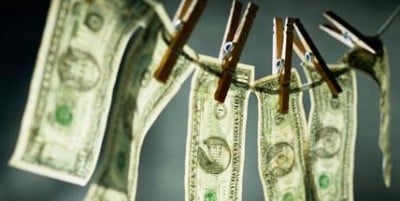
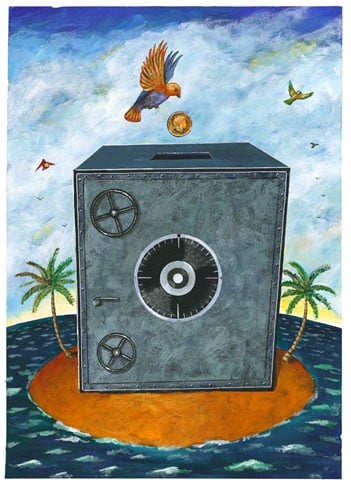
Money Laundering and Offshore Fraud for the Rich, Economic Austerity for the Poor

Money Laundering and Offshore Fraud for the Rich, Economic Austerity for the Poor

Global Research, November 02, 2012

Offshore banking is the elephant in the global economic room which the political and financial elite is trying to hide from the public view. While imposing austerity measures on hard working citizens, they are well aware that astronomical amounts of money are secretly held in offshore banks, thus lost in taxes. Where is that money from? What is it for?
Drug cartels, fraud, tax evasion and money laundering are common answers to those questions. Despite this reality and even in this era of fiscal austerity, the question world leaders avoid is: why is secret banking still allowed? Are they capable of putting a term to it but unwilling to do it because of the benefits it provides? Clearly.
Every once in a while a robber baron will serve as a scapegoat to give a pale illusion of justice to the common man. Although they deserve to be penalized, the corrupt banking system which allowed them to operate remains inviolate and its flaws are never questioned. Offshore banking is not a parallel banking structure. It is at the heart of the banking system. All major banks have offshore subsidiaries.
R. Allen Stanford is one of the white collar criminals serving time for running a “massive Ponzi scheme camouflaged as a bank [Stanford International Bank (SIB)] that sold some $7 billion in self-styled ‘certificates of deposit’ and $1.2 billion in mutual funds”:
[SIB’s chief financial officer James] Davis told the Justice Department that “his boss had beenstealing from investors for decades while paying bribes to regulators and even performing blood oaths never to reveal his secrets.”
And with connections and generous pay-outs to U.S. politicians going back more than a decade, 65% of which went to Democrats including our “change” presidentAllen Stanford was plugged-in.
Evidence also suggests he may have gotten an assist covering his tracks from regulators and U.S. secret state agencies, including the CIA [...]
Allen Stanford did business the American way; he swindled depositors and then siphoned-off the proceeds into a spider’s web of offshore accounts.
The indictment charges “it was part of the conspiracy that Stanford … and others would cause the movement of millions of dollars of fraudulently obtained investors’ funds from and among bank accounts located in the Southern District of Texas and elsewhere in the United States to various bank accounts located outside of the United States … in order to exercise exclusive control over the investors’ funds.”
Auditors learned that funds were moved through Stanford-controlled accounts to offshore banks, including HSBC in London, Bank Julius Baer in Zurich and eight others; banks which have figured in past money laundering or tax-avoidance scandals. None have been charged with an offense in connection with the affair. (Tom BurghardtFinancial Fraud, The Laundering of Drug Money and the CIA, Antifascist Calling… August 4, 2010.)
Out of willful blindness, the troika – the European Union, European Central Bank and International Monetary Fund – inflicts draconian measures on many Europeans, while letting a “vast offshore industry [operate] out of sight and mind”. The same cannot be said for press freedom and whistleblowers, which are closely monitored:
Greek magazine publisher Costas Vaxevanis faces charges of violating state privacy laws. Potentially he faces two years in prison.
Press freedom and whistleblowing should be inviolate. Not in today’s corrupt money controlled world [...]
A [...] recent Tax Justice Network (TJN) USA report [...] estimates up to $32 trillion of hidden and stolen wealth stashed largely tax-free secretly.
“The Price of Offshore Revisited” reveals what super-rich elites want concealed. Governments let them avoid taxes. Societal costs are huge. Ill-gotten gains are free to make more of them. Only ordinary people pay what they owe. Many pay too much [...]
Hot Doc magazine editor Vaxevanis was arrested for publishing the “Lagarde List.” In 2010, French authorities gave it to Athens. At issue is investigating 2,059 wealthy Greeks with secret HSBC Swiss accounts. (Stephen Lendman, Greek Whistleblower: Billions in Secret Offshore Bank Accounts, October 31, 2012.)
Seeing poverty and inequalities rise dramatically due to budget austerity crafted and ordered by the banking industry, some European nations raise the specter of separatism:
Recent months have seen one example after another of gains for parties advocating the creation of new, small states in Spain, Belgium, Italy, Scotland and elsewhere in Europe.
The growth in support for such tendencies has been fuelled by the savage cuts and austerity measures being imposed by central governments on the instructions of the troika—the European Union, European Central Bank and International Monetary Fund—at the behest of the banks and global speculators. But the exploitation of legitimate social grievances does not mean that the political beneficiaries represent the interests of the broad masses who are being exploited. (Chris Marsden, Austerity and Political Balkanization: The Rise of Separatist Agitation in Europe, October 30, 2012.)
F. William Engdahl warns that the same kind of “ austerity measures paved the way to the III Reich” and insists that the banks are “the source of the problem”:
The EU governments have shied away from any resolute action on the banks involved in the dodgy lending in the first place during the financial bubble years. Those banks remain the source of the problem. There is no lending going on to the real economy, and that`s the root cause of the 25 per cent unemployment in Spain and Greece and elsewhere across the EU. Until that problem with the banks is addressed, we’re not going to see economic recovery. To treat it only as a sovereign debt crisis is grabbing the tale of the elephant and calling it a snake. (F. William Engdahl, Germany Enforces Same Austerity that Paved Way to 3rd Reich, October 30, 2012.)
With the recent images of the brutal Spanish police state in mind we have to wonder if following the corrupt banking industry diktats is a very ruinous ride on the highway to totalitarianism.
Global Research offers its readers a list of articles on this important topic.