Theme images by kelvinjay. Powered by Blogger.

This is war propaganda

This is war propaganda
A 2013 Mondoweiss article exposing how war propaganda gets a "makeover". The same military action is rebranded for media: "targeted operation" instead of "bombing", "self-defense" instead of "aggression". Goal: reshape public perception and sell the war.

COVERT WAR ON TERROR Yemen: reported US covert action 2012

COVERT WAR ON TERROR Yemen: reported US covert action 2012
2012 report on reported US covert operations in Yemen as part of the "War on Terror". The article discusses secret military actions, drone strikes, and how they were covered in media. Source: bladalarb.blogspot.com

CALL FOR INTERNATIONAL SOLIDARITY

CALL FOR INTERNATIONAL SOLIDARITY
CALL FOR INTERNATIONAL SOLIDARITY Article from Brussels Tribunal calling on global activists, intellectuals, and movements to unite in solidarity with Iraq and against occupation. Source: brussellstribunal.org

Saddam’s VP, Izzat ad-Douri: Maliki follows Iran’s agenda to divide Iraq /Video)

Saddam’s VP, Izzat ad-Douri: Maliki follows Iran’s agenda to divide Iraq /Video)
2013 video statement by Saddam's former VP Izzat ad-Douri. He accuses PM Maliki of following Iran's agenda to divide Iraq. Source: bladalarb.blogspot.com

BOOKS ON IRAQ

BOOKS ON IRAQ
click Pic.

The US War crimes on Iraq

The US War crimes on Iraq
How much they hate Iraq and why?

War in Mali : STOP THIS

War in Mali : STOP THIS
CLICK PHOTO

War in Syria : STOP THIS

War in Syria : STOP THIS
CLICK PHOTO

Welcome to Kuala Lumpur Foundation to Criminalise War

Welcome to Kuala Lumpur Foundation to Criminalise War
Kuala Lumpur Foundation to Criminalise War The Foundation promotes justice and accountability for war crimes. It seeks to bring political and military leaders responsible for aggression and crimes against humanity to an international tribunal.

Criminalize War - War is about killing, massive killing

Criminalize War - War is about killing, massive killing
A - List of killed Iraqi academics

"Kill Anything That Moves"

"Kill Anything That Moves"
Military Doctrine Began in Vietnam

How the Pentagon is hiding the dead The secret campaign to undercount the ‘war on terror’ death tol

How the Pentagon is hiding the dead The secret campaign to undercount the ‘war on terror’ death tol
CLICK The PIC

U.S. Officials Guilty of War Crimes

U.S. Officials Guilty of War Crimes
for the Iraq War

The Massacre of Al-Amiriyah Shelter Remembered – 2/10/13

The Massacre of Al-Amiriyah Shelter Remembered – 2/10/13
click Pic

PILOTS FOR 9/11 TRUTH

PILOTS FOR 9/11 TRUTH
Now available

US War Crimes

US War Crimes
Coverup of Extensive War Crimes

Barack Obama : A Gigantic Fraud upon the American People

Barack Obama : A Gigantic Fraud upon the American People
Clik Pict.

The victims of Fallujah's health crisis are stifled by western silence

The victims of Fallujah's health crisis are stifled by western silence
To research a possible link between US bombardment and rates of birth defects and pediatric cancer in Iraq is a moral imperative

If Americans Knew

If Americans Knew
UN Resolutions Targeting Israel and the Palestinians

40% of Palestinian Children Detained by Israel Sexually Abused; Virtually All Tortured

40% of Palestinian Children Detained by Israel Sexually Abused; Virtually All Tortured
Click Pict.

The Iraq War began when

The Iraq War began when
CLICK PC.

Israeli soldiers raid Al Aqsa courtyard, attack worshipers

Israeli soldiers raid Al Aqsa courtyard, attack worshipers
CLICK The PIC

#CrowdActivism 911 Mass Arrests!

#CrowdActivism 911 Mass Arrests!
Click for RAW Evidence DECIDE *now*!

War Crimes Are US

War Crimes Are US
Depleted Uranium weapons: Why shouldn’t it be a war crime to poison civilians with radiation?

The Iraqi weapons of mass destruction

The Iraqi weapons of mass destruction
Found at last! After searching for 10 years, the Iraqi weapons of mass destruction have finally been found – in Syria

The Mother of All Battles The Endless U.S.-Iraq War

The Mother of All Battles The Endless U.S.-Iraq War
Book by Jeff Archer

MASS Graves uncovered accidentally unveiling true dangers of iranian backed militias in iraq

MASS Graves uncovered accidentally unveiling true dangers of iranian backed militias in iraq
REPORT Foreign Relations Bureau - Iraq - United Kingdom

Get the REAL DEAL

CLICK TO VISIT

operation iraqi freedom

operation iraqi freedom
click PC

LIST OF KILLED IRAQI ACADEMICS

LIST OF KILLED IRAQI ACADEMICS
ASSASSINATED IRAQI MEDIA PROFESSIONALS

International Lawyers Seek Justice for Iraqis

International Lawyers Seek Justice for Iraqis
Sabah al-Mukhtar is the president of the Arab Lawyers Association and chair of the Iraq Commission

A World Appeal to Anti-war Forces: STAND WITH IRAQ!

A World Appeal to Anti-war Forces: STAND WITH IRAQ!
click the photo

Engineering solution for Radioactive Waste in IRAQ

Engineering solution for Radioactive Waste in IRAQ
Engineering Solution for Radioactive Waste in IRAQ

Wikileaks Iraq: data journalism maps every death

Wikileaks Iraq: data journalism maps every death
Iraq war logs release has dumped some 391,000 records

Report on Status of Iraq

Report on Status of Iraq
Government War Crimes in Anbar Province

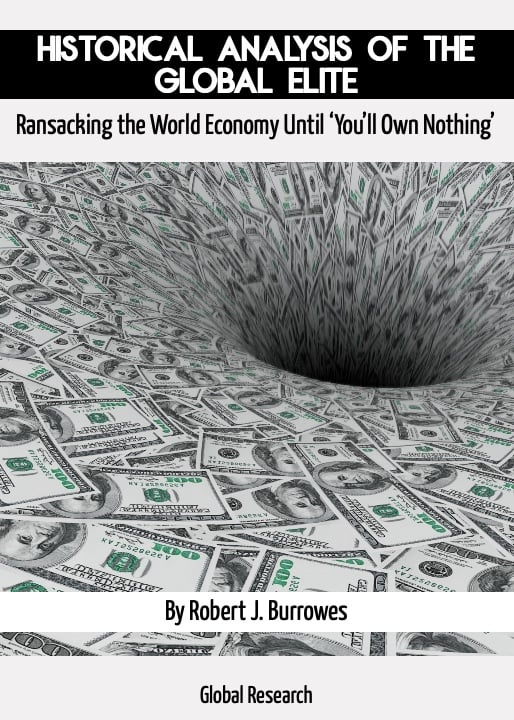
Historical Analysis of the Global Elite: Ransacking the World Economy Until ‘You’ll Own Nothing.’

COVERT WAR ON TERROR Yemen: reported US covert action 2012

COVERT WAR ON TERROR Yemen: reported US covert action 2012

Sir Henry Kissinger: Midwife to New Babylon

Sir Henry Kissinger: Midwife to New Babylon
The moment Kissinger’s last breath left his corpse, media commentators lost no time running out the gates, either singing songs of slavish praise about the “great liberal statesman”clik Pict.

Action in Ghent 16 March. 7000 posters were distributed by 70 volunteers. A lot of "Justice For Ira

Beyond Torture U.S. Violations of Occupation Law in Iraq

Beyond Torture U.S. Violations of Occupation Law in Iraq
A report by the Center for Economic and Social Rights

Iraqi Children: Deprived Rights, Stolen future

Iraqi Children: Deprived Rights, Stolen future
click PIC

Syria News - August 16, 2013 (Warning: Graphic Videos)

Syria News - August 16, 2013 (Warning: Graphic Videos)
Local Coordination Committees of Syria + Videos

Letter From Yemen by Felicity Arbuthnot + Defining Drone Deaths in Yemen

Handwritten letter from President Saddam Hussein to the American people. 7 July 2006.

Handwritten letter from President Saddam Hussein to the American people. 7 July 2006.
To the American people:

Saddam Hussein refuses to sell out Iraq.

Saddam Hussein refuses to sell out Iraq.
Saddam Hussein refuses to sell out Iraq. Egyptian Magazine publishes transcript of meeting in prison between Saddam Hussein and Donald Rumsfeld.

Report On Israeli Human Rights Violations

Report On Israeli Human Rights Violations
Weekly Report On Israeli Human Rights Violations in the Occupied Palestinian Territory (23 - 29 May 2013)

Weekly Report On Israeli Human Rights Violations in the Occupied Palestinian Territory (05 - 12 Jun

Weekly Report On Israeli Human Rights Violations in the Occupied Palestinian Territory (05 - 12 Jun
The Palestinian Centre for Human Rights (PCHR)

IRAKDOSSIER in DE WERELD MORGEN: verschillende Engelstalige artikels die op deze website staan, wer

5 Ideas That Will Blow Your Mind


5 Ideas That Will Blow Your Mind


You won't find apps or Angry Birds here. Check out five ambitious companies pursuing big, bold ideas.
If you wanted to teach a computer to mimic the way the human brain works, where would you start? Union City, Calif.-based start-up Vicarious is starting with the eyes: It's building software that can “see” and make sense of the world.
When Inc. set out to find some of the biggest, mind-blowing business ideas, we knew what we didn't want. Those smartphone apps with crazy growth stats? Another slickly designed Web dashboard to manage your finances? The next Angry Birds? All perfectly valid start-up ideas--but they don't exactly make your head spin. We wanted boldness.
What we found were the kind of ideas that may not come to fruition this year--or even this decade. In fact, we're not even sure some of them will pan out at all. But they are ideas to watch, for sure, if only because of the audacity and ambition required to pursue them. 
1. A Laser Printer for DNA
The idea: San Francisco-based Cambrian Genomics is creating the world’s first DNA laser printer. Instead of printing ink, this gadget will spit out genetic code. The traditional process of synthesizing DNA is tedious, costly, and error-prone. Cambrian's printer will produce accurate strands much faster and, theoretically, much cheaper once the technology comes to market. Cambrian, which is a product of the nonprofit academic institution Singularity University, is still in stealth mode so little is known about the actual mechanics of the printer. But the project has received funding from Founders Den managing partner Michael Levit and lists Singularity University as an advisor. 
Mind-blowing factor: Because the printer may drastically decrease the time and cost required to produce synthetic DNA, researchers will be able to generate larger quantities of DNA. The end result could be more advancements in personalized medical treatments--and even new organisms. "People get upset about extinction of animals, which I think is pretty silly,” Cambrian CEO Austen Heinz said in aninterview with TWiT Live. “We're going to make new ones and we're going to make more creatures."
2. Software That Thinks Like a Human Brain
The Idea: If you wanted to teach a computer to mimic the way the human brain works, where would you start? Union City, Calif.-based start-up Vicarious is starting with the eyes: It's building software that can “see” and make sense of the world. Its first product is called the Recursive Cortical Network, which is designed to recognize objects, people, and places just as the human brain can. The company claims it's training the Cortical Network to mimic the way the primary visual cortex works in humans. The company has raised $15 million in funding led by Good Ventures, Founders Fund, and Facebook co-founder Dustin Moskovitz.
Mind-blowing factor: This isn’t just the same old facial recognition algorithm marketed by companies such as Like.com. Instead, Vicarious combines visual data with pixel recognition to create a mathematical understanding of an object similar to the way neurons in the human brain make the same visual connections. Co-founder Scott Phoenix said in a recent interview that “having a visual perception system that works well would be enormously transformative.” How transformative? Down the line, the system will be able to scan a dinner plate to report how many calories are in the meal or even recognize cancerous tumors in a patient’s body.
3. Medical Drones That Deliver on Demand
The Idea: When heroine Katniss Everdeen suffers a bee sting in The Hunger Games, a tiny parachute-like drone drops the medication she needs at her feet in the middle of the woods. The idea isn’t as far-fetched as it seems: Matternet is developing an unmanned drone that can carry between two and four pounds of medicine, vaccines, and blood samples. The Palo Alto-based start-up’s goal is to give patients that live in hard-to-reach areas access to much-needed medical supplies. Matternet plans to test in the drones in the Dominican Republic later this year. 
Mind-blowing factor: According to the company, nearly 1 billion people are unable to get medical aid because of where they live. Currently, the size of Matternet's drones (the platform is just 3 feet across and carries four rotors) limits what it can deliver, but eventually the company plants to develop pilotless vehicles that can transport heavier supplies and even people.
4. X-Ray Vision
The Idea: The typical motion detector with infrared sensors has weaknesses: It must be cleaned, it’s sensitive to temperature changes and dust, and it doesn’t work if obstructed or deployed in large open spaces. Salt Lake City-based Xandem has developed a new kind of technology that not only solves these problems but also has a superhero-like power: It can “see” through walls to sense movement. Co-founders Joey Wilson and Neal Patwari have won a number of innovation awards in the state of Utah that have largely funded the company since its inception four years ago. Xandem launched its first product in April with help from Salt Lake City angel investor Ryan Smith.
Mind-blowing factor: Intruders can’t beat this system: There is no place to hide from these small, card-size nodes because they can be embedded in walls, beams, and furniture. The technology could be used in households and commercial buildings, but the company also claims that it’s sensitive enough to protect government buildings that require the highest level of security.
5. Digital Pills to Track Your Health
The Idea: How do you know if your medication is really working? One way to know is to look inside the body. Proteus has developed a small, swallowable sensor that lets you do exactly that. There are no wires or batteries--the sensor, which received FDA approval in July, is powered completely by your own stomach fluids. A disposable patch worn on the body captures data from the sensor and relays it to your--or your doctor’s--mobile device.
Mind-blowing factor: This is the only sensor of its kind to run solely on body fluids. Co-founder and CEO Andrew Thompson says the bigger idea behind Proteus is that it could help patients seek preventive treatment. "Right now we have a sickcare system,” Thompson says. "What we need is a healthcare system."

Read more:


  • Why the World Needs Big Ideas
  • 3 Reasons Your Start-up Should Tackle Really Big Problems
  • How to Achieve Big, Hairy, Audacious Goals


  • Massive Turkish Anti-war protests against Interference in Syria

    Massive Turkish Anti-war protests against Interference in Syria

    Global Research, November 07, 2012
    World Socialist Web Site 6 October 2012

    Economy Alone Fails to Explain Turkey’s Success
    Tens of thousands of anti-war protesters gathered in Istanbul, Thursday evening, opposing military action against Syria. Marchers streamed through the capital’s commercial district, opposing Turkey’s alliance with the United States and pledging support for the Syrian people.

    The demonstration took place after the Justice and Development Party (AKP) government used its majority in parliament to grant Prime Minister Recep Tayyip Erdogan powers to send soldiers into “foreign countries”.
    The clear intent is to wage a cross-border offensive to depose the regime of Bashir al-Assad without consulting the national assembly. The motion submitted allows the government to determine “the scope, extent and time” of any possible intervention.
    The motion was passed after a stray shell from Syria killed five people in the Turkish border town of Akçakale Wednesday. Two days of mortar fire followed; Turkish fighter jets also carried out strikes on targets including a Syrian military camp, killing an unspecified number of soldiers.
    The measure, denounced as a “war bill”, was opposed by the opposition Republican People’s Party (CHP). AKP spokesmen denied that war was being considered, but Erdogan called the mortar shells that hit Akçakale “at the threshold of armed attacks” and pledged “to act in a timely and quick manner against additional risks and threats facing our country.”
    The parliamentary session was held in closed session, under AKP instructions. Demonstrators outside parliament in Ankara were attacked by police with teargas.
    Internationally, Turkey engaged in a flurry of diplomatic activity to secure support for its stand. It called repeatedly for the support of its NATO military allies against an external threat, citing Article 4 of the NATO treaty.
    Turkish Foreign Minister Ahmet Davutoglu personally called United Nations Secretary-General Ban Ki-moon and NATO Secretary-General Anders Fogh Rasmussen.
    The response was bellicose.
    A NATO statement declared, “The Syrian regime’s recent aggressive acts at Nato’s south-eastern border … are a flagrant breach of international law and a clear and present danger to security.” It demanded the immediate end of “aggressive acts against an ally”.
    Pentagon Press Secretary George Little denounced what he called “depraved behavior” by Syria and called for the removal of the government.
    Britain’s Foreign Secretary William Hague joined Secretary of State Hilary Clinton in expressing outrage.
    Russia blocked the more inflammatory positions demanded by the US and its allies at the UN. A first draft of a resolution condemned the shelling of Akçakale and the deaths of five civilians as “violations of international law” and as constituting “a serious threat to international peace and security,” calling on “the Syria government to fully respect the sovereignty and territorial integrity of its neighbours.”
    Russia opposed the reference to violations of international law and a serious threat to international peace and security, urging an appeal to both parties for “restraint” and to “avoid military clashes”.
    Deputy Foreign Minister Gennady Gatilov made clear to Interfax news agency that Russia was seeking to block “pretexts for carrying out a military scenario or to introduce initiatives such as humanitarian corridors or buffer zones.”
    Most media sources accepted the AKP’s denials that it is contemplating war, but war is clearly what it wants.
    The resolution moved in parliament was in fact dated September 20, showing that the AKP cynically used Akçakale as a pretext to promote pre-existing plans to obtain authorization for an invasion of Syria.
    In addition, on Friday, the Turkish General Staff declared 15 mountainous areas, predominantly in the East and Southeast of Turkey “temporary security zones.” Public entry into the areas will be forbidden between October 7 and January 7 due to “extensive military operations” being carried out against the Kurdistan Workers Party (PKK). Turkey has already said it will not respect Syria’s border in pursuing its military campaign against Kurdish separatists it has accused Assad of encouraging and sheltering.
    Turkey has repeatedly urged the establishment of military corridors and no-fly zones in Syria. It also hosts the Free Syrian Army and the Syrian National Congress. It provides bases for various opposition groups to enter Syria and conduct military attacks, including covert forces from the CIA and Gulf States such as Saudi Arabia and Qatar and numerous Al Qaeda-type outfits.
    The AKP is intent on advancing itself as the head of an alliance of Sunni powers on which the imperialist powers can rely to police essential oil and gas extraction and to suppress social and political opposition in the working class through repression and whipping up ethno-sectarian tensions.
    But the AKP wants military action to proceed under a NATO umbrella and with active US participation. For both the AKP and the Obama administration, this is fraught with difficulties. Both would face major domestic opposition to the launch of another war in the Middle East. Both will face opposition, possibly including a military response, from Russia and China to an attempt to exclude them from the strategically-vital region.
    The Turkish media reflected these concerns, with Ismail Kucukkaya, writing in centre-right Aksam urging, “Let us scream from the very beginning: No war!” Warning of “incalculable dangers”, he asked, “Are we right to make a war and do we have enough legitimate reasons? Does the nation want that? Will our economy bear this?”
    Melih Asik in Milliyet warned: “We’ve reached a critical point. We’re not only up against Syria, but also Iran, Iraq, Russia and China which support Damascus. Behind us, there is nothing but the provocative attitudes and empty promises of the United States.” Referring to the AKP’s recent conviction of Turkish generals on charges of plotting a coup, he added: “What we have is an army whose generals are arrested… and a terror problem we are struggling to deal with.”
    Such comments indicate the sense of impending disaster that is developing in sections of the Turkish ruling class. Nonetheless, the AKP and its NATO allies are continuing to pour fuel on the flames.
    Warning Syria that testing Turkey’s preparedness for war would be a “fatal mistake,” Erdogan said yesterday: “We are not interested in war, but we’re not far from it either. This nation has come to where it is today having gone through intercontinental wars.”
    The logic of the AKP’s participation in the US drive for regime change in Syria and to destroy Iran’s nuclear program leads to war with both those countries and ultimately with Russia and China—that is, towards war throughout the Middle East and the world. The parliament vote authorizing military action brings Turkey and the world one step closer to such a catastrophe.
    Deutsche Welle wrote: “Ankara is preparing for conflict and at the same time stating it does not intend to declare war. The West has responded slowly to play down the clash’s importance… Turkey is not limiting its response to howitzer fire. The air force and navy were put on alert, according to press reports.”
    “Few doubts remain about Turkey’s resolve to consider a full military reaction against Syria,” it concluded.
    At the same time, Simon Tisdall busily lobbied for military intervention in theGuardian. Asking “How long can the world’s great powers sit on their hands?” he condemned “do-nothing hand-wringing.” He solidarised himself with the “pressure for more direct, multilateral intervention, most probably via NATO,” coming from the Arab states and US Republicans.
    The head of the Israeli military intelligence, Maj Gen Aviv Kochavi, used the occasion to threaten action to protect the Golan Heights. “The erosion of the Syrian regime’s control and the growing penetration of global jihadist forces present a new threat, for which Military Intelligence and the IDF [Israel Defence Forces] are preparing,” he said.

    Regarding War Criminal Tony Blair: Letter to Director of Public Prosecutions

    Regarding War Criminal Tony Blair: Letter to Director of Public Prosecutions

    Global Research, November 04, 2012
    Blair War crimes Foundation

    From Nicholas Wood
    Secretary,  Blair War crimes Foundation
    To Keir Starmer QC    Director of Public Prosecutions
    Rose Court
    2 Southwark Bridge
    SE1 9HS
    23 October 2012
    Dear Sir,          RE    1949 GENEVA CONVENTIONS IV     Articles 146 , 147, 148
    I wish you to understand that I am  not seeking  a private prosecution of Mr Blair and others for grave breaches of the Geneva  Conventions as I am not in a financial or legal position to do so.
    My letter is to ask two  questions.
    1.   Why is it that the UK  as a High Contracting Party to the 1949 Geneva Convention IV has not yet  initiated penal sanctions against those who have caused grave breaches of those conventions, and
    2 .  Why  has the UK Government as High Contracting Party  not yet  initiated suppression of  all acts contrary to the provision of the Convention ( Article 146)?
    As you will know failure to initiate such suppression  may be considered  as, in itself, a war crime.  The most glaring example of this  failure to suppress grave breaches has been the continued use of depleted uranium munitions in the joint enterprise of  UK/USA to invade Iraq and the failure during the invasion, occupation, and post occupation   to clear up radioactive depleted uranium material and debris   as promised by the UK in 2003, and to suggest that the Interim Iraq Administration and  the present Iraq Government are capable, and should have carried out such a clean up operation themselves.   As you may know this failure has resulted in the spread of radioactive dust and widespread death by leukaemia  and other cancers and the gross deformities of embryos in the Fallujah, Basra and Baghdad areas to such an extent that women in  Fallujah were advised by Imams not to have children.
    I enclose a petition signed by 7.800 showing concern at the lawless conduct of the Iraq War,  also  a series of short films called <chilcotreports> illustrating some,  but by no means all,  of the grave breaches of the 1949 Geneva Convention IV.
    I think you will agree that for future generations in this country and others upholding International Law  is extremely important,  quite apart from stemming infant mortality and misery in The Middle East, Afghanistan. and elsewhere by the continued use of extremely toxic munitions with widespread, long term,  and severe damage to the natural environment.
    Yours sincerely,
    Nicholas Wood, Secretary BWCF
    DVD <chilcotreports>
    Blair War Crimes Foundation Petition as of 1st October 2012.
    Copy to Sir John Chilcot.

    A BDS Movement That Works

    A BDS Movement That Works

    — Barbara Harvey

    IN 2005, 173 Palestinian civil society organizations and 71 members of parliament, political parties, and unions in Jordan united to issue a powerful nongovernmental call for global nonviolent resistance to occupation through acts of boycott, divestment, and sanctions (BDS) against Israel.(1) They had three goals: an end to occupation and return to the pre-1967 Green Line, equality for Palestinian citizens of Israel, and recognition of the Palestinian right of return.
    The strongly united 2005 Palestinian civil society call for BDS electrified progressives around the world. European activists responded strongly, but in the United States, where the mainstream news media have tended to voluntarily censor undistorted news reports about Israel’s ever-widening theft of Palestinian lands, public consciousness was generally absent, while sympathy for the Jewish legacy of trauma from the Holocaust remained the dominant theme.
    It’s time to reassess: Where is the U.S. BDS movement now? The answer is that, while it still lags behind the BDS movements in Europe, Australia and elsewhere, it’s catching up fast, on campuses across the country and in local communities, as a genuinely grassroots movement led by focused, smart, strategic young Arab Americans — with the generous, if unintended assistance of Bibi Netanyahu, whose unashamed racism and crudeness has stunned the world, leaving Israel’s defenders without a credible spin on his words and actions.
    The BDS movement encourages progressive activists on many fronts to set aside differences and instead focus on common goals: to ensure the rights of Palestinians, as affirmations of the rights of all people, to adequate and uncontaminated water; to belong to a country; to get an education; to be protected from languishing in prison for years without trial or knowing why; to farm the land that has belonged to their families for centuries; to freedom and dignity.
    The results have been stunning early victories for this country’s young BDS movement — in large measure a testament to the years of movement work in Europe and to the chilling confirmations repeatedly given by Israeli Prime Minister Netanyahu for the movement’s accusations of Israeli racism and the cruelty of life for Palestinians who live under Israeli occupation. But these successes would have been unattainable without the wisdom and maturity of young movement leaders who have, in the best spirit of the World Social Forum, consistently put shared goals above political differences and worked democratically and collaboratively, without ego hang-ups, to achieve shared goals.
    This article focuses on the story of one U.S. BDS campaign: the campaign to persuade TIAA-CREF to divest from the Occupation. In a testament to the determination of the BDS movement to cross organizational and interest group lines and stay focused on shared goals, and to Jewish Voice for Peace (JVP) as the campaign’s creator, the campaign — now known as “We Divest” — now also includes American Friends Service Committee, Grassroots International, Adalah-New York, the U.S. Campaign to End the Occupation, and the U.S. Palestine Community Network.
    Since the campaign’s launch in June 2010, it has provided a big tent for all sorts of local activism against shared target companies — Caterpillar, Veolia, Hewlett Packard, Elbit, Motorola Solutions, and Northrup Grumman. These local campaigns have recognized that they all benefit by working collaboratively, with shared resources, sophisticated tactical guidance, training for local activists, and rich opportunities for local coalition work provided by We Divest.

    The TIAA-CREF Campaign

    On a lovely day in July 2011, activists and allies of Jewish Voice for Peace converged on an idyllic country setting outside Charlotte, North Carolina. This is the immaculately manicured country home of the Teachers Insurance Annuity Association-College Retirement Equity Fund (TIAA-CREF), the partly non-profit and partly for-profit retirement and investment mutual fund manager.
    Activists were there for the annual CREF shareholder meeting. They had attended and demonstrated at the prior year’s shareholder meeting in New York City at TIAA-CREF headquarters, where shareholder meetings were usually held. These members and supporters of JVP shared a commitment to its campaign, launched in June 2010, to persuade TIAA-CREF to divest across all of its accounts from all companies around the world that profit from or help to maintain Israel’s occupation of the West Bank, Gaza and East Jerusalem.
    As of March 2012, TIAA-CREF managed $487 billion for more than 3.7 million people working in academia, medicine, culture, government, and research.(2) A promising focus for activism, its primary clients are colleges and universities, where student movements for justice for Palestinians had already started and could benefit from a shared organizing focus. By highlighting commonly held investments as targets for TIAA-CREF divestment, the campaign provided a big tent for activism that could be coordinated with boycott and other divestment campaigns around the country.
    TIAA-CREF itself is a globally admired financial services manager, a leader whose actions are likely to be noted and followed elsewhere in the investment world. Its 3.7 million clients tend to be community leaders, opinion shapers, and more socially committed and progressive than the general population.
    TIAA-CREF was in fact a leader in the creation of socially responsible investing (SRI), offering its participants the option to invest in companies complying with the United Nation’s CESG investment principles (Companies committed to Environmental, Social, and Governance good practices). Importantly, the campaign does not ask participants in TIAA-CREF to divest their own accounts from TIAA-CREF, but instead asks the company to divest its holdings from Israel’s occupation.
    The 2010 activism at the shareholder meeting in New York had been a huge success. A dozen activists having credentials to attend the meeting had asked embarrassing questions of TIAA-CREF CEO Roger Ferguson, face-to-face, that so powerfully confronted the company on its refusal to divest from the Israeli occupation that one after another of the other shareholders present at that meeting — strangers to the still fledgling national divestment campaign — had risen to join the voices challenging the absence of moral judgment in the company’s investment decisions.
    The Q & A period at the 2010 meeting began and ended on a single theme: that it was wrong for an Andrew Carnegie company whose motto was “Financial Services for the Greater Good” to leave teachers, professors, researchers and nonprofit employees no choice but to retire in part on the profits from a military occupation that violates both human rights and international law. For nearly three hours, the CEO of a Fortune Top 50 company politely listened to a stream of complaints about the ethics of his otherwise well-managed company.

    What “Delegitimizes” Israel?

    Four months later, in November 2010, Israeli Prime Minister Benjamin Netanyahu addressed a large audience in New Orleans at the Jewish Federation’s annual assembly, railing against the “delegitimization” of Israel by alleged anti-Semites and self-hating Jews. A young JVP college student stood up in the midst of the audience and yelled to the stunned prime minister and crowd, “The siege of Gaza delegitimizes Israel!”
    It was the highest profile “mic checking” action of the new U.S. BDS movement. A few moments later, after the audience and speaker collected themselves, another young activist stood up and yelled, “The Occupation delegitimizes Israel!” A total of five activists disrupted Netanyahu’s “delegitimization” speech to the Jewish Federation assembly, with the audience becoming more enraged with each one.
    Other slogans were: “The settlements delegitimize Israel,” “The Loyalty Oath delegitimizes Israel,” and “Silencing dissent delegitimizes Israel!” [The “Loyalty Oath” is a proposed requirement for Arab citizens of Israel to swear allegiance to the country as the “Jewish state” — ed.]
    The final protestor, a slight young woman, was greeted with a roar of outrage and assaulted from behind by a man who grabbed her in a stranglehold. In less than one well-conceived minute of total protest time, the moral bankruptcy of Israel’s “delegitimization” campaign had been exposed.(3)
    Determined not to let protesters take over its 2011 shareholder meeting or humiliate the company on the sidewalks of New York, TIAA-CREF moved its 2011 CREF meeting to Charlotte, North Carolina. Similarly determined JVPers followed TIAA-CREF to North Carolina, attending the 2011 meeting in about three times the number of those who had attended the 2010 meeting. They were met by a small army of private security guards, who apparently had been instructed to never let these perceived terrorists out of sight; guards followed them even into bathrooms.
    Again in 2011, campaign activists dominated the shareholder meeting. On the day preceding the meeting, the Charlotte Observer printed an op-ed by retired Archbishop Desmond Tutu, supporting the goals of the campaign and explicitly drawing the parallel between the Israeli occupation and South African apartheid.(4)
    Activists around the country held coordinated, “You can run, but you can’t hide” demonstrations against TIAA-CREF’s decision to flee NYC for its shareholder meeting and demanding divestment from Caterpillar.
    Less than two months later, in September 2011, CEO Roger Ferguson gave a presentation on retirement issues to a packed auditorium at Wayne State University, in Detroit. Activists from 13 student, faith-based and other progressive organizations distributed a joint statement to attendees, stating in part:
    “We come from many different walks of life, but we stand in solidarity with one another on this issue and with the national campaign to persuade TIAA-CREF to divest from Israel’s Occupation. As a largely non-profit company that solicits customers under the proud motto, ‘Financial Services for the Greater Good,’ TIAA-CREF must honor its commitment. We are all seriously committed to the greater good, and we will not rest until TIAA-CREF stops investing in the Israeli occupation.”
    Campaign activists, in this public forum, again controlled the discussion, converting the post-presentation Q & A into an indictment of the company’s investments in serious human rights violations.

    A Campaign Victory!

    Eight months later, between May and June 2012, TIAA-CREF completely divested its SRI accounts from ownership of nearly $73 million in Caterpillar. Caterpillar manufactures D-9 bulldozers and sells them to Israel to be armor-plated, weaponized, and used to demolish civilian homes and build settlements in the West Bank, all of which violate the Fourth Geneva Convention’s prohibition against the expropriation of any occupied territory by any occupying power. These are the bulldozers that killed International Solidarity Movement activist Rachel Corrie, as she stood in 2003 between such a bulldozer and a civilian home in Gaza, trying to save another family from homelessness.
    TIAA-CREF’s public statement was that the action reflected simply the decision by its SRI screening company, Morgan Stanley Capital Investment (MSCI), to “delist” Caterpillar as an acceptable socially responsible investment.  MSCI is the largest such company, providing investment screening services to 6,200 investment firms, including TIAA-CREF. All companies that retain MSCI to screen their SRI accounts should now be following suit. This is the advice that they pay MSCI to give them.
    A month before TIAA-CREF’s action, Friends Fiduciary Corporation, serving more than 250 Quaker Friends meetings, schools, organizations, trusts and endowments, became the first U.S. company to divest from Caterpillar, selling $900,000 in holdings. On September 26, 2012, Friends Fiduciary announced its further divestment from Hewlett Packard, because it provides IT consulting services to the Israeli Navy, and Veolia Environnement, the largest water privatization company in the world and the supplier of discriminatory water resources to Israeli West Bank settlements.
    MSCI explained its decision to delist Caterpillar as having been “initiated following a controversial lockout and plant closing at the company’s London, Ontario, locomotive plant.”(5) (Indeed, this unionized plant was closed and the work moved to a nonunion facility in Indiana.) A senior MSCI official acknowledged, however, that Caterpillar’s sales to Israel had been “a factor” in the delisting decision, since its rating had already been dropped to borderline status as a result of its sale of D-9 bulldozers to Israel for use in demolishing homes and building West Bank settlements.(6)
    By the time of MSCI’s announcement, the TIAA-CREF divestment campaign had educated MSCI about Caterpillar’s unsuitability for socially responsible investing. The TIAA-CREF divestment campaign leaders are confident that the campaign played a key role, perhaps the key role, in MSCI’s decision to delist Caterpillar, and CEO Roger Ferguson conceded as much in an unguarded moment of dialogue at the 2012 shareholder meeting.
    TIAA-CREF still has a long way to go before it is divested from the Israeli occupation.  It still owns about $900,000,000 in Caterpillar, in its non-SRI accounts, for example. Its SRI accounts still own equities in Veolia, Motorola and Hewlett Packard — all of which earn profits from sales of equipment to Israel that is directly used to subjugate the Palestinian people.
    But with the actions of MSCI and TIAA-CREF, U.S. divestment from the Israeli occupation took a giant step toward becoming mainstream. It is only a matter of time, for example, before Veolia will be divested.

    The Heat on Veolia

    Veolia flunks every single prong of the “environment, social, and governance” (ESG) standards that define companies suitable for SRI. Veolia will be saved from divestment only if it initiates prophylactic action in shedding the last of its business dealings with the Israeli occupation before it shares Caterpillar’s “delisted” fate.
    Veolia has already sold its landfill operation for West Bank settlements, which literally turned Palestinian land near Israeli settlements into garbage pits; it has sold its interest in building the entirely illegal light rail system that connects West Bank settlements to Jerusalem and Israel; it has finally found a purchaser — Israel’s bus company, Egged — of its right to operate that light rail system, although a condition of the sale is that it must continue to operate the rail system until Egged employees have sufficient training to operate it themselves; and it has sold all but a couple of the bus lines that transport Israeli commuters from their homes in West Bank settlements to their jobs in Haifa and Tel Aviv, on apartheid-like roads that Palestinians cannot use.
    Why is Veolia so determined to sell off its profitable Occupation business? The answer appears to be that the European divestment movement against Veolia has made it unprofitable for Veolia to engage in Occupation business, causing losses of many billions of dollars in lost contracts. In early October the investment grade of Veolia subsidiary, Veolia Environnement, was downgraded, making it a less attractive investment to all investors.
    The downgrade provides a potent new argument to the BDS movement: that investing in businesses that profit from Israel’s human rights and legal violations is becoming simply bad business. The French and U.S. subsidiaries, Veolia Environment (providing waste management services) and Veolia Transportation (which runs all of the airport Super Shuttle services and many bus and small van services for local governments around the country) will be prime targets of the BDS movement in the coming year.
    TIAA-CREF’s divestment from Cater­pillar in all of its SRI accounts comes hard on the heels of increasing BDS activity and successes:
    • Hot off the wires as we go to press is the news that several major U.S. churches have co-signed a letter to Congress demanding an end to unconditional military aid to Israel, and “immediate investigation into possible violations by Israel of the U.S. Foreign Assistance Act and the U.S. Arms Export Control Act which respectively prohibit assistance to any country which engages in a consistent pattern of human rights violations and limit the use of U.S. weapons to ‘internal security’ or ‘legitimate self-defense.’”(7) This is the sort of stuff that millions of ordinary Americans will pay attention to: Their own churches have indicted Israel for human rights violations and colonialism.
    • After devilishly clever procedural maneuvers by pro-Israel forces, which deprived delegates at both the United Methodist Church General Conference (May 2012) and the Presbyterian Church-USA General Assembly (July 2012) of opportunities to vote on the merits of resolution to divest from specified companies that profit from Israel’s occupation, the Methodists adopted a strongly worded resolution condemning the settlements,(8) and the Presbyterians voted for “positive investment” in the occupied Palestinian territories, although there is no such thing.
    By a unanimous vote in early June, the Arizona State University undergraduate student government unanimously passed a bill, submitted by its Students for Justice in Palestine chapter, demanding that ASU divest from and blacklist companies that provide the Israeli army with weapons or militarized equipment or are complicit with the genocide against the people of Darfur. The bill named ten such companies, including Caterpillar, Motorola Solutions, Alliant Tech Systems, Boeing, and United Technologies.(9)
    • Similar divestment votes were adopted by student governments at Hampshire College in 2009, the University of Michigan Dearborn campus in 2010, Columbia University in 2011, and the University of Massachusetts-Boston in April 2012.(10) The Hampshire College trustees divested from Caterpillar, United Technologies, General Electric, ITT Corporation, Motorola and Terex, all companies that profit from supplying the Israeli military with equipment and services in the occupied West Bank and Gaza Strip.(11)
    • In July 2010, the 22,000-member Olympia Food Co-op in Olympia, Washington, the home of Rachel Corrie, became the first U.S. business to implement a boycott of Israeli products. Sixteen past and current board members were individually sued on procedural and other theories, in a lawsuit that was reportedly filed with the backing of StandWithUs, a right-wing Zionist organization that is being funded, in part, by a $6 million fund created by the Israel Action Network, a consortium created to crush the U.S. BDS movement.(12)
    A pro bono team put together by a National Lawyers Guild working group created to provide legal advice to BDS activists and the Center for Constitutional Rights filed an anti-harassment defense and won dismissal with statutory damages of $160,000 ($10,000 for each named defendant) and attorney fees.
    • At the June 2012 Caterpillar shareholder meeting, Gabe Schivone, a student in Tucson, Arizona, stood at the microphone for JVP and other religious organizations to lambast Caterpillar for targeting only Iran for instructions to its dealers to boycott direct and indirect sales of bulldozers.
    Instead, he argued, shareholders should endorse a resolution calling for a broad human rights policy: “Without a general policy... we’re vulnerable to the charge of hypocrisy. For example, Israel has a far worse human rights record than Iran and is engaged in its 45th year of military occupation and settlement of the Palestinian West Bank, Gaza and East Jerusalem and crucially uses armies of our bulldozers to do it.” The resolution was not adopted, but it did win support from about 20% of shareholders, a strong showing for a shareholder resolution.
    By July 2012, the time of the third CREF shareholder meeting in the divestment campaign’s history, TIAA-CREF had accepted the judgment that Caterpillar was not an appropriate subject for socially responsible investing and removed it from its SRI accounts.
    It had given up hope of being able to run away from campaign activists and moved its meeting back to Manhattan, where there was a huge rally in front of the headquarters building, showing support for the campaign — with some deeply appreciated solidarity from the Killer Coke campaign and a group demanding health care reform.
    More importantly, one campus after another has seen the birth of its own Students for Justice in Palestine (SJP) chapter, and even Brandeis has its own student JVP chapter. NYU’s SJP chapter has created an excellent handbook for other chapters and its own successors to mount campus We Divest campaigns.
    Most importantly, the unspoken censorship of criticism of Israeli policies and practices is crumbling under the persistent and well-framed objections of focused students and radical rabbis.
    [You can learn more about the campaign at www.wedivest.org.]

    Notes


    1.  www.bdsmovement.net/call.
      back to text


    2.  http://www.tiaa?cref.org/public/about/index.html.
      back to text


    3.  Although an attempt was made to choke one of them, none of the JVP protesters was prosecuted or sued. Muslim student mic-checkers at the University of California at Irvine fared less well. All 10 of them, plus another who led a rally outside the hall, were criminally prosecuted for “conspiring” to disrupt a public meeting — a presentation by Israeli ambassador Michael Oren — and for actually disrupting it, even though the real disruption was caused by the sustained and petulant overreactions by Oren and the audience. They were convicted by an Orange County jury, and their appeal is currently pending.
      back to text


    4.  http://www.charlotteobserver.com/2011/07/17/2459590/tiaa-cref-should-hear-us-divest.html#ixzz1SOdiHGJJ.
      back to text


    5. http://www.msci.com/insights/responsible_investing/qa_removal_of_caterpillar_from_several_msci_esg_indices.html.
      back to text


    6.  “The sale of Caterpillar tractors to Israel was a factor, but not the determining one, in the delisting of the company from an influential index that prioritizes good governance and human rights.” Ron Kampeas, “Israel cited in Caterpillar’s delisting from influential investment index.” JTA (June 22, 2012), athttp://www.jta.org/news/article/2012/06/22/3098921/israel-cited-as-one-of-several-factors-in-caterpillars-delisting.
      back to text


    7.  http://blogs.elca.org/peacenotwalls/files/2012/10/12oct5letteraboutaid.pdf.
      back to text


    8.  The resolution urged the U.S. government to “end all military aid to the region and called on all nations to prohibit any financial support by individuals or organizations for the construction and maintenance of settlements and the import of products made by companies in Israeli settlements on Palestinian land.
      back to text


    9.  http://sjpalestine.com/?p=623.
      back to text


    10.  http://www.bdsmovement.net/2012/umass?boston?student?senate?passes?resolution?calling?for?divestment?from?boeing?8954#.T84aZtVYuSp.
      back to text


    11.  http://electronicintifada.net/content/hampshire?college?first?us?divest?israel/932.
      back to text


    12.  http://israelactionnetwork.org/hot.
      back to text
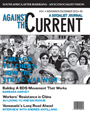
    November/December 2012, ATC 161

    Despotic vs Democratic: Gulf States Suppress Rallies with US Blessing

    Despotic vs Democratic: Gulf States Suppress Rallies with US Blessing
    by grtv
    Local activists in Kuwait say security forces have detained dozens of pro-democracy campaigners in the latest clampdown on a rally in the Gulf nation.
    Riot police used stun grenades and smoke bombs against thousands of demonstrators who defied a ban on public gatherings, protesting against new voting rules.
    Sunday's rally became the third major protest in the past few days.
    Geopolitical analyst Eric Draitser says Gulf monarchies confidently take undemocratic measures, comfortable in the knowledge they have the support of the US.

    US Elections: From the “Lesser to the Greater Evil”. The Demise of Critical Liberalism

    US Elections: From the “Lesser to the Greater Evil”. The Demise of Critical Liberalism

    Global Research, November 03, 2012

    Introduction
    There is ample evidence that the Obama Presidency has pulled the US political spectrum further to the Right. On most domestic and foreign policy issues Obama has embraced extremist positions surpassing his Republican predecessor and in the process devastating what remained of the peace and social movements of the past decade.  Moreover, the Obama Presidency has laid the groundwork for the immediate future promising a further extension of regressive policies following the presidential elections: cuts in Social Security, Medicaid and Medicare.  Incumbents and their opposition compete over hundreds of millions of dollars in campaign funding from wealthy donors, which they will have to repay in the post-election period in billion dollar handouts, subsidies, tax abatements, anti-labor and environmental policies.  Not a single positive proposal was put forth by the Obama campaign but numerous militarist and regressive social policies were articulated.  The Obama campaign ran a fear campaign, playing off of the reactionary proposals of the Romney-Tea Party  alliance:  a cover for his own record of unprecedented military spending, sequential wars, immigrant expulsions, mortgage foreclosures and Wall Street bailouts.
    In the process, critical liberals have crossed the line, surrendering their integrity by deflecting attention from Obama’s militarist-socially regressive policies to focus on “opposing Romney” as a “greater evil”:  progressives and critical liberals have multiplied and magnified the duplicity of the Obama political apparatus.  In the name of opposing the current ‘greater evil’ (Romney) they dare not enumerate and specify the wanton political crimes and monumental socio-economic in justice perpetrated by their “lesser evil” candidate (Obama).  Will the “progressives” ever play honest and publicly state:  we back Obama in “swing states” because he has “only” murdered 10,000 Afghans, 5,000 Iraqis, is starving 75 million Iranian’s via sanctions, gives $3 billion for Israeli displacement of millions of Palestinians, personally oversees the arbitrary executions of US citizens and promises an extended kill list … because Romney promises to be worse … Expecting honesty from the proponents of ‘lesser evils’ is as farfetched as taking serious their criticisms between elections.
    The political damage incurred by the social movements and US working class under the Obama presidency is unprecedented and has laid the groundwork for further social regression and greater imperial bellicosity.
    Political Consequences of the Obama Presidency: Past, Present and Future
    The Obama Presidency and the run-up to his past and present electoral campaigns have had a devastating impact on popular social movements, engaged in issues of peace, labor, immigrant and constitutional rights and environmental regulation.
    The peace movement virtually disappeared as its leaders urged its supporters to turn their activities to supporting Obama’s election.  He rewarded them by escalating military spending, and engaging in sequential wars, directly or by proxy, in seven countries, wreaking havoc and destruction. He faced minimum opposition as ex-peace activists, in dismay, turned away or grabbed a post and apologized for war.  By 2012 the follower- less peace leaders repeat the same mantra to support Obama; but dare not repeat the past lie (in the name of ‘peace’) rather they claim in order ‘to defeat Romney’.
    The immigrant rights movements prior to the 2008 election of Obama mobilized several million…. till it was infiltrated and taken over by Mexican-American political hacks from the Democratic Party ad turned into an electoral machine to secure elected posts for themselves and Obama.  He rewarded the immigrants by setting a record: seizing, jailing and expelling 1.5 million immigrants over his tenure in office.  The immigrant rights mass movement has been largely dismantled and now Democratic political hustlers hire canvassers to round up and register, highly disillusioned immigrant voters.
    Afro-Americans were the most neglected sector of the US working class under Obama:  they experienced the highest levels of unemployment and home foreclosures and the longest period of joblessness.  They became politically invisible as Obama bent over front ways to appease rabid White racists seeking to label him a ‘black president’.  The established black leadership-political and religious – and the media  celebrities went all out to block any expression of grass-roots opposition, claiming it would only “help the racists” – ignoring Obama’s embrace and bail out of White Wall Street and showing his backside to millions of black households under water. Without movement or leadership, fearful of the problem (economic racism) and the solution (4 more years of invisibility under Obama) most black workers are left to abstain or hold their nose and vote for ‘Oreo’ Obama.
    The Occupy Wall Street Movement, precisely because it was independent of the Democratic Party and fed up with Obama’s total subservience to Wall Street, provided a temporary voice for the vast majority of Americans opposed to both political parties.  The local and state Democratic officials applauded “the cause” and then repressed the movement.
    A spontaneous movement without political direction, and lacking an alternative political leadership, was incapable of confronting the Obama regime:  the movement declined and disintegrated, many sympathizers sucked up by the Obama ‘lesser evil’ propaganda campaign. The mass popular animus to Wall Street was defused by Obama’s claim to have saved “the economy” from catastrophe by channeling $4.5 trillion dollars into the bankers’ pockets.
    Constitutional rights were savaged by Obama’s defense of military trials, Bush era tortures, expansion of arbitration executive power including the assumption of Presidential power to assassinate US citizens without a trial.  While legal organizations fought the good fight for civil liberties, the vast majority of liberals were notable by their absence from any sustained democratic movement upholding the rights of 40 million Americans under police surveillance, especially Muslim citizens and immigrants.  They chose not to embarrass their Democratic President:  they placed the re-election of a police-state Democrat over and above their putative defense of constitutional rights.  No mass marches for civil liberties; no protests against Home Land Security; no campus-wide free speech movements against the abrogation of the right to criticize Israel .
    For decades, the trade union confederation and senior citizen movements defended Social Security, Medicare and Medicaid.  With Obama in office, openly declaring and preparing major reductions and regressive clauses on coverage (raising age qualification) and indexing, there is no significant protest movement.   Programs which for the better part of a century (social security) or half century (Medicare, Medicaid) were considered untouchable are now, according to Obama, “on the table” to be gutted (“reformed”, “adjusted”).  The trade union millionaire bosses hire a small army of campaign workers and raise over a $150 million to re-elect a President who promises to make huge cuts in medical programs for pensioners and the poor.  Obama has legitimated the regressive social positions of the far-right while the Democratic Party neutralized any trade union opposition or mobilization.
    Last but not least, the Obama regime has co-opted progressive liberal social critics via backdoor support.  In the name of “opposing Romney” the progressive pundits, like Chomsky and Ellsberg, end up in alliance with Wall Street and Silicon Valley billionaires, Pentagon militarists, Homeland Security boosters and Zionist ideologues (Dennis Ross) to elect Obama. Of course, the support of the progressives will be accepted -but hardly acknowledged- but they will have no influence on future Obama policy after the election:  they will be discarded like used condoms.
    The Future:  Post-Election Consequences
    With or without the re-election of Obama, his regime and policies have laid the groundwork for an ever more regressive and reactionary social agenda:  living standards including health, welfare, social security will be cut drastically. Afro-Americans will remain invisible except to the police and racist judicial system.  Immigrants will be hunted down and driven out of homes and jobs:  immigrant student dreams will become nightmares of fear and trepidation.  Death squads, proxy and drone wars will multiply to prop up a bankrupt US empire.  Unaccountable and hypocritical progressives will shift gears and criticize the president they elected; or if it’s Romney they will attack the same vices they overlooked during Obama’s electoral campaign:  more cuts in public spending and climate change will result in greater deterioration in everyday life and basic infrastructure; more floods, fires, plagues and blackouts.  New Yorkers will learn to detox their toilet water; they might be drinking and bathing in it.

    Algeria Skips the Revolutionary Spring

    Algeria Skips the Revolutionary Spring

    The police line up to quell a planned demonstration on Boulevard Amirouche in Algiers. Credit: Giuliana Sgrena/IPS.
    The police line up to quell a planned demonstration on Boulevard Amirouche in Algiers. Credit: Giuliana Sgrena/IPS.
    ALGIERS, Oct 31 2012 (IPS) - As the Arab Spring continues to rage across the Middle East and North Africa, the gaze of the international media has largely passed over a country that was once known for its restive population, its long and bloody decolonisation struggle and revolutionary zeal.
    Algeria has remained uncharacteristically quiet during the wave of popular uprisings in the region that began with the Tunisian revolution in December 2010, with many spectators questioning if or when the country will explode in its own brand of protest against the ruling powers.
    But the chances that Algerians will take to the streets are slim, mostly because memories of the ‘black decade’, during which close to 200,000 Algerians lost their lives in the crossfire between warring Islamist groups, are still fresh in survivors’ minds.
    “We no longer want to be considered terrorists the way we were in the past,” Amir Moussawi, a 22-year-old student at the International Commerce Institute, told IPS.
    Hailing from the city of Blida, just 40 kilometres from the capital Algiers, Amir has good reason to fear political upheaval. During the period of terror in the 1990s, Blida was the stronghold of the Armed Islamist Group (GIA), responsible for killing tens of thousands of Algerians between 1992 and 1999.
    In 2005, an amnesty law implemented by the newly elected government of Abdelaziz Bouteflika freed most of the former Islamist militants, in a bid to reduce violence between the warring sides. The law also absolved the army – which was also accused of killing, torturing and ‘disappearing’ countless thousands – of blame.
    As a result, thousands responsible for the massacre are still at large and were never made to repent for their crimes.
    “The majority of the radical Islamists are no longer engaged in politics,” Samira Ababsa, a young primary-school teacher in Algiers, told IPS.
    “They emerged from ‘underground’ or from jail with a ‘war chest’, money stolen during ten years of terrorism that involved (besides widespread rape and murder) the looting of victims’ homes.
    “So now they have their own businesses, they built villas, and shopping centres. But this does not mean the political mindset has changed,” she added.
    After the referendum and approval of amnesty in 2005, Salafist groups continued to fight and the majority of them joined the al-Qaeda in the Islamic Maghreb (AQIM). Ali Belhhadj, one of the two most powerful players in the Islamic Salvation Front in the 1990s, is considered a leader of the active Salafist groups in Algeria today.
    Amir and Samira were youngsters during the reign of terror, but have vivid memories of that time.
    “I remember how terrified my family was. (Sometimes) we could not even leave the house,” Samira recalled.
    The son of a military official, speaking under strict condition of anonymity, told IPS that women were at risk of igniting the wrath of Islamists and young men were in danger of either being recruited by armed groups or being killed if they were suspected of having loyalties to the army.
    All these young people agreed that they did not live normal lives during that decade. No part of the country, nor any time of day, was safe: attacks began after dark in villages, but took place in broad daylight in the cities.
    This long nightmare, which ended with perpetrators being pardoned for their crimes and left to walk among family members of their victims, could explain why many people in this country of 29 million seem to be “vaccinated against protest and demonstrations,” Cherifa Kheddar, president of an associations of relatives of terror victims known as ‘Djazairouna’ (Our Algeria), told IPS.
    Another reason for the relative quiet on the Algerian front could be the stability of the economic situation compared to other countries in the region. Though by no means free of inequality, Algeria has managed to remain buoyant throughout the global recession.
    Hydrocarbons are still the backbone of the economy, accounting for 70 percent of national gross domestic product (roughly 71.4 billion dollars) and 98 percent of the total volume of exports in 2011, according towww.africaneconomicoutlook.org figures.
    Revenue from the sale of hydrocarbons brought reserves of foreign currency up to 182.2 billion dollars in 2012.
    Though production in the oil and gas sectors continues to decline, dropping from 43.2 million tonnes to 32 million tonnes between 2007 and 2011, prices have increased steadily.
    The Algerian economy grew by 2.6 percent in 2011. At the exact moment when masses demanding an end to economic stagnation were pouring onto the streets in neighbouring countries like Egypt and Tunisia, the Algerian government was raising salaries and providing housing subsidies to the poor.
    Algeria also has a relatively ‘open’ civil society compared to other countries in the region. There is significant space for political debate, Amir told IPS, with students, bloggers and facebook users utilising the web to exchange information about the current political climate without much intervention by the authorities.
    Still, the country is not without its share of problems.
    The overall unemployment rate was 10 percent in 2011, while unemployment among the 15 to 24 year-old age group topped 21.5 percent during the same time period.
    Back in 2006, the last time official data was collated, the poverty rate was 23 percent.
    The sprawling informal market continues to thrive, with transactions totalling 35 billion dollars last year, according to the prominent economist Rachid Seddak (El Watan, 16th October, 2012).
    Corruption is rife in every layer of governance, from state to local administrations, and in public and private companies. According to Transparency International’s Corruption Perceptions Index for 2011, Algeria ranked 112 on a list of 183 countries.
    Algerians do not take these injustices lightly. Various groups and organisations attempting to organise protests against the government have been suppressed by the security apparatus, which consists of close to 500,000 forces spread out between the army, police units and the gendarmerie.
    With most of the population still haunted by the ghosts of the past, it is unlikely that they will venture into open confrontations with the armed forces or risk opening another blood-soaked chapter in the country’s history.
    “We don’t want to go back to the 1990s and even if we would like to fight against corruption, for justice, freedom and democracy, Algerians are still traumatised, we need more time to overcome the effect of ten years of violence,” Cherifa Salhi, a psychology professor at the University of Algiers specialising in treating women victims of violence, told IPS.