Theme images by kelvinjay. Powered by Blogger.

This is war propaganda

This is war propaganda
A 2013 Mondoweiss article exposing how war propaganda gets a "makeover". The same military action is rebranded for media: "targeted operation" instead of "bombing", "self-defense" instead of "aggression". Goal: reshape public perception and sell the war.

COVERT WAR ON TERROR Yemen: reported US covert action 2012

COVERT WAR ON TERROR Yemen: reported US covert action 2012
2012 report on reported US covert operations in Yemen as part of the "War on Terror". The article discusses secret military actions, drone strikes, and how they were covered in media. Source: bladalarb.blogspot.com

CALL FOR INTERNATIONAL SOLIDARITY

CALL FOR INTERNATIONAL SOLIDARITY
CALL FOR INTERNATIONAL SOLIDARITY Article from Brussels Tribunal calling on global activists, intellectuals, and movements to unite in solidarity with Iraq and against occupation. Source: brussellstribunal.org

Saddam’s VP, Izzat ad-Douri: Maliki follows Iran’s agenda to divide Iraq /Video)

Saddam’s VP, Izzat ad-Douri: Maliki follows Iran’s agenda to divide Iraq /Video)
2013 video statement by Saddam's former VP Izzat ad-Douri. He accuses PM Maliki of following Iran's agenda to divide Iraq. Source: bladalarb.blogspot.com

BOOKS ON IRAQ

BOOKS ON IRAQ
click Pic.

The US War crimes on Iraq

The US War crimes on Iraq
How much they hate Iraq and why?

War in Mali : STOP THIS

War in Mali : STOP THIS
CLICK PHOTO

War in Syria : STOP THIS

War in Syria : STOP THIS
CLICK PHOTO

Welcome to Kuala Lumpur Foundation to Criminalise War

Welcome to Kuala Lumpur Foundation to Criminalise War
Kuala Lumpur Foundation to Criminalise War The Foundation promotes justice and accountability for war crimes. It seeks to bring political and military leaders responsible for aggression and crimes against humanity to an international tribunal.

Criminalize War - War is about killing, massive killing

Criminalize War - War is about killing, massive killing
A - List of killed Iraqi academics

"Kill Anything That Moves"

"Kill Anything That Moves"
Military Doctrine Began in Vietnam

How the Pentagon is hiding the dead The secret campaign to undercount the ‘war on terror’ death tol

How the Pentagon is hiding the dead The secret campaign to undercount the ‘war on terror’ death tol
CLICK The PIC

U.S. Officials Guilty of War Crimes

U.S. Officials Guilty of War Crimes
for the Iraq War

The Massacre of Al-Amiriyah Shelter Remembered – 2/10/13

The Massacre of Al-Amiriyah Shelter Remembered – 2/10/13
click Pic

PILOTS FOR 9/11 TRUTH

PILOTS FOR 9/11 TRUTH
Now available

US War Crimes

US War Crimes
Coverup of Extensive War Crimes

Barack Obama : A Gigantic Fraud upon the American People

Barack Obama : A Gigantic Fraud upon the American People
Clik Pict.

The victims of Fallujah's health crisis are stifled by western silence

The victims of Fallujah's health crisis are stifled by western silence
To research a possible link between US bombardment and rates of birth defects and pediatric cancer in Iraq is a moral imperative

If Americans Knew

If Americans Knew
UN Resolutions Targeting Israel and the Palestinians

40% of Palestinian Children Detained by Israel Sexually Abused; Virtually All Tortured

40% of Palestinian Children Detained by Israel Sexually Abused; Virtually All Tortured
Click Pict.

The Iraq War began when

The Iraq War began when
CLICK PC.

Israeli soldiers raid Al Aqsa courtyard, attack worshipers

Israeli soldiers raid Al Aqsa courtyard, attack worshipers
CLICK The PIC

#CrowdActivism 911 Mass Arrests!

#CrowdActivism 911 Mass Arrests!
Click for RAW Evidence DECIDE *now*!

War Crimes Are US

War Crimes Are US
Depleted Uranium weapons: Why shouldn’t it be a war crime to poison civilians with radiation?

The Iraqi weapons of mass destruction

The Iraqi weapons of mass destruction
Found at last! After searching for 10 years, the Iraqi weapons of mass destruction have finally been found – in Syria

The Mother of All Battles The Endless U.S.-Iraq War

The Mother of All Battles The Endless U.S.-Iraq War
Book by Jeff Archer

MASS Graves uncovered accidentally unveiling true dangers of iranian backed militias in iraq

MASS Graves uncovered accidentally unveiling true dangers of iranian backed militias in iraq
REPORT Foreign Relations Bureau - Iraq - United Kingdom

Get the REAL DEAL

CLICK TO VISIT

operation iraqi freedom

operation iraqi freedom
click PC

LIST OF KILLED IRAQI ACADEMICS

LIST OF KILLED IRAQI ACADEMICS
ASSASSINATED IRAQI MEDIA PROFESSIONALS

International Lawyers Seek Justice for Iraqis

International Lawyers Seek Justice for Iraqis
Sabah al-Mukhtar is the president of the Arab Lawyers Association and chair of the Iraq Commission

A World Appeal to Anti-war Forces: STAND WITH IRAQ!

A World Appeal to Anti-war Forces: STAND WITH IRAQ!
click the photo

Engineering solution for Radioactive Waste in IRAQ

Engineering solution for Radioactive Waste in IRAQ
Engineering Solution for Radioactive Waste in IRAQ

Wikileaks Iraq: data journalism maps every death

Wikileaks Iraq: data journalism maps every death
Iraq war logs release has dumped some 391,000 records

Report on Status of Iraq

Report on Status of Iraq
Government War Crimes in Anbar Province

Historical Analysis of the Global Elite: Ransacking the World Economy Until ‘You’ll Own Nothing.’

COVERT WAR ON TERROR Yemen: reported US covert action 2012

COVERT WAR ON TERROR Yemen: reported US covert action 2012

Sir Henry Kissinger: Midwife to New Babylon

Sir Henry Kissinger: Midwife to New Babylon
The moment Kissinger’s last breath left his corpse, media commentators lost no time running out the gates, either singing songs of slavish praise about the “great liberal statesman”clik Pict.

Action in Ghent 16 March. 7000 posters were distributed by 70 volunteers. A lot of "Justice For Ira

Beyond Torture U.S. Violations of Occupation Law in Iraq

Beyond Torture U.S. Violations of Occupation Law in Iraq
A report by the Center for Economic and Social Rights

Iraqi Children: Deprived Rights, Stolen future

Iraqi Children: Deprived Rights, Stolen future
click PIC

Syria News - August 16, 2013 (Warning: Graphic Videos)

Syria News - August 16, 2013 (Warning: Graphic Videos)
Local Coordination Committees of Syria + Videos

Letter From Yemen by Felicity Arbuthnot + Defining Drone Deaths in Yemen

Handwritten letter from President Saddam Hussein to the American people. 7 July 2006.

Handwritten letter from President Saddam Hussein to the American people. 7 July 2006.
To the American people:

Saddam Hussein refuses to sell out Iraq.

Saddam Hussein refuses to sell out Iraq.
Saddam Hussein refuses to sell out Iraq. Egyptian Magazine publishes transcript of meeting in prison between Saddam Hussein and Donald Rumsfeld.

Report On Israeli Human Rights Violations

Report On Israeli Human Rights Violations
Weekly Report On Israeli Human Rights Violations in the Occupied Palestinian Territory (23 - 29 May 2013)

Weekly Report On Israeli Human Rights Violations in the Occupied Palestinian Territory (05 - 12 Jun

Weekly Report On Israeli Human Rights Violations in the Occupied Palestinian Territory (05 - 12 Jun
The Palestinian Centre for Human Rights (PCHR)

IRAKDOSSIER in DE WERELD MORGEN: verschillende Engelstalige artikels die op deze website staan, wer

Reconsidering Identity and Ideology: Jewish Communities, Zionism, and the Politics of Classification

 Reconsidering Identity and Ideology: Jewish Communities, Zionism, and the Politics of Classification

Abstract

Public discourse on Jewish identity, Zionism, and Middle Eastern politics is often marked by conceptual imprecision and historical oversimplification.

This article disentangles key categories like “Jewish,” “Zionist,” and “Semitic” by situating them within their appropriate historical and intellectual contexts.

Drawing on the historical experience of Iranian Jewry and modern scholarship on nationalism and identity, it argues for a more rigorous analytical framework that distinguishes religious identity from political ideology while clarifying the evolution of relevant terminology.

Screenshot from MEE

Introduction

Debates concerning the Middle East frequently collapse complex identities into reductive formulations, flattening centuries of cultural, religious, and political diversity into overly simplistic narratives. Among the most persistent and consequential of these reductions is the conflation of Jewish identity with Zionism. This assumption which is often implicit in political discourse, media representation, and even some academic treatments treats Judaism as inherently tied to the modern political project of Zionism, thereby erasing the multiplicity of Jewish experiences across time and space.

Such a conflation obscures the historical diversity of Jewish communities, which have existed across the Middle East, North Africa, Europe, and Asia for millennia, long before the emergence of modern nationalism. Jewish identity has historically been expressed through a wide range of linguistic, cultural, and religious practices shaped by local environments. From Arabic-speaking Jews in Baghdad to Ladino-speaking communities in the Ottoman Empire and Persian-speaking Jews in Iran, these communities developed distinct identities that cannot be subsumed under a single political framework. To collapse this diversity into a monolithic category is to misunderstand both the nature of diaspora and the internal plurality of Jewish life.

Moreover, equating Jewish identity with Zionism disregards the relatively recent origins of Zionist political thought. Emerging in the late nineteenth century within the broader context of European nationalism, Zionism represents one particular response to modern political conditions, especially antisemitism and questions of minority belonging in Europe rather than an inevitable or universally embraced expression of Jewish identity. Historically, Jewish responses to these challenges were varied and often contested, including religious traditionalism, socialist internationalism, liberal integrationism, and other diasporic frameworks that did not center on territorial nationalism.

This paper seeks to challenge these simplifications by examining the historical depth and continuity of Jewish diasporic life, with particular attention to the longstanding Jewish presence in Iran. By foregrounding this case, the discussion highlights how Jewish communities have maintained enduring identities rooted in local cultures while also participating in broader transregional networks. In doing so, the article aims to decouple Jewish identity from any single political or ideological framework.

This study emphasizes the importance of conceptual clarity. Distinguishing between Judaism as a religion, Jewishness as a multifaceted cultural and ethnic identity, and Zionism as a modern political movement is essential for a more precise and responsible academic discourse. Without such distinctions, analysis risks reproducing the very simplifications it seeks to critique.

Historical Continuity: Jewish Communities Beyond Israel

The presence of Jewish communities in Iran dates back over two millennia, originating in the aftermath of the Babylonian Exile in the sixth century BCE. Following the conquest of Babylon by Cyrus the Great, exiled populations that included Jews were granted a degree of autonomy and the freedom to return to their ancestral homelands or to settle within the expanding Achaemenid Empire. This policy, preserved in sources such as the Cyrus Cylinder, has often been interpreted as an early articulation of imperial pluralism.[1]

Front view of a barrel-shaped clay cylinder resting on a stand. The cylinder is covered with lines of cuneiform text

Front of the Cyrus Cylinder. (CC BY-SA 3.0)

While many Jews returned to Jerusalem and contributed to the rebuilding of the Second Temple, a substantial number remained in Persian territories, forming enduring communities across regions such as Media, Elam, and later throughout the Iranian plateau.[2] Over the centuries, these communities persisted under successive imperial formations, including the Parthian Empire and the Sasanian Empire, as well as under Islamic rule following the Arab conquests of the seventh century. Throughout these transformations, Jewish populations adapted to shifting political and social conditions while maintaining religious institutions, communal structures, and textual traditions that anchored their continuity.

In the Iranian context, Jewish life developed in close interaction with Persian language and culture. Judeo-Persian emerged as a significant literary medium, blending Hebrew script with the Persian language, and producing a body of religious, poetic, and historical texts that reflected both local integration and transregional connections. Communal life was organized around synagogues, rabbinic authority, and shared legal traditions, yet it also bore the imprint of Iranian social norms, economic practices, and cultural forms. This dual embeddedness simultaneously particularistic and locally rooted illustrates the adaptability of diasporic Jewish identity across time.

The transition into the modern period did not erase this deep historical presence. Despite episodes of marginalization and fluctuating legal status, Jewish communities remained an integral, if often vulnerable, component of Iranian society into the nineteenth and twentieth centuries, and continue to exist in contemporary Iran, albeit in reduced numbers following waves of emigration. Their persistence offers a powerful counterpoint to narratives that retroactively center Jewish history exclusively on territorial sovereignty.

The continued existence of Jewish populations in Iran thus underscores a broader historical reality: Jewish life has long been diasporic, constituted through movement, adaptation, and continuity across diverse political and cultural landscapes. To interpret Jewish identity solely through the framework of the modern State of Israel is to overlook this extensive and multifaceted history, as well as the varied forms of belonging that have defined Jewish existence for centuries.

Distinguishing Judaism from Zionism

Judaism constitutes a religious and cultural tradition spanning millennia, encompassing theological doctrines, ritual practices, legal systems, and diverse cultural expressions shaped across multiple regions and historical periods. It is not reducible to a single geographic or political framework; rather, it has historically functioned as a portable and adaptive system of belief and identity, capable of sustaining communal continuity in diasporic contexts. By contrast, Zionism is a modern nationalist movement that emerged in late nineteenth-century Europe, shaped by the intellectual and political currents of its time, including romantic nationalism, colonial expansion, and the intensification of racialized antisemitism. Associated most prominently with Theodor Herzl, Zionism sought to establish a Jewish homeland which was eventually realized in the State of Israel as a political solution to the insecurity faced by Jews in Europe.[3]

It is crucial to recognize that Zionism represents one particular historical response to modern conditions rather than the culmination or inevitable expression of Jewish religious tradition. Classical Jewish thought, especially in its rabbinic forms, often conceptualized exile (galut) in theological rather than political terms, emphasizing spiritual endurance, communal law, and messianic expectations over immediate territorial sovereignty. The transition from these frameworks to modern political nationalism was neither seamless nor uncontested; it required significant reinterpretation of religious concepts and a reorientation toward secular political strategies.

Scholarly literature consistently emphasizes that Zionism was never universally accepted among Jews. From its inception, it generated robust internal debate across religious, intellectual, and political spheres. Certain Orthodox groups rejected Zionism on theological grounds, arguing that the restoration of Jewish sovereignty should await divine intervention rather than human initiative. At the same time, segments of Reform Judaism in nineteenth-century Europe and the United States initially opposed Zionism, viewing Judaism primarily as a religious community rather than a national one. Secular Jewish movements including socialist and diasporist currents such as the General Jewish Labour Bund advocated for cultural autonomy and political rights within existing societies rather than emigration to a separate state.[4]

Even among those who supported aspects of Zionist thought, there existed significant conflict regarding its goals, methods, and ideological foundations. Cultural Zionists, religious Zionists, and political Zionists articulated differing visions of what a Jewish homeland should represent, whether primarily a spiritual center, a refuge from persecution, or a sovereign nation-state. These debates underscore the extent to which Zionism itself has never been ideologically monolithic, further complicating any attempt to equate it straightforwardly with Jewish identity as a whole.

Consequently, equating Jewish identity with Zionism constitutes a category error that fails to account for this internal plurality. Judaism, as a religion and civilization, cannot be subsumed under a modern political ideology without erasing its historical depth and diversity. A more precise analytical framework requires distinguishing between Jewish religious and cultural belonging on the one hand, and the specific political project of Zionism on the other, recognizing both their points of intersection and their fundamental differences.

The Semantics and Misuse of “Semitic”

The term “Semitic” originates in the field of Linguistics and refers to a family of languages that includes Hebrew, Arabic, Aramaic, and related tongues such as Amharic and Akkadian.[5] These languages share structural features, including similar root systems and grammatical patterns, and are historically associated with populations across the Middle East and parts of North and East Africa. As a technical classification, “Semitic” is therefore linguistic rather than racial, religious, or political in nature.

The term itself emerged in European scholarship during the 18th and 19th centuries, when philologists sought to categorize languages according to perceived historical relationships. Derived from “Shem,” a figure in the Hebrew Bible, “Semitic” was part of a broader, now outdated attempt to map linguistic groupings onto biblical genealogies. Over time, however, this linguistic label was inappropriately extended into racial and cultural discourse, contributing to essentialist and often misleading notions of “Semitic peoples” as a coherent or unified group. Modern scholarship has largely rejected such usages, emphasizing that language families do not correspond neatly to ethnic or political identities.

This distinction is particularly important in contemporary debates, where the term is frequently invoked in ways that depart from its original meaning. In political and popular discourse, references to “Semitic peoples” are sometimes used to imply a shared identity or mutual political alignment among groups that, in reality, possess distinct histories, cultures, and social experiences. Such usage risks flattening significant differences and obscuring the specific historical trajectories of individual communities.

In contrast, the term “antisemitism” has developed a distinct and historically grounded meaning. Coined in the 19th century within a European context of racialized hostility, it has come to denote prejudice, discrimination, or hostility directed specifically at Jews, regardless of their linguistic background or geographic location.[6] Although the word is etymologically derived from “Semitic,” its established usage does not extend to all speakers of Semitic languages. Institutions such as the International Holocaust Remembrance Alliance and a wide body of academic literature consistently define antisemitism in this specific sense, reflecting the historical realities of anti-Jewish persecution in Europe and beyond.

Attempts to redefine “antisemitism” solely on etymological grounds by arguing that it should apply equally to all “Semitic” peoples risk obscuring this historically specific meaning. Such arguments, while superficially appealing, overlook the ways in which language evolves and acquires context-dependent significance. In this case, detaching the term from its historical usage can dilute its analytical precision and hinder efforts to identify and address forms of anti-Jewish prejudice.

A careful distinction between linguistic terminology and historically situated concepts is therefore essential. Recognizing “Semitic” as a technical term within linguistics, while understanding “antisemitism” as a historically defined form of prejudice, allows for greater clarity and rigor in both scholarly analysis and public discourse.

Political Critique and the Boundaries of Prejudice

A critical distinction must be maintained between political critique and ethnoreligious prejudice. Criticism of state policies including those of the State of Israel is a legitimate and necessary aspect of political analysis, comparable to critique directed at any other state.[7] Within academic, legal, and journalistic frameworks, such critique is generally understood as part of open discourse, grounded in principles of accountability, human rights, and international law. Scholars, policymakers, and activists routinely evaluate state actions, whether related to governance, security, or foreign policy, without such evaluation being inherently prejudicial.

This distinction is reinforced by international standards and scholarly consensus. For example, the International Holocaust Remembrance Alliance (IHRA) definition of antisemitism explicitly acknowledges that criticism of Israel comparable to that leveled against any other country cannot be regarded as antisemitic. This clarification underscores the importance of intent, language, and scope when assessing whether a given statement constitutes legitimate critique or crosses into prejudice.

However, the boundary between critique and discrimination is crossed when political arguments rely on generalizations about Jewish individuals or communities as a whole, or when they invoke longstanding antisemitic tropes. These may include attributing collective responsibility to Jews worldwide for the actions of the Israeli state, deploying conspiratorial narratives about Jewish power or influence, or using dehumanizing or essentialist language. In such cases, the focus shifts from specific policies or institutions to an entire ethnoreligious group, thereby entering the domain of Antisemitism.

Additionally, the collapse of distinctions between “Israel,” “Zionists,” and “Jews” in discourse can contribute to this slippage. While these categories may overlap in certain contexts, they are not interchangeable. Treating them as such risks reinforcing precisely the kind of essentialism that critical scholarship seeks to dismantle. It also obscures the diversity of perspectives among Jews globally, including those who hold critical views of Israeli policies or reject Zionism altogether.

Maintaining this boundary is therefore essential not only for ethical reasons but also for analytical precision. Clear differentiation allows for robust and necessary political critique while safeguarding against the reproduction of prejudice. In academic discourse, where conceptual clarity is paramount, failure to uphold this distinction can lead to category errors that undermine both intellectual rigor and the integrity of scholarly inquiry.

Conclusion

The relationship between Jewish identity, Zionism, and Middle Eastern politics is inherently complex and resists reductive categorization. Efforts to collapse these distinct domains into a single explanatory framework not only obscure historical realities but also hinder meaningful analysis. The historical experience of Jewish communities in Iran, with roots extending back over two millennia, illustrates the deep  continuity and diversity of Jewish life beyond the territorial framework of the State of Israel. This case underscores that Jewish identity has long been shaped by diasporic conditions, local cultural integration, and evolving social contexts, rather than by any singular political project.

Image: Statue of the founder of Zionism Theodor Herzl, unveiled in 2012 at the Mikveh Israel synagogue in Tel Aviv.

At the same time, the emergence of Zionism as a modern nationalist movement highlights the need to situate political ideologies within their concrete historical contexts. As associated with figures such as Theodor Herzl, Zionism represents one among several responses to the challenges faced by Jewish communities in the modern era, rather than a universal or timeless expression of Jewish identity. Recognizing this distinction allows for a more multifaceted  understanding of both the movement itself and the diverse perspectives that have existed within Jewish communities worldwide.

A more accurate analytical framework therefore depends on careful differentiation: between Judaism as a religious and cultural tradition, Jewishness as a multifaceted form of identity, and Zionism as a politicalideology rooted in modern nationalism. Equally important is the precise use of terminology, including an awareness of how terms such as “Semitic” and “antisemitism” have developed specific meanings within scholarly and historical discourse. Without such precision, discussions risk reproducing conceptual ambiguities that obscure rather than clarify.

Ultimately, adopting a historically grounded and conceptually rigorous approach enables a more informed and constructive engagement with one of the most contested areas of contemporary discourse. By resisting simplification and acknowledging internal diversity, both within Jewish histories and within broader Middle Eastern contexts, scholarship can contribute to more balanced, critical, and ethically responsible conversations.

*

Click the share button below to email/forward this article. Follow us on Instagram and X and subscribe to our Telegram Channel. Feel free to repost Global Research articles with proper attribution.

Prof. Ruel F. Pepa is a Filipino philosopher based in Madrid, Spain. A retired academic (Associate Professor IV), he taught Philosophy and Social Sciences for more than fifteen years at Trinity University of Asia, an Anglican university in the Philippines. He is a Research Associate of the Centre for Research on Globalization (CRG).

Sources

Herzl, Theodor Herzl. The Jewish State. Translated by Sylvie d’Avigdor. New York: Dover Publications, 1988.

Huehnergard, John & Na’ama Pat-El (ed.) The Semitic Languages. London: Routledge, 1997.

Klug, Brian. “The Collective Jew: Israel and the New Antisemitism.” Patterns of Prejudice 37, no. 2 (2003): 117–138.

Kuhrt, Amélie. The Persian Empire: A Corpus of Sources from the Achaemenid Period. London: Routledge, 2007.

Lipstadt, Deborah E. Antisemitism: Here and Now. New York: Schocken Books, 2019.

Rabkin, Yakov M. A Threat from Within: A Century of Jewish Opposition to Zionism. London: Zed Books, 2006.

Sarshar, Houman, ed. Esther’s Children: A Portrait of Iranian Jews. Philadelphia: Jewish Publication Society, 2002.

Notes

  1. Amélie Kuhrt, The Persian Empire: A Corpus of Sources from the Achaemenid Period (London: Routledge, 2007), 141–145.
  2. Houman Sarshar, ed., Esther’s Children: A Portrait of Iranian Jews (Philadelphia: Jewish Publication Society, 2002).
  3. Theodor Herzl, The Jewish State, trans. Sylvie d’Avigdor (New York: Dover Publications, 1988).
  4. Yakov M. Rabkin, A Threat from Within: A Century of Jewish Opposition to Zionism (London: Zed Books, 2006).
  5. John Huehnergard & Na’ama Pat-El (ed.). The Semitic Languages (London: Routledge, 1997), 3–15.
  6. Deborah E. Lipstadt, Antisemitism: Here and Now (New York: Schocken Books, 2019).
  7. Brian Klug, “The Collective Jew: Israel and the New Antisemitism,” Patterns of Prejudice 37, no. 2 (2003): 117–138.

Featured image is a screenshot from this video

Claims of Victory, Reality of Defeat: The True Picture of the America-Iran War

 Claims of Victory, Reality of Defeat: The True Picture of the America-Iran War

When the announcement of a two-week ceasefire between America and Iran was made, the world collectively exhaled in relief.

For more than a month, the clouds of war had loomed over West Asia, casting a shadow of fear not only over the nations directly engaged in conflict, but over billions of ordinary people across the globe.

The blockade of the Strait of Hormuz, devastating aerial strikes, and threats to erase entire civilisations had shaken the world to its core.

Against that backdrop, this ceasefire is undeniably a relief. Yet the question of how long that relief will last remains unanswered.

To understand this war, one must first understand its background. Multiple rounds of negotiations were already underway between America and Iran. The prospects of a deal through Omani and British mediation were strong. But President Donald Trump, provoked and encouraged by Israeli Prime Minister Benjamin Netanyahu, ordered bombing strikes on Iran on 28 February.

Iran’s Supreme Leader Ayatollah Ali Khamenei and several senior officials were killed in those strikes. Trump had expected Iran to buckle under the shock. The opposite happened. Iran launched fierce counter-strikes on American bases across the Gulf region, shut down the Strait of Hormuz, and dragged the global economy into the conflict. It is now abundantly clear that this war did not need to happen. Agreements that could have been reached peacefully were ultimately paid for with thousands of innocent lives.

At the very outset of the war, Trump had declared a set of ambitious objectives: destroying Iran’s missile capability, dismantling its navy, ending its nuclear programme, and engineering a regime change. After forty days of devastating warfare, not a single one of these objectives was achieved.

While America and Israel inflicted significant damage on Iran, Iran did not collapse. On the contrary, the experience of war gave Iran a new kind of strategic strength. It demonstrated to the world its capacity to exert leverage over the Strait of Hormuz. Paradoxically but truthfully, this conflict, rather than weakening Iran, has made it strategically more powerful in a West Asia that is rapidly destabilising.

After the ceasefire, both nations claimed victory. Trump declared it proof of American military supremacy and a symbol of having curbed Iran’s nuclear ambitions. Iran, for its part, said it had stood alone against the world’s most powerful superpower and demonstrated its influence over the global oil supply. Behind these contradictory claims lies a bitter truth. The one who started the war failed to achieve its goals, and the one who endured it declared itself the victor despite losing so much. Seasoned diplomats observe that neither side’s statements carry the seeds of lasting peace  they are signals of the next strategic manoeuvre.

The terms of the ceasefire itself are riddled with contradictions. Iran and Pakistan say the ceasefire applies to all fronts, including Lebanon. But Netanyahu, even while welcoming the ceasefire, made clear that Israeli strikes on Lebanon would continue. Within minutes of the ceasefire announcement, Israel launched a hundred strikes on Lebanon in the space of ten minutes. Civilians were wounded. The campaign of targeting Hezbollah continued unabated. Against this backdrop, Iran warned that if attacks on it persisted, it would extend the conflict beyond borders. This is not merely a diplomatic warning — it is testimony to how fragile this ceasefire truly is. If there is no consensus even on the definition of the agreement, the question of how long it can hold becomes unavoidable.

Disagreements between the two sides are equally sharp on the question of the Strait of Hormuz. Trump says the strait will remain open. Iran says vessels will only be permitted passage with authorisation and upon payment of fees. Following intense Israeli strikes, Iranian state media announced that the strait was closed. How swiftly reality can shift in a single day  this incident serves as a stark illustration. Trump claimed that a regime change had taken place in Iran. In reality, the new leadership that has come to power is less experienced, more unpredictable, and more hardline in its positions. Future negotiations will therefore be harder, not easier.

The price this war has exacted from the world is immense. Oil, gas, and food prices soared. Global markets were thrown into turmoil. Humanitarian relief operations were disrupted. The heaviest burden of all this fell upon the world’s poorest and most vulnerable populations. Countries with no direct role in the conflict also suffered the consequences of this instability. After so much destruction, with not a single war objective achieved, the world is asking: what was the justification for this war? Thousands of innocent lives were lost, including those of children. Millions were left traumatised  frightened, exhausted, and psychologically shattered. The parties to the conflict openly expressed their intent to commit war crimes. The moral cost of all this is beyond calculation.

America spent billions of dollars in this war, depleted its defence systems on a massive scale, and damaged relations with its allies. Trump defined victory as the reopening of a waterway that had been open before the conflict began. Many American citizens are now asking what kind of victory this truly is. Even among his own supporters, divisions have emerged. Domestic prices have risen and economic discontent is growing. Israel too has strained its ties with Gulf nations and pushed global public opinion — already alienated by the Gaza war — further into opposition. Netanyahu had promised Trump that the war would be short and easy. Yet Trump was soon left searching for a way out. Israel failed to achieve its intended goals and is now left facing an adversary that, while weakened, is more unpredictable and more bitter than before.

The Gulf states are deeply angered by the entire sequence of events. They never wanted this war. America is now withdrawing, leaving behind a more enraged and more dangerous Iran. Their image as a safe destination for tourism and investment has been tarnished by the war. Their vital maritime trade routes remain entangled in disruption. For Iran, perhaps mere survival may have to count as success. But senior leaders are dead, an already fragile economy has been further battered, essential infrastructure has been destroyed, and citizens may face even harsher repression. The concern that this war has given Iran an even stronger justification to pursue nuclear weapons as essential for its future security is not without foundation.

And who are the real victors in all of this? The arms manufacturers, whose products were consumed by this war. Russia, which has benefited from elevated oil revenues. And perhaps China, which emerges from this chaos appearing to be the more stable, more reliable power. The perception that America is turning away from the Pacific is taking hold, and China stands to gain from it. For America, this is not merely a temporary diplomatic setback — it is a long-term strategic blunder.

This war has weakened the very idea of a rules-based international order. Discussion of war crimes is becoming normalised. Trump threatened that “tonight, an entire civilisation will be destroyed,” and the very next day was speaking of a peace deal. The gulf between those two statements is not merely political  it is moral. When the person occupying the most powerful office in the world speaks in such a manner, it strikes a blow not only to the dignity of that office, but to the entire framework of international diplomacy.

Pakistan’s role as mediator holds particular significance in this context. Its constructive diplomatic efforts in bringing the two sides to the table have been meaningful. The talks scheduled to take place in Islamabad on Friday will be critical in shaping the long-term direction of this conflict. But a wide gap remains between America’s 15-point proposal and Iran’s 10-point formula. On every issue  uranium enrichment, control of the Strait of Hormuz, missile capability, and sanctions relief  the differences run deep. If these negotiations fail, it will not take long for the clouds of war to gather once again.

It is clear that the current ceasefire represents a limited window of opportunity. For this opportunity not to be wasted, both sides will have to reconsider their positions. If genuine peace and stability are to be established in the region, Israel’s aggressive militarism must be reined in. Stopping the strikes on Lebanon would be the first step. A clear, shared understanding of the ceasefire’s terms is essential. Without agreement on sensitive issues such as uranium enrichment and control of the Strait of Hormuz, this ceasefire will not hold.

The agreements that were possible before this war began are now harder to reach. A greater price in lives has been paid. And yet, the answer that must ultimately be found is the same one that was always available: dialogue, diplomacy, and mutual respect. Trump must understand that inflammatory rhetoric, crude language, and threats to destroy civilisations are not instruments of diplomatic success. If he wishes to find his way out of the entanglement he has created for himself, he must watch his words and focus on building a lasting peace.

Ultimately, this ceasefire is not merely a test of the intentions of the parties to the conflict  it is a test of the collective conscience of the international community. That war does not resolve questions but only makes them more complex, this conflict has proven once again. The window of peace that is now available must not be used merely to draw breath before the next war, but to begin a genuine march towards enduring peace. Otherwise, this pause will prove fleeting  and the next conflict will be far more devastating.

*

Click the share button below to email/forward this article. Follow us on Instagram and X and subscribe to our Telegram Channel. Feel free to repost Global Research articles with proper attribution.

Vikas Parashram Meshram is an independent writer, social worker, and researcher associated with rural development. He regularly writes on issues related to tribal communities, rural livelihoods, agriculture, climate change, and social transformation. He is a regular contributor to Global Research.

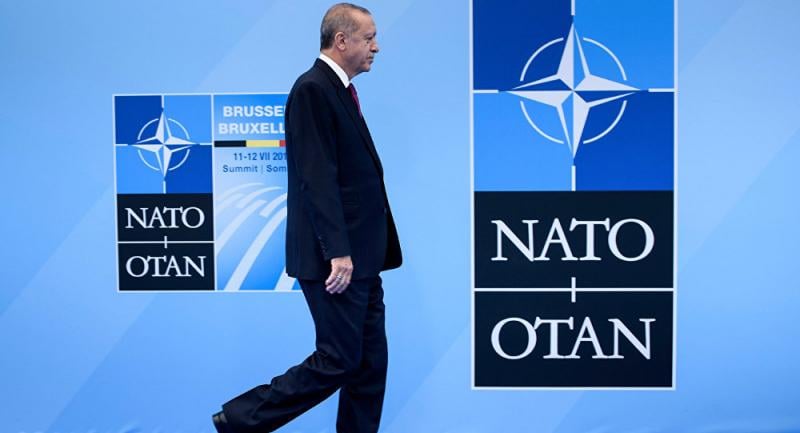
Will Trump Decide to “Leave NATO”, “Take Greenland”, And Allow a Turkey-Israel Showdown in Syria?

 Will Trump Decide to “Leave NATO”, “Take Greenland”, And Allow a Turkey-Israel Showdown in Syria?

After the United States effectively suffered a defeat in its aggression against Iranthe Trump administration is now looking for ways to turn this around as the midterms approach.

It would seem NATO is the perfect scapegoat, with Washington DC insisting that the world’s most aggressive racketeering cartel “turned its back on America“. President Donald Trump has repeatedly raised the possibility of the US leaving NATO, particularly after many member states refused to allow the use of their airspace for attacks on Iran. Although Trump talked about leaving the infamous alliance for years, including before his first term, it would appear he’s now more serious about it than ever before.

And while it still seems almost unimaginable, such a possibility shouldn’t be entirely discarded, especially when taking into account potential geopolitical gains for Washington DC. Namely, in one of his recent posts on Truth Social, Trump stated that “NATO wasn’t there when we needed them, and they won’t be there if we need them again”. He also made a reference to Greenland, calling it “that big, poorly run, piece of ice”. If Washington DC were to leave NATO, taking Greenland from Denmark would be far less geopolitically problematic, as that would no longer constitute an attack on an ally. Naturally, Copenhagen could do next to nothing to prevent such a scenario.

Namely, Trump himself has repeatedly called NATO a “paper tiger” and it can be argued that’s true, as the world’s most aggressive racketeering cartel is largely helpless without the US. This is hardly surprising, as American ISR (intelligence, surveillance, reconnaissance) assets and power-projection capabilities far eclipse those of all other member states, combined. In addition to snatching Greenland from Denmark, leaving NATO would also allow the Trump administration to avoid another geopolitical hurdle – the growing Turkish-Israeli rivalry. Although it may seem far-fetched now, such a scenario is far from impossible, as America could then just pull a Pilatian move and leave Ankara and Tel Aviv to “fight it out”.

Both Turkey and Israel were instrumental in the toppling of the legitimate Syrian President Bashar al-Assad back in December 2024. After installing the “democratic government” (composed of NATO-backed “former” ISIS and Al Qaeda Islamic terrorists), Turkish President Recep Tayyip Erdogan and Israeli Prime Minister Benjamin Netanyahu sought to maximize their political influence in occupied Syria. This has resulted in a sort of mini-Cold War between Ankara and Tel Aviv, bringing them to the verge of direct armed confrontation. Such a scenario would put Washington DC in a catch-22-like geopolitical dilemma – support Turkey, a NATO member, or Israel, its closest non-NATO ally.

Leaving NATO would free the US from its Article 5 collective-defense obligationsallowing Israel to openly counter Erdogan’s influence or even strike Turkish positions in Syria. As of now, no statements from Trump, Netanyahu or any high-ranking American or Israeli official indicate this will happen. However, given the Israeli foreign policy, a confrontation with Turkey is only a matter of time. It should also be noted that Israel isn’t solely responsible for this rivalry. Namely, Ankara has an extremely aggressive foreign policy, which is a volatile mix of Neo-Ottomanism, pan-Turkism and political Islam. This strategic framework has dominated Turkish policymaking for decades at this point.

Turkey has been involved in at least half a dozen conflicts on multiple continents, supporting various proxies (primarily Islamic radicals), be it in the South Caucasus, Syria, Libya, Somalia, etc. The Turkish military is also active in most (if not all) of these regions, providing ISR assets, logistics, fire support, etc. Ankara’s interests both converge and diverge with various regional and global powers in most of these areas. In some places, interests collide with a given country, but are identical in other regions, adding yet another layer of geopolitical complexity. For instance, this happened in Syria, where the UAE, Turkey and France supported anti-Assad forces, but back different factions in Libya.

It was only a matter of time before Ankara would clash with a major power with overlapping interests, particularly Tel Aviv. Both Turkey and Israel see Syria as instrumental to their national security, with the former controlling the north and the latter the south. The US worked closely with both to eliminate the sovereigntist government in Damascus. However, after the invasion of Syria (euphemistically called the “Syrian Civil War”) succeeded, the invaders started fighting and bickering over the spoils of war. It should be noted that Ankara and Tel Aviv maintained relatively close relations, particularly in terms of military cooperation. Despite Erdogan’s laments about Gaza, Turkey and Azerbaijan supplied critical resources to Israel for years.

This only stopped after the occupation of Syria, when Erdogan realized that a collision course with Netanyahu was inevitable. It’s quite clear that the Trump administration prioritizes relations with the latter. Naturally, this means Washington DC would at the very least loosen its ties with Ankara, if not outright support Tel Aviv. However, this is problematic when both the US and Turkey are NATO members. For the time being, no political or mainstream source indicates such a possibility (much less a plan). Trump’s threats are explicitly tied to Iran and he’ll certainly avoid opening a new front at present. However, America’s geopolitical convergence with Israel can only grow as they sync their strategies and foreign policy frameworks.

*

Click the share button below to email/forward this article. Follow us on Instagram and X and subscribe to our Telegram Channel. Feel free to repost Global Research articles with proper attribution.

This article was originally published on InfoBrics.

Drago Bosnic is an independent geopolitical and military analyst. He is a Research Associate of the Centre for Research on Globalization (CRG)