Theme images by kelvinjay. Powered by Blogger.

This is war propaganda

This is war propaganda
A 2013 Mondoweiss article exposing how war propaganda gets a "makeover". The same military action is rebranded for media: "targeted operation" instead of "bombing", "self-defense" instead of "aggression". Goal: reshape public perception and sell the war.

COVERT WAR ON TERROR Yemen: reported US covert action 2012

COVERT WAR ON TERROR Yemen: reported US covert action 2012
2012 report on reported US covert operations in Yemen as part of the "War on Terror". The article discusses secret military actions, drone strikes, and how they were covered in media. Source: bladalarb.blogspot.com

CALL FOR INTERNATIONAL SOLIDARITY

CALL FOR INTERNATIONAL SOLIDARITY
CALL FOR INTERNATIONAL SOLIDARITY Article from Brussels Tribunal calling on global activists, intellectuals, and movements to unite in solidarity with Iraq and against occupation. Source: brussellstribunal.org

Saddam’s VP, Izzat ad-Douri: Maliki follows Iran’s agenda to divide Iraq /Video)

Saddam’s VP, Izzat ad-Douri: Maliki follows Iran’s agenda to divide Iraq /Video)
2013 video statement by Saddam's former VP Izzat ad-Douri. He accuses PM Maliki of following Iran's agenda to divide Iraq. Source: bladalarb.blogspot.com

BOOKS ON IRAQ

BOOKS ON IRAQ
click Pic.

The US War crimes on Iraq

The US War crimes on Iraq
How much they hate Iraq and why?

War in Mali : STOP THIS

War in Mali : STOP THIS
CLICK PHOTO

War in Syria : STOP THIS

War in Syria : STOP THIS
CLICK PHOTO

Welcome to Kuala Lumpur Foundation to Criminalise War

Welcome to Kuala Lumpur Foundation to Criminalise War
Kuala Lumpur Foundation to Criminalise War The Foundation promotes justice and accountability for war crimes. It seeks to bring political and military leaders responsible for aggression and crimes against humanity to an international tribunal.

Criminalize War - War is about killing, massive killing

Criminalize War - War is about killing, massive killing
A - List of killed Iraqi academics

"Kill Anything That Moves"

"Kill Anything That Moves"
Military Doctrine Began in Vietnam

How the Pentagon is hiding the dead The secret campaign to undercount the ‘war on terror’ death tol

How the Pentagon is hiding the dead The secret campaign to undercount the ‘war on terror’ death tol
CLICK The PIC

U.S. Officials Guilty of War Crimes

U.S. Officials Guilty of War Crimes
for the Iraq War

The Massacre of Al-Amiriyah Shelter Remembered – 2/10/13

The Massacre of Al-Amiriyah Shelter Remembered – 2/10/13
click Pic

PILOTS FOR 9/11 TRUTH

PILOTS FOR 9/11 TRUTH
Now available

US War Crimes

US War Crimes
Coverup of Extensive War Crimes

Barack Obama : A Gigantic Fraud upon the American People

Barack Obama : A Gigantic Fraud upon the American People
Clik Pict.

The victims of Fallujah's health crisis are stifled by western silence

The victims of Fallujah's health crisis are stifled by western silence
To research a possible link between US bombardment and rates of birth defects and pediatric cancer in Iraq is a moral imperative

If Americans Knew

If Americans Knew
UN Resolutions Targeting Israel and the Palestinians

40% of Palestinian Children Detained by Israel Sexually Abused; Virtually All Tortured

40% of Palestinian Children Detained by Israel Sexually Abused; Virtually All Tortured
Click Pict.

The Iraq War began when

The Iraq War began when
CLICK PC.

Israeli soldiers raid Al Aqsa courtyard, attack worshipers

Israeli soldiers raid Al Aqsa courtyard, attack worshipers
CLICK The PIC

#CrowdActivism 911 Mass Arrests!

#CrowdActivism 911 Mass Arrests!
Click for RAW Evidence DECIDE *now*!

War Crimes Are US

War Crimes Are US
Depleted Uranium weapons: Why shouldn’t it be a war crime to poison civilians with radiation?

The Iraqi weapons of mass destruction

The Iraqi weapons of mass destruction
Found at last! After searching for 10 years, the Iraqi weapons of mass destruction have finally been found – in Syria

The Mother of All Battles The Endless U.S.-Iraq War

The Mother of All Battles The Endless U.S.-Iraq War
Book by Jeff Archer

MASS Graves uncovered accidentally unveiling true dangers of iranian backed militias in iraq

MASS Graves uncovered accidentally unveiling true dangers of iranian backed militias in iraq
REPORT Foreign Relations Bureau - Iraq - United Kingdom

Get the REAL DEAL

CLICK TO VISIT

operation iraqi freedom

operation iraqi freedom
click PC

LIST OF KILLED IRAQI ACADEMICS

LIST OF KILLED IRAQI ACADEMICS
ASSASSINATED IRAQI MEDIA PROFESSIONALS

International Lawyers Seek Justice for Iraqis

International Lawyers Seek Justice for Iraqis
Sabah al-Mukhtar is the president of the Arab Lawyers Association and chair of the Iraq Commission

A World Appeal to Anti-war Forces: STAND WITH IRAQ!

A World Appeal to Anti-war Forces: STAND WITH IRAQ!
click the photo

Engineering solution for Radioactive Waste in IRAQ

Engineering solution for Radioactive Waste in IRAQ
Engineering Solution for Radioactive Waste in IRAQ

Wikileaks Iraq: data journalism maps every death

Wikileaks Iraq: data journalism maps every death
Iraq war logs release has dumped some 391,000 records

Report on Status of Iraq

Report on Status of Iraq
Government War Crimes in Anbar Province

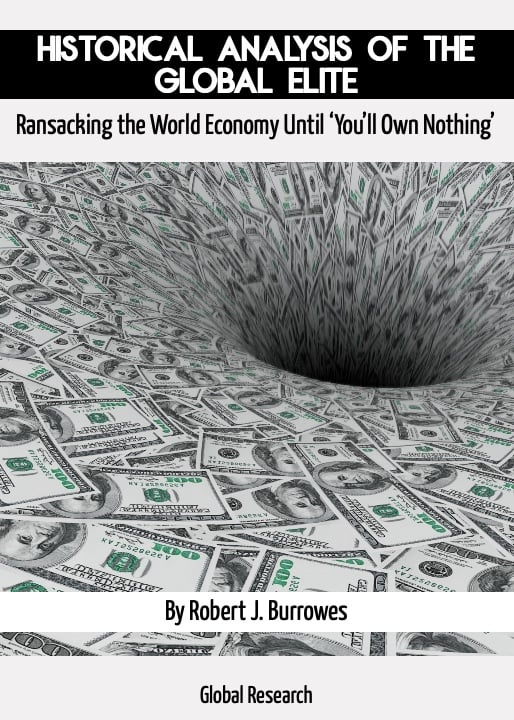
Historical Analysis of the Global Elite: Ransacking the World Economy Until ‘You’ll Own Nothing.’

COVERT WAR ON TERROR Yemen: reported US covert action 2012

COVERT WAR ON TERROR Yemen: reported US covert action 2012

Sir Henry Kissinger: Midwife to New Babylon

Sir Henry Kissinger: Midwife to New Babylon
The moment Kissinger’s last breath left his corpse, media commentators lost no time running out the gates, either singing songs of slavish praise about the “great liberal statesman”clik Pict.

Action in Ghent 16 March. 7000 posters were distributed by 70 volunteers. A lot of "Justice For Ira

Beyond Torture U.S. Violations of Occupation Law in Iraq

Beyond Torture U.S. Violations of Occupation Law in Iraq
A report by the Center for Economic and Social Rights

Iraqi Children: Deprived Rights, Stolen future

Iraqi Children: Deprived Rights, Stolen future
click PIC

Syria News - August 16, 2013 (Warning: Graphic Videos)

Syria News - August 16, 2013 (Warning: Graphic Videos)
Local Coordination Committees of Syria + Videos

Letter From Yemen by Felicity Arbuthnot + Defining Drone Deaths in Yemen

Handwritten letter from President Saddam Hussein to the American people. 7 July 2006.

Handwritten letter from President Saddam Hussein to the American people. 7 July 2006.
To the American people:

Saddam Hussein refuses to sell out Iraq.

Saddam Hussein refuses to sell out Iraq.
Saddam Hussein refuses to sell out Iraq. Egyptian Magazine publishes transcript of meeting in prison between Saddam Hussein and Donald Rumsfeld.

Report On Israeli Human Rights Violations

Report On Israeli Human Rights Violations
Weekly Report On Israeli Human Rights Violations in the Occupied Palestinian Territory (23 - 29 May 2013)

Weekly Report On Israeli Human Rights Violations in the Occupied Palestinian Territory (05 - 12 Jun

Weekly Report On Israeli Human Rights Violations in the Occupied Palestinian Territory (05 - 12 Jun
The Palestinian Centre for Human Rights (PCHR)

IRAKDOSSIER in DE WERELD MORGEN: verschillende Engelstalige artikels die op deze website staan, wer

We've moved on from the Iraq war – but Iraqis don't have that choice

We've moved on from the Iraq war – but Iraqis don't have that choice

John Pilger

26iraqi-children-take-cover-008.jpg
Iraq's ministry of social affairs estimates 4.5 million children have lost one or both parents. This means 14% of the population are orphans. Photograph: Reuters


Like characters from The Great Gatsby, Britain and the US have arrogantly turned their backs and left a country in ruins

May 26, 2013

The dust in Iraq rolls down the long roads that are the desert's fingers. It gets in your eyes and nose and throat; it swirls in markets and school playgrounds, consuming children kicking a ball; and it carries, according to Dr Jawad Al-Ali, "the seeds of our death". An internationally respected cancer specialist at the Sadr teaching hospital in Basra, Dr Ali told me that in 1999, and today his warning is irrefutable. "Before the Gulf war," he said, "we had two or three cancer patients a month. Now we have 30 to 35 dying every month. Our studies indicate that 40 to 48% of the population in this area will get cancer: in five years' time to begin with, then long after. That's almost half the population. Most of my own family have it, and we have no history of the disease. It is like Chernobyl here; the genetic effects are new to us; the mushrooms grow huge; even the grapes in my garden have mutated and can't be eaten."
Along the corridor, Dr Ginan Ghalib Hassen, a paediatrician, kept a photo album of the children she was trying to save. Many had neuroblastoma. "Before the war, we saw only one case of this unusual tumour in two years," she said. "Now we have many cases, mostly with no family history. I have studied what happened in Hiroshima. The sudden increase of such congenital malformations is the same."
Among the doctors I interviewed, there was little doubt that depleted uraniumshells used by the Americans and British in the Gulf war were the cause. A US military physicist assigned to clean up the Gulf war battlefield across the border in Kuwait said, "Each round fired by an A-10 Warhog attack aircraftcarried over 4,500 grams of solid uranium. Well over 300 tons of DU was used. It was a form of nuclear warfare."
Although the link with cancer is always difficult to prove absolutely, the Iraqi doctors argue that "the epidemic speaks for itself". The British oncologist Karol Sikora, chief of the World Health Organisation's cancer programme in the 1990s, wrote in the British Medical Journal: "Requested radiotherapy equipment, chemotherapy drugs and analgesics are consistently blocked by United States and British advisers [to the Iraq sanctions committee]." He told me, "We were specifically told [by the WHO] not to talk about the whole Iraq business. The WHO is not an organisation that likes to get involved in politics."
Recently, Hans von Sponeck, former assistant secretary general of the United Nations and senior UN humanitarian official in Iraq, wrote to me: "The US government sought to prevent WHO from surveying areas in southern Iraq where depleted uranium had been used and caused serious health and environmental dangers." A WHO report, the result of a landmark study conducted with the Iraqi ministry of health, has been "delayed". Covering 10,800 households, it contains "damning evidence", says a ministry official and, according to one of its researchers, remains "top secret". The report says birth defects have risen to a "crisis" right across Iraqi society where depleted uranium and other toxic heavy metals were used by the US and Britain. Fourteen years after he sounded the alarm, Dr Jawad Al-Ali reports "phenomenal" multiple cancers in entire families.
Iraq is no longer news. Last week, the killing of 57 Iraqis in one day was a non-event compared with the murder of a British soldier in London. Yet the two atrocities are connected. Their emblem might be a lavish new movie of F Scott Fitzgerald's The Great Gatsby. Two of the main characters, as Fitzgerald wrote, "smashed up things and creatures and retreated back into their money or their vast carelessness … and let other people clean up the mess".
The "mess" left by George Bush and Tony Blair in Iraq is a sectarian war, the bombs of 7/7 and now a man waving a bloody meat cleaver in Woolwich. Bush has retreated back into his Mickey Mouse "presidential library and museum" and Tony Blair into his jackdaw travels and his money.
Their "mess" is a crime of epic proportions, wrote Von Sponeck, referring to the Iraqi ministry of social affairs' estimate of 4.5 million children who have lost one or both parents. "This means a horrific 14% of Iraq's population are orphans," he wrote. "An estimated one million families are headed by women, most of them widows". Domestic violence and child abuse are rightly urgent issues in Britain; in Iraq the catastrophe ignited by Britain has brought violence and abuse into millions of homes.
In her book Dispatches from the Dark Side, Gareth Peirce, Britain's greatest human rights lawyer, applies the rule of law to Blair, his propagandist Alastair Campbell and his colluding cabinet. For Blair, she wrote, "human beings presumed to hold [Islamist] views, were to be disabled by any means possible, and permanently … in Blair's language a 'virus' to be 'eliminated' and requiring 'a myriad of interventions [sic] deep into the affairs of other nations.' The very concept of war was mutated to 'our values versus theirs'." And yet, says Peirce, "the threads of emails, internal government communiques, reveal no dissent". For foreign secretary Jack Straw, sending innocent British citizens to Guantلnamo was "the best way to meet our counter-terrorism objective".
These crimes, their iniquity on a par with Woolwich, await prosecution. But who will demand it? In the kabuki theatre of Westminster politics, the faraway violence of "our values" is of no interest. Do the rest of us also turn our backs?
www.johnpilger.com
Source 


Exclusive: Friend of Michael Adebolajo arrested at BBC studios requests investigation into MI5 role in torture and harassment

Exclusive: Friend of Michael Adebolajo arrested at BBC studios requests investigation into MI5 role in torture and harassment

CagePrisoners

28cpx96ca90b9_xl.jpg
May 28, 2013

In an interview to the BBC, Abu Nusaybah  revealed that his friend Michael Adebolajo had allegedly been harassed by British security agencies and tortured in Kenya with their knowledge. Arrested immediately after the interview, he is currently held in police custody.

From there, he wrote a formal complaint to the Chairman of the Intelligence and Security Committee, urging him to investigate their treatment of Michael Adebolajo prior to the killing of last week. He also reiterates his innocence, explaining that he believed his arrest had been ordered by intelligence services since he made this information public.
He writes: "I am of the firm belief that the two fundamental factors that effected my friend's behavior up until this point have been given insufficient attention in the press.
It is my belief that the first factor was the systematic torture and sexual abuse he was subjected to by Kenyan troops (...). Michael was told by his captors that this action by them was at the behest of the UK authorities (...).
To add insult to injury, after his return to the UK, he informed me that he was subjected to further harassment and intimidation from security services in order to pressurise him into working for them as an agent, which to him would constitute a betrayal of his own community (...).
I implore you to use the forthcoming sitting of your committee as an opportunity to both scrutinise and hold to account the security services so that they may not be a contributory factor in tragic incidents like this anymore.
He concludes: "I am witness that the Michael I knew ceased to exist after his treatment in Kenya; though the assertion is shocking, unfortunately it would not be a unique event in the annals of UK security service."
Read Abu Nusaybah's full letter here Source 

Israel Decimates Village, Leaving Many Homeless Including 24 Children

Israel Decimates Village, Leaving Many Homeless Including 24 Children

Palestine News Network

28dn-article5_copy_340_220.jpg
May 28, 2013

The village of Atteer Um al-Hieran is considered an "unrecognized" village by the Israeli occupation, and has experienced home demolitions in the past, in 2007. But this week, residents say, 600 Israeli officers came and "destroyed everything".

The village is home to around fifty people, half of them children. All of the residents are now homeless, with no accommodation made by the Israeli occupation who destroyed their homes.

One 18-year old resident of the village, Nour Abu al-Qian, told reporter Jillian Kestler D'Amours, "This time, they destroyed everything." According to a report by Kestler D'Amour in "The Electronic Intifada", Nour, who witnessed the demolition from beginning to end, said residents had no time to take their belongings out of their homes before the demolitions were carried out.

Kestler D'Amours continues, "Nour now sleeps in a makeshift tent with four of his siblings; inside the tent, thin mats and blankets were piled on cinderblocks, gathering dust as the wind swept through the village. 'It's very difficult. But we will rebuild the houses. We will remain here,' he said."

The Israeli occupation, since 1948, has refused to recognize the Bedouin villages that have been in place in the Negev desert for hundreds of years. Instead, the occupation has forcibly transferred tens of thousands of indigenous Arab Bedouins into government-run townships that are rife with poverty and disease, and have few basic services. One of the most well-known of these townships was constructed by the Israeli government adjacent to the city dump of Jerusalem.

The Israeli government recently approved a plan to forcibly remove the remaining two dozen "unrecognized villages" of Bedouins, along with a plan for housing developments, businesses and shopping centers in place of the villages.

Source 

After five years of British drone strikes, five basic facts we are simply not allowed to know

After five years of British drone strikes, five basic facts we are simply not allowed to know

By Chris Cole

May 28, 2013

Five years ago this week the first British drone strike took place somewhere in Afghanistan.  Like the more than 380 British drone strikes since, details of that first strike remain shrouded in secrecy.

Although we don’t know the exact day (all the MoD reported at the time was that it had taken place 'in the past week’), subsequent MoD reports have dated UK drones strikes back to late May 2008.  The location of the strike, why it occurred and, if anyone was killed, who they were, all remain secret.
In the five years since, the Ministry of Defence has refused to answer many questions about its use of armed drones.  Freedom of Information requests and questions asked by MPs in the House of Commons have been repeatedly refused on security grounds or that to answer would endanger our relationship with another state (no prizes for guessing who that is).
There are many important ethical and legal questions about the growing use of armed drones.  However these wider questions can only be addressed by having access to basic information about how drones are actually being used on a day-to-day basis. As we reach the important milestone of five years of British drone strikes, here are five basic facts we are not allowed to know about the UK’s use of armed drones.
–//–
1)  Where do UK drone strikes take place?
This is a pretty basic question, but we don’t officially know where the British Reaper drones actually operate within Afghanistan.  Some sources have told us unofficially that UK drones only operate within Helmand Province where British troops are based.  However other sources  have also told us, again off the record, that they operate throughout Afghanistan.  The MoD has refused to answer our Freedom of Information request about the location of UK drone strikes in Afghanistan.
It should be noted that multiple sources have reported that the UK’s Reaper drones are based at Kandahar airport which is in Kandahar Province.
One of the UK’s primary justification for using armed drones is the protection of British troops.  While there are some British troops at the airbase in Kandahar and in the capital, Kabul, the overwhelming majority are in Helmand.  If UK armed drones are operating outside Helmand province, they are more than likely engaged in different tasks than force protection.  If they are just operating within Helmand, why are we not allowed to know?
 2)  How many people have been killed in British drones strikes and who are they?
There are no public figures for the number of people killed in British drone strikes, let alone details about who they were or why they were killed.  Across the border in Pakistan there are casualty figure compiled by the Bureau of Investigative Journalism from a variety of reliable sources that show between 2,500 and 3,500 people have been killed in 366 US drone strikes.  However  because of the lack of media and independent NGOs on the ground in Afghanistan there are no such reports.
In December 2010 David Cameron reportedly told journalists that 124 insurgents had been killed by British drone strikes in Afghanistan.  Later however, the Ministry of Defence said that there were unable to find a record of the PM making such a statement (although the MoD also states that this does not mean the PM didn’t say it just that there is no official record of him saying it).
Following a NATO inquiry into an airstrike in March 2011, the MoD acknowledged that a weapon launched from one of its Reaper drones  had killed 4 civilians and injured two others as well as killing two insurgents.  While the MoD regularly states that this is the only time that civilians have been harmed in its drone strikes in Afghanistan, it also regularly states that it cannot know how many people have been killed in its drone strikes.
Responding to one of our FoI requests, the MoD confirmed that it carries out what it calls a "post-strike assessment" after each drone strike.   However the MoD refuses to give details saying that "for reasons of operational security we are not prepared to comment on the assessed numbers of insurgents killed/wounded in Reaper strikes."
3)  What is the balance between pre-planned strikes and those launched 'on the fly’?
Perhaps the key question relation to the use of armed drones is whether they are lowering the threshold to lethality in general and, in particular, whether their ability to loiter over areas looking for suspicious behaviour and 'targets of opportunity’ is leading to more air strikes.
RAF Reaper being readied for a mission in Afghanistan
The MoD flatly refuses to give details of the circumstances and reasons for launching drone strikes.  However it is hard to see why the MoD won’t release information about the balance of strikes that are launching under daily tasking orders (i.e. pre-planned) and those that are launched under dynamic tasking procedures (i.e. those 'on the fly’).  Indeed  the MoD have insisted to the Information Commissioner when we appealed this refusal that they wouldn’t give the reason why they wouldn’t tell us!   We are pursuing this refusal to an Information Tribunal.
4)  How accurate are British drone strikes? 
Proponents of drone strikes argue they are ethical because they can be much more precise than strikes from manned aircraft.  Their ability, they argue, to loiter over targets waiting until potential 'collateral damage’ is minimised makes them much better than old-fashioned manned aircraft.  This would perhaps be hard to argue with if it were true.  The problem is that we simply do not know if it is true or not.  Many people appear to accept the 'drones are pinpoint accurate’ argument without any data or information.
Weapons accuracy is measured in Circular Error Probability (CEP).  Under test conditions, a number of weapons are launched and a circle is drawn around the impact point of the 50% of the weapons that hit closest to the target (the 50% that landed further away are simply ignored).The radius of the circle is given as the CEP of that particular weapon.
Tom Watson MP asked the Defence Secretary in January 2013 how many times weapons launched from British Reaper drones had fallen outside their given CEP but again this information has been refused.  In addition requests for information about the actual CEP of the weapons, their blast radius and indeed whether the thermobaric variant of Hellfire missiles have been launched from  British Reaper drones have all been refused.
5)  Has the UK engaged in targeted killing with drones in Afghanistan?
Within Afghanistan, it appears that the UK may have used its Reaper drones to carry out targeted killings using Reaper drones although due to the lack of transparency it has not been possible to confirm this.
We know from published RAF operational updates that UK Reapers have tracked what they called "high value" insurgents for many hours before finally launching weapons.  Although the use of force in Afghanistan has been authorised by the UN and International Humanitarian Law (IHL)therefore applies, insurgents in Afghanistan are not members of uniformed armed forces and their status as combatants under IHL remains unclear. While individuals fighting in Afghanistan may be targeted while directly participating in hostilities, targeting killings take place away from the battlefield.
While UK Rules of Engagement are secret, it should be possible for the UK to confirm or deny whether it has carried out targeted killings in Afghanistan, particularly if the UK believes it is has the legal authority to do so under IHL.
– // –
Five years after the first British drone strike in Afghanistan there continues to be huge controversy surrounding the use of armed drones.  As the MoD say themselves in their publication The UK Approach to Unmanned Aircraft Systems:
"It is essential that, before unmanned systems become ubiquitous (if it is not already too late) that we consider this issue and ensure that, by removing some of the horror, or at least keeping it at a distance, that we do not risk losing our controlling humanity and make war more likely." (Para. 517)   
The passage concludes "What is needed is a clear understanding of the issues involved so that informed decisions can be made."  This 'clear understanding of the issues’ can only be aided by more transparency about how Britain’s Reaper drones are actually being used in Afghanistan.
So far only three countries - the Unites States, Israel and the UK - are known to have used unmanned drones to launch armed attacks.  Many fear that this is just the tip of the iceberg however, and the proliferation of this technology will lead to multiple countries carrying out remote armed attacks with obvious implications for global peace and security.
We believe that as one of only a tiny number of countries to use armed drones, the UK has a moral duty to be much more transparent about its use of this technology.
In addition, information about the basic day-to-day use of armed drones by British forces would go a long way to help those around the globe – lawyers, politicians, military commanders, academics and ordinary members of the public  - answer the hugely important ethical, moral and legal questions that surround this new way to wage war.    The UK must answer our basic questions.


Food Justice: Monsanto, Factory Farming, and Beyond

Food Justice: Monsanto, Factory Farming, and Beyond

Mickey Z.

28food-justice-photo.jpg
Photo credit: Mickey Z.

May 28, 2013
"In nature's economy, the currency is not money, it is life."
- Vandana Shiva
On May 25, 2013, millions marched against Monsanto across the globe. I took part here in New York City, of course, and was fortunate to have the opportunity to lead a teach-in called: "Food Justice, GMOs, & the Vegan Option (Eat Like a Revolutionary)."
The ostensible goals of this event included:
  • Present GMOs as much more than a single issue.
  • Suggest that GMOs offer a powerful entry point for outreach to the mainstream.
  • Provide facts to be used for such outreach.
  • Explain why there’s more to food justice than screaming "Fuck Monsanto." 
At the request of those who attended the teach-in, I’ve compiled some of the material in an article of sorts. This is not meant to be the definitive word on any of these topics. Rather, I strongly encourage all readers to follow-up with their own research and, of course, share what they find.
Monsanto 101
Monsanto is not a food company.
Monsanto a chemical company that made its name, for example, selling saccharin to Coca-Cola and Agent Orange to U.S. military. Its products also include PCBs, dioxin, DDT, and rBGH.
Monsanto records annual sales of roughly $11.8 billion and operates 404 facilities in 66 countries, over 6 continents with products grown on more than 282 million acres worldwide.
Monsanto is one of three corporations (along with DuPont and Syngenta) that control 70 percent of the global seed market -- aiming for monopoly power over the planet’s food and water supplies.
GMO 101
GMO is short for "genetically modified organism" and is the result of corporate scientists taking genes from one species and inserting them into another species in an attempt to obtain a desired trait or characteristic. GMOs are also known as "transgenic organisms" and the process is often called "genetic engineering" or GE.
Examples of genetic engineering include:
  • Inserting spider genes into goat DNA in an attempt to produce goat milk that contains spider web protein to be used in the manufacturing of bulletproof vests.
  • Arctic fish gene spliced into tomatoes and strawberries to make them tolerant to frost.
  • Potatoes that will glow in dark when they need water.
All this and so much more is happening even though, as any non-corporate scientist can tell you, our current understanding of the way DNA works is extremely limited. Any change to DNA can have side effects that are impossible to predict or control. Still, the industry forges on, e.g. 94 percent of soy is GM, 90 percent of cotton, 88 percent of corn, and 95 percent of sugar beets.
Reality: 80 percent of processed food contains at least one GM ingredient. 
Monsanto Protection Act
For those who seek solace in oversight, be warned: the U.S. Food and Drug Administration (FDA) does not require a single safety study, does not mandate the labeling of GMOs, and allows companies to put GM foods onto the market without even notifying the agency.
You might even say we are the test.
GMOs were introduced into the American food supply in 1996 and within nine years, the percentage of Americans with three or more chronic illnesses jumped from 7 percent to 13 percent while food allergies skyrocketed.
Which brings us to what is euphemistically known as the "Monsanto Protection Act." Thanks to the Farmer Assurance Provision, Section 735, of the recently passed spending bill, even if an individual or group were to bring suit against a GM company, no action could be taken until an "Environmental Impact Statement" (EIS) is compiled -- and this typically takes years.
Translation: The product suspected to be dangerous stays on the market until the EIS inevitably declares it safe.
"Safe?"
GMOs are bad for the environment. GMOs, explains Greenpeace, "can spread through nature and interbreed with natural organisms, thereby contaminating non-GE environments and future generations in an unforeseeable and uncontrollable way. Their release is genetic pollution and is a major threat because GMOs cannot be recalled once released into the environment." 
Most GM crops are engineered to be "herbicide tolerant." This is why Monsanto sells Roundup Ready crops, designed to survive their Roundup herbicide. As a result, between 1996 and 2008, U.S. farmers sprayed an extra 383 million pounds herbicide on GM crops and the overuse of Monsanto’s Roundup herbicide creates what are called "superweeds," and thus, even more herbicide is used in the futile attempt to control this cycle. 
GMOs interbreed with natural organisms, contaminating non-GE environments. Again: once genetic pollution is released into nature, it cannot be recalled. 
GMOs are not the answer to world hunger. The 2008 Friends of the Earth report, "Who Benefits From GM Crops," sums it up well: "The majority of GM crops are not destined for hungry people in developing countries, but are used to feed animals, generate biofuels, and produce highly processed food products -- mainly for consumption in rich countries. GM crops have not increased food security for the world's poor. None of the GM crops on the market are modified for increased yield potential and research continues to focus on new pesticide-promoting varieties that tolerate application of one or more herbicides." 
Companies like Monsanto seeks only profit and control. In my 2010 interview with journalist Marie-Monique Robin, she told me: "Monsanto is the world leader in biotechnology and the first seed company. Ninety percent of the GMOs grown in the world belong to it. During the last decade, the firm bought dozens of seed companies all over the world, pushing its transgenic seeds, which are patented. A patented seed means that the farmers who grow it may not keep a part of his crops to re-sow it, the next year, as farmers used to do everywhere in the world. In the United States and Canada, farmers who grow transgenic crops must sign a 'technology agreement.' The no-sowing requirement is clearly expressed. If they don't respect the agreement and violate the patent, they are harassed by the 'gene police' and sued by Monsanto. Clearly transgenic crops are just a tool to control the seeds supply -- which is the first link in the food chain -- by forcing farmers to buy seeds each year." 
Seed monopolies = 250,000 farmers to commit suicide in India alone.
Next from Monsanto: Gene Use Restriction Technologies (GURTS).
Some radical food choices…
Obviously, we need to do more than talk and listen and learn. We have to put into practice the kind of world we want. In terms specific to GMOs, we can:
  • Avoid buying 'em and instead opt for fresh, local, organic non-GMO, non-processed food from farmers markets.
  • Label 'em ourselves.
  • Organize non-GMO seed banks/local swaps/seed bomb events.
  • Start or join a Community Supported Agriculture (CSA) initiative.
  • Grow our own organic non-GMO food everywhere: window boxes, balconies, community garden, rooftops, fire escapes, etc.
  • Choose food not lawns.
FYI: The single most irrigated crop in the U.S. is lawn.
Instead of gardens, we have 40 million acres of lawn from sea to overfished sea. Americans spend $40 billion per yea on seed, sod, and chemicals; one-third of all residential water use in the United States goes to lawns; and lawns require ten times more chemicals per acre than industrial farmland.
"If the Bill of Rights contains no guarantee that a citizen shall be secure against lethal poisons distributed either by private individuals or by public officials," wrote Rachel Carson some five decades ago, "it is surely because our forefathers … could conceive of no such problem."
We now produce pesticides at a rate more than 13,000 times faster than we did when Carson wrote Silent Spring in 1962. The EPA considers 30 percent of all insecticides, 60 percent of all herbicides, and 90 percent of all fungicides to be carcinogenic, yet Americans spend about $7 billion on 21,000 different pesticide products each year. 
How have we reached this point? One reason is that we’ve opted to blindly trust the morally indefensible and scientifically fraudulent institution of animal experimentation.
This is but one way our speciesist culture intersects with Monsanto. Also, 65 percent of grains -- the vast majority of which is GM -- are fed to the 53 billion land animals murdered for "food" each year.
FYI: These animal "food" products are also not labeled as GE.
For activists to know all this and still consume animal products is at the very least denial and at the very most: sheer hypocrisy.
The most radical food choice…
The vast majority of food we consume involves GMOS, unspeakable animal cruelty, exploited human labor, a human health holocaust, higher profits and more control for the 1%, and irreversible environmental degradation.
Translation: Every time you order a pizza to one of your rallies or get a quick bite at McDonalds (or any such death emporium) or opt to chow down on Ben & Jerry’s because the owners are so "progressive," or plan a turkey dinner for climate change victims, you are voting with your meager dollars for GMOs, unspeakable animal cruelty, exploited human labor, a human health holocaust, higher profits and more control for the 1%, and irreversible environmental degradation. 
What kind of irreversible environmental degradation, you ask? Let’s begin with this: The number one source of human-created greenhouse gases is the global animal by-products industry -- factory farming, the meat-and-dairy-based diet.
More:
  • We lose nearly 7 billion tons of topsoil every year and 75 percent of the original U.S. topsoil is already gone. Without nutrient-rich topsoil, human life will vanish... and guess what’s causing 85 percent of this topsoil erosion: livestock raising and feedcrops.
  • 200,000 acres rainforest are destroyed every single day and 70 percent of previous forested land in the Amazon is now pastures or feedcrops for doomed livestock. Every time you eat a burger sourced from the rainforest, you are responsible for 700 pounds of living matter being destroyed: 20-30 plant species; 100 insect species; and of dozens reptiles, birds, and mammals.
  • The land used to raise animals for "food" is 10 billion acres. Livestock production consumes 70 percent of all agricultural land, which translates into one-third of the land surface on the planet.
Let’s re-cap: Each year, 65 percent of untested GM grains are fed to 53 billion doomed land animals in an industry that eats up one-third of the land surface on the planet and is the number one source of human-created greenhouse gases.
Translation: Going vegan is a lot more than just tofu recipes.
It’s even more than barbarism like: veal crates, vivisection, battery cages, slaughterhouses, whaling ships, carriage horses, dogfight rings, fur farms, zoos, circuses, and rodeos.
It’s also about (among many other things): workplace justice, torture, health care, deforestation, overfishing, poverty, habitat loss, ocean dead zones, corporate welfare, and GMOs. 
Most of all, embracing veganism and animal rights is more than a boycott, a diet, or a lifestyle option. It is a surrendering of a privilege and that privilege is called "speciesism." Every time someone voluntarily surrenders a privilege, it is an act of revolution. Thus, veganism and animal rights are part of a liberation movement, recognizing that animals are not property, products, or commodities. 
Angela Davis, someone who knows a thing or two about challenging privilege, has declared her vegan status to be "part of a revolutionary perspective -- how we not only discover more compassionate relations with human beings but how we develop compassionate relations with the other creatures with whom we share this planet." 
At your next sign-making party: Recognize that Monsanto is far from only corporation killing planet via food industry and consider… 
Tyson Foods, which became the world's largest poultry and red meat provider after buying Iowa Beef Processors, Inc. (IBP) in 2001. Tyson controls 27 percent of all meat and poultry sales in the United States. One out of every four pounds of chicken, beef, and pork consumed in the United States is a Tyson product.
Fuck Tyson Foods…
Smithfield Foods, the largest pig-farming operation in the united States and the world's largest pork producer. Smithfield controls 26 percent of the U.S. pork market, raising 14 million pigs at its facilities and killing 27 million of the 60 million that went to slaughter in 2006.
Fuck Smithfield Foods…
Cargill, the second largest meat processing company in the United States, after Tyson Foods. It is the second largest supplier of animal feed in the world.
Fuck Cargill…
Cal-Maine Foods, the largest egg producer in the U.S. In 2009, Cal-Maine sold approximately 778 million dozen shell eggs, representing approximately 18 percent of domestic shell egg consumption. The company's approximately 27 million laying hens and 6 million pullets and breeders is the largest concentration of chickens in the United States.
Fuck Cal-Maine Foods…
Nestle, the world's leading producer of dairy products.
Fuck Nestle…
McDonalds, the largest purchaser of beef and second largest purchaser of poultry in the United States.
Fuck McDonalds…
KFC, the largest purchaser of poultry in the United States.
Fuck KFC…
This is where food justice and our food choices connect directly with Wall Street and with "free trade" agreements like the Trans-Pacific Partnership (TPP).
Not free, not trade
TPP, as described by the Citizens Trade Campaign, is a "massive new international trade pact being pushed by the U.S. government at the behest of transnational corporations. The TPP is already being negotiated between the United States, Australia, Brunei Darussalam, Canada, Chile, Malaysia, Mexico, New Zealand, Peru, Singapore and Vietnam -- but it is also specifically intended as a 'docking agreement’ that other Pacific Rim countries would join over time, with Japan, Korea, China and others already expressing some interest.  It is poised to become the largest Free Trade Agreement in the world."
Such an agreement would also give animal agribusiness the opportunity to pressure countries to eliminate import safety standards and eliminate tariffs on U.S. meat, dairy, and egg exports.
Translation: More animals suffering on factory farms, more climate change and factory farm pollution, more destruction of rainforests for livestock feed, more diabetes, heart disease, and cancer in the global South, more outbreaks of deadly diseases like bird flu and swine flu, and dig this: more countries shifting to factory farming to stay competitive.
Fuck Wall Street and fuck the TPP…
Side note to the lesser (sic) evil crowd: Neither party gets it on these issues or wants to get it or will ever get it.
I give you Michael Taylor, appointed by President Obama to the position of deputy commissioner for Foods at the FDA. Taylor is also vice president for public policy at Monsanto, which means he’s in charge of GMOs being put into our food supply.
Fuck Obama and fuck the so-called 2-party system…
It starts with alternative vision: While the dominant hierarchy drowns in its own hypocrisy, fear, and greed let’s use our energy and passion to create -- occupy -- a whole new cultural model.
So yes, scream: "Fuck Monsanto!"
But also scream: "Fuck the entire system!"
Fuck the entire system because we have reached the point of no return and minor changes are no longer enough.
Fuck the entire system because we recognize the big connections and must stop acting like we’re the last generation of humans.
Fuck the entire system because we must re-imagine our relationship with the natural world, the source of our existence.
Fuck the entire system because we want total liberation and we know that mutual aid and cooperation are not utopian. We know that mutual aid and cooperation are our last, best chance.
Utah Phillips once said: "The earth is not dying. It is being killed, and the people killing it have names and addresses."
With that in mind, here’s our message to the 1%: If you won’t protect all life on earth, we will… and we will do so, by any means necessary.
Peace and power to all species…
#shifthappens
NYC event note: To continue having conversations like this, come see Mickey Z. in person at Union Square Park (north) on June 9 for the Third National Animal Rights Day.
***
Mickey Z. is the author of 11 books, most recently the novel Darker Shade of Green. Until the laws are changed or the power runs out, he can be found on an obscure website called Facebook.
© WorldNewsTrust.com -- Share and re-post this story. Please include this copyright notice and a link to World News Trust.

Source 

Scahill: Dirty Wars Institutionalized Despite Obama Promises

Scahill: Dirty Wars Institutionalized Despite Obama Promises

By Sarah Jaffe, Truthout

28ob2013_0528o_.jpg
President Barack Obama delivers a speech on counterterrorism at the National Defense University in Washington, May 23, 2013. A day after admitting the killing of four Americans in drone strikes, Obama on Thursday announced new limits on the targeted attacks and a renewed effort to shut Guantanamo prison. (Photo: Doug Mills / The New York Times)

May 28, 2013

In his new book, the New York Times-bestselling Dirty Wars, investigative reporter Jeremy Scahill takes us on a tour through the United States' descent into neverending war, showing us the decisions that were made that led us to this place, where, as multiple sources tell him, "the world is a battlefield."
Expanding on the work he began in Blackwater: The Rise of the World's Most Powerful Mercenary Army, Scahill traces the rise of the Joint Special Operations Command (JSOC), the super-secret special ops force that became central first to Bush's and now to Obama's strategy for combating terrorism. Night raids, cruise missiles, and yes, drones, figure in this story, but it's also a story of how we got here - where just last week, the president admitted for the first time in public to killing United States citizens, including 16-year-old Abdulrahman al-Awlaki.
In addition to the book, Scahill collaborated with filmmaker Rick Rowley to create a film, also called Dirty Wars, which hits theaters June 7. The names are the same, but the projects are very different - while the book is a 600-page tome filled with impeccable research and years of history, the film is a trip along with Scahill as he discovers JSOC, trails them from a remote part of Afghanistan to Yemen and Somalia, and deals along the way with the emotional fallout from chasing heartbreaking, horrifying stories around the world. A stunning visual achievement, the film brings to life the characters we meet in the pages of the book, from anonymous sources to the family members of those killed by US weapons.
Scahill took some time to talk with me about the book, the film and the strands that make up American "national security" policy. In the interest of full disclosure, I should tell you that I worked closely with Scahill as an intern at the Nation in 2009, and that without his help I probably would not have the career I have today. As he says, there is no such thing as objective journalism - we just have to tell people where we stand and hope that they trust us enough to come along for the ride.
We talked about drones, about journalism, about the ways anti-communist policy merged into anti-terrorist policy, and much more.
Sarah Jaffe: So much of the conversation about targeted killing has been focused on drones, and it sometimes seems like the real story is obscured in the obsession about the technology. Your book goes well beyond that. Do you think the drone obsession leads people to miss a lot of the story? 
Jeremy Scahill: There's very little new in war except technology.
I understand why people are concerned about drones. The idea that you have guys sitting in trailers in the Southwest of the US bombing Pakistan and Yemen and then getting into their SUVs and driving off their base past a sign that says "Buckle up, this is the most dangerous part of your day" just seems to epitomize everything that's wrong with war and the way that the US fights its wars. You have people really playing a video game, except there are real people getting killed on the other side of the world while they sit there in these little boxes playing with a joystick of the drone controls. I also understand the concerns people have about drones being used domestically, in the US.
I do think that the over-obsessing about drones is giving cover to the fact that this is a much broader program. Some of the more devastating tactics that are being used by the US don't even involve drones. You've got an incredible number of night raids that have taken place in Afghanistan, Pakistan, Yemen that go unreported. Cruise missiles are a heinous devastating weapon. The biggest death toll caused by a US strike in Yemen that we know of was the first strike that Obama authorized, against the village of al Majala. That was a cruise missile attack and they used cluster bombs, which are like flying land mines. And that was launched without having to risk US military lives; it was launched from a submarine in the ocean.
In other words, if it's a drone or a cruise missile or it's an AC-130 attack, the issue should be the policy, that the constitutional law professor, Nobel Peace Prize-winning Democratic president has asserted the right to assassinate people in any country where he deems, in secret, there's a national security threat posed.
SJ: Obama said from the beginning that he would use unilateral force in pursuit of Bin Laden, that he would strike inside Pakistan, but on the other hand, of course, he's also broken a lot of promises. There seems to be this interesting tension between people who want to say, "I knew all along he was going to be terrible," and "Oh my god, this is just horrifyingly disappointing." But I think your book leaves a space for both of those things.
JS: The way I see it is, anybody who thought that Obama was going to be this sort of pacifist or dovish president was only paying attention to his stump speeches and not reading any of his policy papers - or looking at who he had around him advising him. It was pretty clear that he was going with establishment, national-security-hawkish Democrats. He chose one of them as his running mate; he chose one of them as his Secretary of State. So I do think it's a little bit disingenuous when people say "I was hoodwinked by Obama; he told us he was going to do all of this stuff and he didn't do it." He made it pretty clear that he was going to be a pretty hawkish president.
On the flip side, it's not so much that he turned his back on his promises; he's kind of fudged "Hope and Change." The issue of Guantanamo is a complicated one because on the one hand, the Republicans are blocking the funding and have been total obstructionists. On the other hand, when Obama wants to get something done, he would send people like Rahm Emanuel to Capitol Hill to kneecap people and ensure that it was going to get pushed through. The failure to close Guantanamo is the failure of both Republicans and the White House.
But the reason that I say that he's fudging the Hope and Change stuff is because if you look at the executive orders that he issued his first week in office, they told people it was going to dismantle the Bush-Cheney torture unaccountability apparatus. What I've seen in my investigation is while Obama has closed down the CIA's black sites, he's instead using other nations' black sites to interrogate prisoners. He's continued the use of rendition. He has made the interrogation tactics used by US representatives in various war zones compliant with the US Army Field Manual, but the US Army Field Manual has tactics in it that I think reasonable people would call torture. I think in every case where he claims to have ended the Bush-era programs, he's found a way to kind of rebrand it, tweak it, then sell it back to the public as a more humane, clean way of waging war, and it's just not the case. A lot of it is just theatrics.
SJ: In reading, I kept thinking about the performance of masculinity, that there was this hyper-testosterone-laden policy and rhetoric under Cheney and Rumsfeld. And that quiets down somewhat under Obama, but it seems like the major shift is rhetoric rather than policy.
JS: I think that Cheney in particular had this very macho tough-guy attitude, "We need to do things in the dark with unsavory people with sources and methods we won't be able to tell the American people about."
I think he fancied himself sort of Jack Nicholson in A Few Good Men. Which is the very definition of hypermasculinity - you know, "I eat my Cheerios 200 yards from Cubans that want to kill me and I keep the world safe at night so that you can sleep."
Then you have Obama come in and he is a constitutional law professor; he wins the Nobel Peace Prize and he's able to articulate a case for how continuing some of these policies is actually the right thing, but we're going to do it in a way that makes it sound better. It's not going to necessarily be better, but it's going to sound better.
I like to imagine good old Darth Cheney fly-fishing somewhere in Wyoming and chuckling, "So glad Obama cleaned this up for us."
Because the next time a Republican is in office, they're going to point to liberals when they want to assassinate American citizens without trial or even charging them with a crime. Liberals aren't going to be able to say anything because they'll just say, "Remember that two-week period where your guy killed three US citizens, none of whom had been charged with a crime?"
I think there's a way in which Obama really has fulfilled a vision that John McCain never would've been able to do because there would've been pushback on it. To me that's one of the most devastating aspects of this, how Obama has normalized and legitimized Cheney-type tactics for a lot of liberals.
SJ: Obama's policy relies so much on this idea that we trust him because of who he is, and there is that response from some liberals who you would think would know better. The idea being that he's doing it for our own good because he says so.
JS: Look at the attacks on journalists recently. I've no love in my heart for FOX News or James Rosen, this FOX News journalist, specifically. But I think it's reprehensible that Obama's justice department is trying to criminalize national security reporting. If we don't have journalists who are willing to cultivate sources that can blow the whistle on wrongdoing within the government or on activities that are being kept secret inappropriately, that the American people have a right to know about ...
At the same time, they're going after whistleblowers in an unprecedented way, locking up whistleblowers and then allowing people like Jose Rodriguez, who was one of the architects of the torture program, to go on national TV bragging about his role in the torture program, and go on a book tour, and be featured in films as though he has a right to be a legitimate member of society anymore, is a devastating commentary on where we are under Obama.
Look at what Media Matters for America did when they put out those talking points: how to defend the Obama administration's crackdown on journalism. If this was the Bush administration doing it, they'd be putting out talking points about how to go after it. To me it shows a sort of fundamental intellectual dishonesty. People just check their consciences at the door for the eight-year party of Obama. I think years from now, we're going to look back and realize that the silence on the part of so many liberals in the face of this made possible much more belligerent Republican wars.
SJ: You talk in the book about persecuted journalists - one in particular who is still in prison in Yemen - but also about the job of reporters. You mention the Guardian journalists who outed Raymond Davis as a CIA operative and their statement on what journalism should be. There's a really important conversation I think to be had about what the role of journalism - in the world, in politics, in war zones - is.
JS: One thing I know from traveling to all these countries is that the real heroes of this story are the journalists who are not famous, who never get invited to go on big cable news shows or to give speeches or testify in front of Congress. They're local journalists who largely are not reporting in English and they're taking very real risks.
I can go into a place and then come back to the safety of lattes and baby strollers in Park Slope, Brooklyn, but Abdulelah Haider Shaye, the Yemeni journalist who exposed this horrifyingly deadly US cruise missile attack, is rotting away losing his mind in a Yemeni prison, and when the Yemeni government wanted to pardon him from these trumped-up charges of being an al-Qaeda facilitator, President Obama personally called the dictator of Yemen and told him that he wanted him kept in prison and the pardon was torn up. So we've got a journalist in Yemen who is well known to foreign and local reporters alike as being a fiercely independent guy who has been critical of al-Qaeda and the United States, in prison because of our constitutional law professor who is president right now.
I think it's shameful that journalists, particularly those whose media outlets he worked for, aren't standing up and demanding his freedom. That's the last line of my book, saying that he should be free.
I take this all as part of the same program, the operation to get the Associated Press and the seizure of their phone records was in retaliation for the critical reporting they were doing about the CIA and the kill program. It's meant to send a message of warning to journalists who are getting too close to stories the White House doesn't want out in the public. It's sent a chill effect through a relatively small community of journalists who report on these issues.
One other note on the Raymond Davis thing. The New York Times found out that Raymond Davis was a CIA contractor and they withheld that information at the request of the US government. Now, I can understand the logic of the government asking them to withhold that information and we can all debate whether or not that's proper to do. I think that would be a tough call: the US was saying look, this guy's in custody; if they find out he's CIA, they could kill him.
The problem, though, is that the Times knew that and then continued to print statements from the Obama administration calling him a diplomat. So they crossed the line from dealing with the moral or ethical quandary of what you do when there is a possibility that your reporting will get someone killed to actually facilitating US government propaganda, and they did it knowingly.
That was the problem with that issue, and I think that that is indicative of a broader culture, particularly in these White House clique elite media, to view yourself as allies of the White House, not as critical, independent observers who are trying to ask tough questions to provide people with information that is independent and true and they can use to make informed decisions.
We have what I call the Super Soaker culture, where Chuck Todd and the boys go and play Super Soaker in Joe Biden's lawn; they hang out at the correspondents' dinner and chuckle at jokes about drone strikes. We have a pathetic elite media culture that views itself as like the cocktail party buddies of those in power. That's a big part of our problem with media today. Not to say that there aren't fantastic journalists who work for corporate media outlets. Charlie Savage at The New York Times, fantastic reporter. Michelle Shephard at The Toronto Star. Dana Priest, Jane Mayer. The problem is that they are few and far between, and most of the chatter on cable news comes from the buddies of the powerful.
SJ: The polarization of the press mirrors the way the whole country is going. We've got a few celebrity journalists at the top who get invited to parties at the White House, and then we've got a whole bunch of people at the bottom scrambling to make ends meet, and we really don't have a solid middle-class newspaper culture, with a good newspaper in every town with one or two foreign reporters: that just doesn't exist anymore. I think that this culture of elite journalism is something that we need to think about really hard.
JS: Someone was asking me the other day, "Why don't you go and work for like, a bigger news outlet or try to write for glossy magazines or something?" It's not that I haven't had offers to do that; it's that I believe in building independent media. That's where I started and it wasn't that I went through a billion internships and landed a job that I liked and I'd better keep my job. I actually got rejected for an internship at the Nation when I tried to apply in the 90s.
But the point is that I believe that if we were to lose Democracy NOW!, or if we were to lose The Nation Magazine or to lose the community papers - the few of them that actually exist that are real, true community papers - that's a huge loss for our society. That fierce independent media tradition is so important to preserve, especially with media consolidation and the crackdown on union-organized publications. It's really important to preserve what we have and to try to hold the line, because it is under attack right now.
SJ: There's a comment somewhere in the book that the US is good at overthrowing governments, but not at establishing them or supporting them. You see over and over again the Taliban, al Shabaab, al-Qaeda providing basic services to these people who don't have anything. One of the people you talked to said, "If my government built schools, hospitals, and roads and met basic needs, I would be loyal to my government and protect it." When you look at what actually wins people over, it's giving them food and schools.
JS: This is a little bit off-topic, but I think it relates: The fact that the CIA used this doctor in Pakistan to run a fake polio vaccination program in the effort to find Osama bin Laden has meant that the aid organizations or the international medical organizations that are trying to fight polio - Pakistan is one of the last countries in the world that has a polio problem - they're unable to do their job because the CIA made targets of all of them and made Pakistani civilians suspicious of vaccination programs. That's going to have a devastating health impact in Pakistan.
In Yemen, we saw clearly that the US was giving all this financial aid to these so-called elite counterterrorism units in Yemen, supposedly to fight al-Qaeda, and instead those units are used to suppress dissent and to repress political opponents of the regime. I met scores of people in various countries who would say, "I don't have any love for al-Qaeda whatsoever, but I would rather be around those guys than your drones and your aid to these forces that are shooting our people."
When people are saying, "The US has to intervene in Syria; we have to do something about that," we are already intervening in Syria. We're intervening to destabilize the region even further. We've destroyed Iraq, Syria's neighbor. We have no credibility; we can't be an honest broker in any of this stuff. It's remarkable how much damage has been done both by the Bush-Cheney administration and the Obama-Biden administration when it comes to the stability of quite a few primarily Muslim countries.
SJ: Another thing I kept thinking about while reading was the connections between anticommunist, cold war-era policy and present-day anti-terrorist policy. You have Yemen's President Saleh, especially, saying that he had to figure out how to manage the cold war policy and then had to figure out how to manage the present-day policy.
JS: We're sort of moving into the era of the Cold War on Terror, where it's this sort of endless justification for covert military actions. Instead of the Communist Menace lurking in every corner, now it's the Terrorist Menace lurking in every corner. It's perfect for the war industry because there's no way that it can end; it encourages the view that we're in a perpetual state of war, but I also look at it back home in the US through a similar lens.
We're militarizing our response to any perceived problem. It's a War on Drugs - so there's a militarized solution to it. We have a War on Crime - so we're para-militarizing law enforcement in the US. It's a War on Terror - so we're militarizing our response to it, when in reality, terrorism's a crime and should be dealt with through the lens of bringing people to justice, not "We're going to get the mob with their high-tech pitchforks, their neo-pitchforks that are drones, and go out and just mete out citizen's justice against them without any due process."
SJ: You mentioned earlier the way the US troops ended up carrying out the will of different dictators rather than doing what they're supposedly there for. Interesting that when the sort of Arab Spring rebellion hit Yemen, our troops were explicitly propping up the dictator there.
JS: I know of specific cases in Afghanistan and Iraq where various factions, or in the case of Yemen, the dictator of Yemen, used the United States to bump off political opponents by tarring them as al-Qaeda members when they weren't: saying, "Here's a high-value target," feeding that info to the Americans, and the next thing you know, the guy is swallowing a Hellfire missile.
That's happened repeatedly in Afghanistan with these night raids, where people will feed bad intelligence to the Americans knowing that the vetting of the intelligence has been pretty flimsy, and so you have night raids going on where US forces are killing people and it turns out that these people were killed by the Americans because someone who had a grudge against them had fed bad intelligence to the US.
These forces play the American government like a piano. In Yemen, a lot of our policy is outsourced to the Saudis, who have their own little war going on in Yemen. I think the drones are evidence of the fact that the United States does not have anything resembling credible intelligence about who's who in Yemen. The use of these signature strikes that are sort of Minority Reportpre-crime - where we're potentially targeting individuals whose identities we don't know and against whom we don't have any evidence that they're involved with terror plots or criminal activity - that's bound to make scores of fresh enemies who probably wouldn't be inclined to be against the US in the first place.
SJ: I was thinking about rendition to Egypt and the uprisings in Egypt, another client state, and what our policies did, eventually, to the politics there.
JS: I call that Saddamization, because, you know, Saddam Hussein was our awesome ally when Reagan was in power and Donald Rumsfeld was running over there to give him golden cowboy spurs at a time when Saddam was at his most brutal. They lifted him off the list of state sponsors of terrorism so that they could sell him weapons that he used not only against his own people, but also used against Iran, when the US wanted Iran and Iraq to kill each other off. Then when Saddam posed a threat to US economic interests or corporate oil interests, then all of a sudden he became this epic bastard tantamount to Hitler who needed to be taken out.
The Assad regime in Syria was a very convenient ally for the Bush administration when they wanted Maher Arar, this Canadian citizen of Syrian descent, to be kidnapped at JFK Airport and sent to Syria to be tortured. Muammar Qaddafi also was working closely with the CIA and assisting in the rendition and torture program. And Mubarak was perhaps the kingpin in the Middle East of supporting the US torture program. And all these guys, when they're doing the bidding of the US, there's silence on their human rights record or who they really are, and then when it becomes clear that they're threatening some perceived interests the United States has in the region, they become hellish dictators on the verge of using chemical weapons.
In the case of Mubarak, the Obama administration held on for dear life, supporting that man until it became clear he was going to fall, and then no one wants to be on a sinking ship, so of course Obama was on the side of the Egyptian people. But Obama went to Cairo, his first major address was under the sponsorship of Hosni Mubarak. The hypocrisy, it just reeks throughout this administration on these issues - and every administration. It's certainly not unique to Obama.
SJ: In Somalia, specifically, you had the entire circuit - we're going to back this guy and overthrow this guy; now we're going overthrow that guy and back the old guy. It seems so completely inept.
JS: The history of Somalia is so unknown in the broader public, but it's such a telling case. The US was involved in Somalia very early on in the Clinton administration; everyone's heard of the Black Hawk Down incident, but then from the early 1990s all the way to 9/11, warlords basically just rampaged throughout Somalia, destroying the country.
And then 9/11 happened and the US starts hiring some of these warlords to hunt down people it believed were affiliated with al-Qaeda. Most experts at the time said there probably were no more than a dozen or so al-Qaeda fighters within Somalia. Somalis were rejecting Bin Laden's efforts to get a foothold in Somalia. But we hired these warlords and then started extrajudicially killing anyone who was sort of an Islamist. You didn't have to be a member of al-Qaeda; anyone who was a pronounced sort of open Muslim, they would go after, you know, mosques and teachers and madrassas and others.
So finally a coalition of Islamic scholars and regional clan leaders formed this alliance called the Islamic Courts Union, and they overthrew the CIA's warlords and they purged all the warlords from Mogadishu and began to establish something resembling stability. That government lasted six months. The Bush administration worked covertly with the Ethiopian military; the Ethiopian military then did an overt ground invasion that gave cover for JSOC and the CIA to start hunting people inside of Somalia. and they - almost in an instant - returned Somalia to the hellscape that was the warlord era, with the added aspect of US hunter teams going out and killing people and the Ethiopians committing massive human rights abuses.
What happened in Somalia is not "Africans butchering each other with machetes"; it was intervention by the United States that overthrew the only stable government Somalia had had since Siad Barre's regime fell in the early 1990s. That was devastating. We bear a huge responsibility for the bloodshed that's happened in Somalia since 9/11.
SJ: Ultimately, it feels like this book and Blackwater are both about accountability. About who's responsible, who gets to sign off on killings or bombings or wars, who ultimately has that power and is held accountable for it.
JS: I think that's right.
The fact that we have "Terror Tuesday" meetings where the secret committee meets, and they decide who's going to live or die around the world and then they give the baseball cards to the president, who then puts them on the board or takes them off the board, is really chilling. You have a White House that has asserted that it doesn't really need to provide Congress with any serious explanation for how this is legal or any serious explanation as to why this is the effective way to address the threat of terrorism around the world.
The oversight right now as it stands on the kill program is that a handful of senators go into a padded room in a classified intelligence facility; they're not allowed to bring writing utensils; they can't bring paper; they're not allowed to bring any recording device; they're only allowed to look at certain memos from the White House and they're not allowed to tell anyone what they've read. That's just not acceptable. I understand that states need to have secrets or even protect sources and methods, but we are in an era of massive overclassification, hypersecrecy that is totally unnecessary, combined with a crackdown on anyone who will speak out from within. And now, snooping on journalists in a widespread manner.
For me, part of my hope for this is that there will be demands for not just accountability or oversight - but effective oversight that leads to effective accountability.
SJ: We've talked about the book; I wanted to talk briefly about the Dirty Wars movie - which comes out June 7 - what went into it.
JS: Rick Rowley and I have worked together for a long time, and Jacquie Soohen, Rick's wife, and I have spent years going in and out of Iraq together. I've traveled with them, worked with them, and we had always talked about doing a bigger project together.
When I was trying to divorce Blackwater, purge them from my life - I promised not to ask them for any alimony - I was starting to look into the story of hidden war in Afghanistan, these night raids that were being covered up by the larger conventional operations. Rick said, "I'd like to go along; if it works out, we can do a film," so we went over on this first trip and I basically paid for the trip out of a grant that I had gotten to do something else. I had to beg the people to let me use it for that and we stayed in a cheap hotel room and rolled very, very cheap.
We started investigating these night raids and when we started reporting on this particularly horrific case of a JSOC team killing three women and two men in this house one night - two of the women were pregnant and one of the men was a police commander who was fighting against the Taliban - when we realized that it was JSOC that had done it, we knew we were going to make a film.
We started to really focus in on, who are these guys and why would the president's elite force be kicking down doors on a family in Gardez, Afghanistan?
The way I would put it is: it was like pulling on a string that was coming out of a hole in the wall and you don't know what's attached to the string and then cracks start to appear in the wall, and then the wall crumbles and there's a massive elephant that's on the other side of the wall. That's how I felt doing this story.
We tried to make a film that would be digestible or accessible to people who are not following this as their primary obsession in life, a film that told real stories. At first I wasn't going to be in the film as myself; I was going to be in the film as sort of a tour guide going around to these countries, but we realized in the course of making it that when you do this kind of work, it affects you on a very deep level. There's a reason why you do what you do as a journalist, and we felt that that should be part of the story.
So we tried to make a film that was about an investigation, that shows people what goes into doing this kind of work, and that journalists are not robots, we're people. I've never believed that there's such a thing as objective journalism; it's just you have to be honest about where you're coming from so people can decide whether or not to trust you.
And so what we tried to do in the film is tell an entirely human story that allows people into the world of the person that we're asking them to spend an hour and a half with. It became a much more personal film than I had ever wanted or intended. I was kind of dragged kicking and screaming by Rick and David Riker into doing that.
But in the end, I think that we made a film that I'm proud to say will be in Milwaukee, Wisconsin, my hometown. I think that people there, even if they're not paying attention to this, will come away asking serious questions that I think should've been asked a long time ago. I'm just psyched that it's going to be showing outside of the bubble of New York and LA.

You can read the 600-page Dirty Wars and support Truthout by ordering it here for a minimum contribution of $40.
Source