Theme images by kelvinjay. Powered by Blogger.

This is war propaganda

This is war propaganda
A 2013 Mondoweiss article exposing how war propaganda gets a "makeover". The same military action is rebranded for media: "targeted operation" instead of "bombing", "self-defense" instead of "aggression". Goal: reshape public perception and sell the war.

COVERT WAR ON TERROR Yemen: reported US covert action 2012

COVERT WAR ON TERROR Yemen: reported US covert action 2012
2012 report on reported US covert operations in Yemen as part of the "War on Terror". The article discusses secret military actions, drone strikes, and how they were covered in media. Source: bladalarb.blogspot.com

CALL FOR INTERNATIONAL SOLIDARITY

CALL FOR INTERNATIONAL SOLIDARITY
CALL FOR INTERNATIONAL SOLIDARITY Article from Brussels Tribunal calling on global activists, intellectuals, and movements to unite in solidarity with Iraq and against occupation. Source: brussellstribunal.org

Saddam’s VP, Izzat ad-Douri: Maliki follows Iran’s agenda to divide Iraq /Video)

Saddam’s VP, Izzat ad-Douri: Maliki follows Iran’s agenda to divide Iraq /Video)
2013 video statement by Saddam's former VP Izzat ad-Douri. He accuses PM Maliki of following Iran's agenda to divide Iraq. Source: bladalarb.blogspot.com

BOOKS ON IRAQ

BOOKS ON IRAQ
click Pic.

The US War crimes on Iraq

The US War crimes on Iraq
How much they hate Iraq and why?

War in Mali : STOP THIS

War in Mali : STOP THIS
CLICK PHOTO

War in Syria : STOP THIS

War in Syria : STOP THIS
CLICK PHOTO

Welcome to Kuala Lumpur Foundation to Criminalise War

Welcome to Kuala Lumpur Foundation to Criminalise War
Kuala Lumpur Foundation to Criminalise War The Foundation promotes justice and accountability for war crimes. It seeks to bring political and military leaders responsible for aggression and crimes against humanity to an international tribunal.

Criminalize War - War is about killing, massive killing

Criminalize War - War is about killing, massive killing
A - List of killed Iraqi academics

"Kill Anything That Moves"

"Kill Anything That Moves"
Military Doctrine Began in Vietnam

How the Pentagon is hiding the dead The secret campaign to undercount the ‘war on terror’ death tol

How the Pentagon is hiding the dead The secret campaign to undercount the ‘war on terror’ death tol
CLICK The PIC

U.S. Officials Guilty of War Crimes

U.S. Officials Guilty of War Crimes
for the Iraq War

The Massacre of Al-Amiriyah Shelter Remembered – 2/10/13

The Massacre of Al-Amiriyah Shelter Remembered – 2/10/13
click Pic

PILOTS FOR 9/11 TRUTH

PILOTS FOR 9/11 TRUTH
Now available

US War Crimes

US War Crimes
Coverup of Extensive War Crimes

Barack Obama : A Gigantic Fraud upon the American People

Barack Obama : A Gigantic Fraud upon the American People
Clik Pict.

The victims of Fallujah's health crisis are stifled by western silence

The victims of Fallujah's health crisis are stifled by western silence
To research a possible link between US bombardment and rates of birth defects and pediatric cancer in Iraq is a moral imperative

If Americans Knew

If Americans Knew
UN Resolutions Targeting Israel and the Palestinians

40% of Palestinian Children Detained by Israel Sexually Abused; Virtually All Tortured

40% of Palestinian Children Detained by Israel Sexually Abused; Virtually All Tortured
Click Pict.

The Iraq War began when

The Iraq War began when
CLICK PC.

Israeli soldiers raid Al Aqsa courtyard, attack worshipers

Israeli soldiers raid Al Aqsa courtyard, attack worshipers
CLICK The PIC

#CrowdActivism 911 Mass Arrests!

#CrowdActivism 911 Mass Arrests!
Click for RAW Evidence DECIDE *now*!

War Crimes Are US

War Crimes Are US
Depleted Uranium weapons: Why shouldn’t it be a war crime to poison civilians with radiation?

The Iraqi weapons of mass destruction

The Iraqi weapons of mass destruction
Found at last! After searching for 10 years, the Iraqi weapons of mass destruction have finally been found – in Syria

The Mother of All Battles The Endless U.S.-Iraq War

The Mother of All Battles The Endless U.S.-Iraq War
Book by Jeff Archer

MASS Graves uncovered accidentally unveiling true dangers of iranian backed militias in iraq

MASS Graves uncovered accidentally unveiling true dangers of iranian backed militias in iraq
REPORT Foreign Relations Bureau - Iraq - United Kingdom

Get the REAL DEAL

CLICK TO VISIT

operation iraqi freedom

operation iraqi freedom
click PC

LIST OF KILLED IRAQI ACADEMICS

LIST OF KILLED IRAQI ACADEMICS
ASSASSINATED IRAQI MEDIA PROFESSIONALS

International Lawyers Seek Justice for Iraqis

International Lawyers Seek Justice for Iraqis
Sabah al-Mukhtar is the president of the Arab Lawyers Association and chair of the Iraq Commission

A World Appeal to Anti-war Forces: STAND WITH IRAQ!

A World Appeal to Anti-war Forces: STAND WITH IRAQ!
click the photo

Engineering solution for Radioactive Waste in IRAQ

Engineering solution for Radioactive Waste in IRAQ
Engineering Solution for Radioactive Waste in IRAQ

Wikileaks Iraq: data journalism maps every death

Wikileaks Iraq: data journalism maps every death
Iraq war logs release has dumped some 391,000 records

Report on Status of Iraq

Report on Status of Iraq
Government War Crimes in Anbar Province

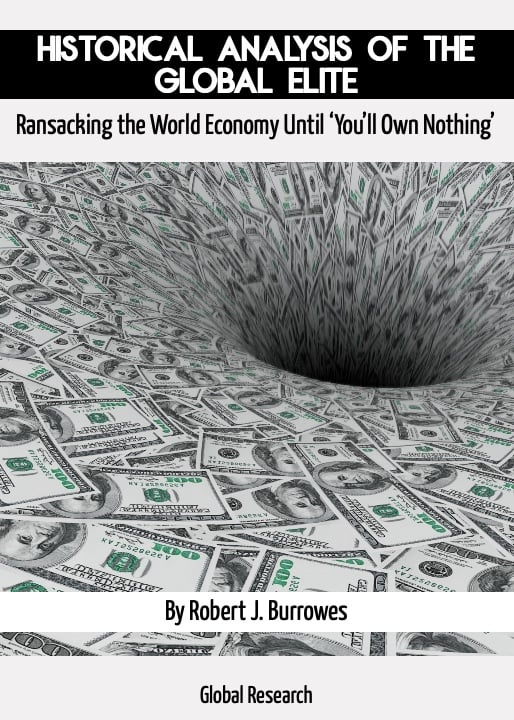
Historical Analysis of the Global Elite: Ransacking the World Economy Until ‘You’ll Own Nothing.’

COVERT WAR ON TERROR Yemen: reported US covert action 2012

COVERT WAR ON TERROR Yemen: reported US covert action 2012

Sir Henry Kissinger: Midwife to New Babylon

Sir Henry Kissinger: Midwife to New Babylon
The moment Kissinger’s last breath left his corpse, media commentators lost no time running out the gates, either singing songs of slavish praise about the “great liberal statesman”clik Pict.

Action in Ghent 16 March. 7000 posters were distributed by 70 volunteers. A lot of "Justice For Ira

Beyond Torture U.S. Violations of Occupation Law in Iraq

Beyond Torture U.S. Violations of Occupation Law in Iraq
A report by the Center for Economic and Social Rights

Iraqi Children: Deprived Rights, Stolen future

Iraqi Children: Deprived Rights, Stolen future
click PIC

Syria News - August 16, 2013 (Warning: Graphic Videos)

Syria News - August 16, 2013 (Warning: Graphic Videos)
Local Coordination Committees of Syria + Videos

Letter From Yemen by Felicity Arbuthnot + Defining Drone Deaths in Yemen

Handwritten letter from President Saddam Hussein to the American people. 7 July 2006.

Handwritten letter from President Saddam Hussein to the American people. 7 July 2006.
To the American people:

Saddam Hussein refuses to sell out Iraq.

Saddam Hussein refuses to sell out Iraq.
Saddam Hussein refuses to sell out Iraq. Egyptian Magazine publishes transcript of meeting in prison between Saddam Hussein and Donald Rumsfeld.

Report On Israeli Human Rights Violations

Report On Israeli Human Rights Violations
Weekly Report On Israeli Human Rights Violations in the Occupied Palestinian Territory (23 - 29 May 2013)

Weekly Report On Israeli Human Rights Violations in the Occupied Palestinian Territory (05 - 12 Jun

Weekly Report On Israeli Human Rights Violations in the Occupied Palestinian Territory (05 - 12 Jun
The Palestinian Centre for Human Rights (PCHR)

IRAKDOSSIER in DE WERELD MORGEN: verschillende Engelstalige artikels die op deze website staan, wer

Will Libya follow in Somalia's footsteps?

Will Libya follow in Somalia's footsteps?

Mohammad al-Haddad

27libya-99rtr3h6e3.jpg
The flag of the self-declared autonomous region of Cyrenaica flutters in the wind as heavily armed vehicles belonging to the military council of the region are deployed to protect oil ports near Sirte, March 14, 2014. Former Libyan Prime Minister Ali Zeidan has fled to Europe after parliament voted him out of office on March 11. (photo by REUTERS/Stringer)

uruknet.info

Amid the world’s preoccupation with the Crimean crisis and the confrontation between a powerful Russia and a weak Ukraine, the recent escape of Libyan Prime Minister Ali Zeidan [to Europe] almost went unnoticed, as though it were a simple and transient incident. This is a dangerous indication that the international community’s attention has completely shifted from the previously so-called Arab Spring regions to the Ukrainian Spring, which might itself turn into a tidal wave that directly targets the West. According to a European official, this shift in international attention or the loss of interest of the West in the countries of the Arab revolutions entails more risks of Somalization for Libya specifically, and perhaps for other Arab countries. In other words, these countries will be left to face their fate — a gloomy one at that — alone.
Libya apparently qualifies, more than any other country, for this catastrophic scenario. Paradoxically, its revolution started with high hopes. When the Libyan Spring began, the country had over $100 billion of treasury surplus, which former President Moammar Gadhafi left behind, knowing that Libya’s population does not exceed 5 million people. Moreover, the results of the elections surprised everyone, as the democratic candidates beat the Islamists, even if by a slight difference. At the time, this seemed like deterrence for the Islamic expansion that had accompanied the elections in Tunisia, Egypt and Morocco.
Meanwhile, the Islamists who lost the elections did not stop trying to take over power and dominate the state’s ministries. They succeeded in passing a law of political isolation that deprived Libya — a country already lacking competent figures and cadres — of its competent national figures who were at the forefront of the revolution. Moreover, this law weakened the democratic front, as it was applied on its leader Mahmoud Jibril. On the other hand, Zeidan was not affected by this law since he had not occupied governmental positions during the past rule. Nonetheless, he was subject to other forms of isolation that began with abducting and insulting him and ended with isolating him under vague and legally dubious circumstances.
Paradoxically also, Libya is always going in the opposite direction of the other revolutions. The two successive post-revolution governments were a complete failure and hit the wall in solving any of the country’s problems. They could not even take one single step to build a new Libya, thus leaving the door wide open for Islamists to take over the main decision axes. The situation in Tunisia and Egypt took an opposite turn since the failure of Islamists caused their power to dwindle and their opponents to strongly return to the scene of political action. This simply indicates that all the countries of the Arab uprisings are drowning in conflicts that will not achieve any of the initial promised goals, which mainly include restoring the state’s institutions, strengthening democracy and reviving the economy.
However, Libya is surrounded by far bigger dangers compared to its two neighbors. Gadhafi’s regime destroyed the state, thus making way for Somalization. Nobody can dream up an effective way to collect the millions of arms, including heavy weapons, that are scattered all over the country. It is only normal for Libyans to organize themselves in militias and tribal groups to protect themselves, given the state is not strong enough to do so.
The Libyan economy is restricted to oil revenues, which have been facing major risks because dissidents have tightened their grip on oil wells and ports. The incident of smuggling a Libyan oil shipment in a naval tanker revealed the breadth of the breaches and the danger of the situation. It also showed how far the violations in Libya have gone. While this case closed when the US Navy intervened to return the stolen oil to Libya, the source of the problem remains. In the footsteps of its precedent, it is unlikely that the next Libyan government will find ways to manage the oil resources in the country. The people calling for an autonomous rule are still in a position of power for reasons related to population distribution, social structure and covert foreign interventions stirred by Libyan oil’s appeal.
On the one hand, internal conflicts are on the rise, and piracy is surfacing on the other. These two factors will weaken the stance of Libyan authorities before the huge oil companies, which had negotiated on a significant share of oil in return for the intervention of Western countries in the revolution. These companies will increase their demands and will grow greedier to exploit the status quo.
As a result, Libya, which lost the large financial savings it had inherited from the previous era, is losing its sovereignty over its oil wealth. It is noteworthy that the whole Libyan economy is based on oil revenues and on distributing part of them directly to citizens. This primitive rentier mechanism, which prevailed before and after the revolution, has not changed. If the authorities lose their ability to buy what can be bought from social security, they would be losing their last standing mechanisms to control the fate of the country.
Needless to say, the Somalization of Libya threatens the entire surrounding region. It affects Egypt, Tunisia and Algeria on the one hand, and the African Sahara on the other, while it can also reach Europe due to the geographic proximity. Even though helping Libya to rise above the current situation is an urgent necessity, it is realistically hard to determine a party capable of extending its hand to the country. Western forces, which dealt with Libya as a huge petroleum field, will wash their hands clean of the country’s internal affairs, except for the issues related to oil and gas flow. The crisis with Russia will only deepen this inclination. The Crimean crisis was not only bad news for the Ukrainians, but for the countries of the Arab revolutions as well — mainly Libya — and for the fate of democratic transition in these countries.


Source 

UN Human Rights Council resolution warning companies to ‘terminate business interests in the settlements’ or face possible criminal liability gets watered down

UN Human Rights Council resolution warning companies to ‘terminate business interests in the settlements’ or face possible criminal liability gets watered down

Annie Robbins and Hostage


The United Nations Human Rights Council (UNHRC) in Geneva passed a resolution today at the closure of the Human Rights Council’s 25th session titled "Israeli Settlements in the Occupied Palestinian Territories, including East Jerusalem, and in the occupied Syrian Golan" (pdf) urging all States to:
(c) To provide information to individuals and businesses on the financial, reputational and legal risks, as well as the possible abuses of the rights of individuals, of getting involved in settlement-related activities, including economic and financial activities, the provision of services in settlements and the purchasing of property;
12. Requests that all parties concerned, including United Nations bodies, implement and ensure the implementation of the recommendations contained in the report of the independent international fact-finding mission [pdf] to investigate the implications of Israeli settlements on the civil, political, economic, social and cultural rights of the Palestinian people throughout the Occupied Palestinian Territory, including East Jerusalem, and endorsed by the Human Rights Council through its resolution 22/29 in accordance with their respective mandates;
13. Calls upon the relevant United Nations bodies to take all necessary measures and actions within their mandates to ensure full respect for and compliance with Human Rights Council resolution 17/4 of 16 June 2011, on the Guiding Principles on Business and Human Rights [pdf] and other relevant international laws and standards, and to ensure the implementation of the United Nations "Protect, Respect and Remedy" Framework, which provides a global standard for upholding human rights in relation to business activities that are connected with Israeli settlements in the Occupied Palestinian Territory, including East Jerusalem;
The original draft of resolution (pdf) called for States and private enterprises to terminate business transaction beyond the 1949 armistice lines and warned of the probability of criminal liability for corporate complicity in breach of international law.
Essentially it was a call to boycott and divest from all Israeli settlements in the West Bank, including East Jerusalem, and the Golan Heights or else be prepared to be held criminally accountable.
The final version of the resolution appears to be watered down. However, the request to implement recommendations contained in the "international fact-finding mission", as well as the references to resolution 22/29, 17/4, and the Guiding Principles on Business and Human Rights (pdf) deserves further scrutiny. The UNHRC had already adopted the conclusions and recommendations contained in the fact finding report, which recommended that the issue of corporate culpability be addressed by a special mandate holder created as part of a decade long UN initiative to hold transnational corporations and other businesses criminally responsible for their roles in human rights violations:
117. Private companies must assess the human rights impact of their activities and take all necessary steps – including by terminating their business interests in the settlements – to ensure that they do not have an adverse impact on the human rights of the Palestinian people, in conformity with international law as well as the Guiding Principles on Business and Human Rights. The mission calls upon all Member States to take appropriate measures to ensure that business enterprises domiciled in their territory and/or under their jurisdiction, including those owned or controlled by them, that conduct activities in or related to the settlements respect human rights throughout their operations. The mission recommends that the Working Group on Business and Human Rights be seized of this matter. (pdf)
The Working Group on the issue of human rights and transnational corporations and other business enterprises, is a standing expert panel with their own UN mandate. Today’s resolution noted that it hasn’t reported back yet on the implementation of its mandate with regard to the issue of settlements in Palestine and the Syrian Golan Heights and that it has announced its intention to make a statement before the next session of the UNHRC is convened.
The council held a general debate on human rights violations in Palestine earlier this week which included the follow-up to, and implementation of, the Vienna Declaration and Programme of Action. The Council then adopted the outcomeof the Universal Periodic Review of Israel (full report here).
The background of the vote is that the PA and Arab League requested a special fact finding mission on the impact of the Israeli settlements. In July 2012 the president of the Human rights council appointed three high-level experts to that mission, Christine Chanet as Chair, Asma Jahangir and Unity Dow.  The findings of the mission resulted in an UNHRC report, titled "Report of the independent international fact-finding mission to investigate the implications of the Israeli settlements on the civil, political, economic, social and cultural rights of the Palestinian people throughout the Occupied Palestinian Territory, including East Jerusalem".
The missions’ report, which addresses the implications of corporate involvement in international crimes, develops arguments presented in two previous September 2013 reports by Special Rapporteur Richard Falk. Among other things, the first report describes the involvement of 13 businesses in the Occupied Palestinian Territory with reference to the United Nations Guiding Principles on Business and Human Rights. The second report includes case studies on two companies, the American international real estate company  Re/Max  and their international Israeli subsidiary, and the second company is the Dexia Group, a European financial institution.
These companies were chosen for the specific ways in which their activities, including profiting from Israeli settlements, potentially implicate them in international crimes.
IV. Case studies
33. As noted in the previous report of the Special Rapporteur on this issue, there is a wide range of businesses operating in the settlements. The Special Rapporteur surveyed 13 businesses, including several that were Israeli and others that were international. Some businesses were connected with the occupation generally and others with the settlements in particular. In the present report the Special Rapporteur focuses on two discrete areas that relate to settlements. The first area is banking institutions involved in financial transactions, such as loans to construct or purchase Israeli settlements. The company that the Special Rapporteur discusses is the Dexia Group, a European banking group. This builds upon the analysis by the Special Rapporteur of the Dexia Group in the previous report. The second area that the Special Rapporteur draws attention to is real estate companies that advertise and sell properties in settlements. The activities of Re/Max International, a company based in the United States of America, are the focus of analysis in the present report. The case studies aim to determine whether the Dexia Group and Re/Max International, through providing loans and mortgages and through advertising and selling properties in settlements, provide knowing assistance that amounts to aiding in the commission of international crimes associated with transferring the citizens of the Occupying Power to the occupied territory. The Special Rapporteur reiterates that the businesses highlighted are illustrative examples. There are other companies that profit from Israeli settlement activities, both in the economic service areas in which the Dexia Group and Re/Max International are working and in other areas involving
goods and services.
(Full case studies here)
Mondoweiss commenter Hostage:
Those two reports and the threat of liability (posed by Palestine’s joining the ICC and the Prosecutor subsequently acting on the 2009 declaration) triggered divestment by companies located in EU/ICC member states. The Prosecutor will be able to investigate acts committed in the EU or Palestine since July 2002, without any Security Council referral or veto. EU members of the ICC would also be required to investigate and prosecute their citizens and corporations.
The present report develops arguments presented in the previous report of the Special Rapporteur to the sixty-seventh session of the General Assembly, which focused on businesses profiting from Israeli settlements and described the  involvement of 13 businesses in the activities of Israel in the Occupied Palestinian Territory with reference to the United Nations Guiding Principles on Business and  Human Rights. The present report delineates a model for legal analysis by focusing  on two illustrative companies chosen for the specific ways in which their activities potentially implicate them in international crimes. The report also takes note of other issues, including the urgent matter of water and sanitation rights.
http://www.un.org/ga/search/view_doc.asp?symbol=A/HRC/22/63
This is Richard Falk’s last stand and a testament to the man he is. It’s his legacy and we thank and honor him. Falk’s 6 year term as  United Nations Special Rapporteur  expires on May 1st. UNHRC decided to delay a vote on 18 incoming special rapporteurs by one month, so it is not clear who Falk’s successor will be.
The ADL  issued a press release earlier this week referencing the resolution:
"This resolution attempts to advance a very similar position to elements of the vehemently anti-Israel Boycott, Divestment and Sanctions (BDS) movement, and at the same time, it puts a serious damper on the current peace talks taking place."
In a letter sent to members of the UNHRC, ADL expressed concern that the resolution was an attack on Israel that was taken "further than any previous sessions."
"Its language goes beyond the current policies of most countries with respect to the issue of Israeli settlements," Mr. Foxman wrote.

Source 

AAUP Backs Iymen Chehade, Supports Academic Freedom at Columbia College Chicago

AAUP Backs Iymen Chehade, Supports Academic Freedom at Columbia College Chicago

By Eva Bartlett


28ayman_shehada.jpg
Iymen Chehade, a professor at Chicago's Columbia College. 

March 28, 2014
American Association of University Professors (AAUP) Illinois statement of support for Iymen Chehade, a professor at Chicago’s Columbia College, marks the latest, and most significant, step forward in the fight against pervasive attempts to control discourse on Occupied Palestine, via stifling academic freedom on college and university campuses.
Chehade, employed by Columbia since 2007, has taught three different courses on the Middle East, but by far most popular has been his Israeli-Palestinian Conflict, a course he designed in 2010.
"The class is popular on campus. Students hear about it from other students and try consistently enroll in it," says Chehade. "Its one of those history classes that is not history, it’s actually present, its also future. As we are speaking, history is being made."
Considerable student demand for the course led to Chehade’s teaching three sections of it at one point. As of fall 2013, Columbia offered Chehade two sections to his Israeli-Palestinian Conflict.
As part of his course content in fall 2013, Chehade showed his students the award-winning documentary 5 Broken Cameras.
"The film itself is about the occupation of the village of Bil’in, the occupation of Palestine. My objective in showing the film was to humanize the issue," says Chehade. "Student reaction was very positive."
In spite of student demand for the course and student interest in the documentary, not long after showing it in his class, one of Chehade’s two spring 2014 sections was canceled.
"I received an email from the Chair’s office saying that they wanted to speak to me about an issue. Before going his office, I checked my mailbox and saw I’d been assigned two sections of the course for spring 2014."
At Chair Steven Corey’s office, Chehade was told a student had complained of "bias" in his class. The student’s identity was not revealed, nor was Chehade able to discuss the allegation with the student. Corey instructed Chehade to be "more balanced" in his class, and asked him to produce his teaching qualifications, a request Chehade says is not in itself unusual. "But in the context of the situation, that makes it alarming."
The week following the meeting with Corey, Chehade’s two sections were posted for Columbia’s spring 2014 offerings. Yet, within a couple of hours, one section of the course was eliminated, in violation of his contract with Columbia.
Chehade took the matter to the union, who brought the cancellation up with administration. "So they gave me another class," says Chehade. "The class was The Middle East Up To Mohammad, which is 1400 years ago, 1300 hundred years removed from when the Israeli-Palestinian conflict began."
According to Academic Vice President and Provost Louise Love, the college supported Chehade’s showing of the film, which she lauded as "widely acclaimed" and noted provided "an important perspective." However, in her statement, she went on to note that the elimination of sections "reflect a multitude of factors such as overall student enrollment, targets for average class size."
"If their objective was to reduce classes, and increase class sizes, why did they give me a different class?" asks Chehade. "Whether they like the film or not is not the issue. Eliminating the opportunity for a professor to teach his perspective is the issue here. That’s exactly what they did."
Since the sudden cancellation of his section, support has grown rapidly for the professor and for the larger issue of academic freedom. Chehade and the AAUP Illinois Committee A on Academic Freedom and Tenure maintain that the cancellation was an act of academic stifling.
"We have over 6000 signatures on our petition for academic freedom," says Chehade. Signatories include supporters from around the world, as well as Columbia faculty, current and former students, and academics nation-wide. "Many people have volunteered their time on this campaign. Students for Justice in Palestine and Jewish Voices for Peace at Columbia College have been very active in bringing this issue to light."
Regarding the cancellation, one former student, Alex Quiroz, notes: "I took this class knowing absolutely nothing about the conflict. Professor Chehade explained everything in a balanced and honest way. It would not be fair to other students who want to take this class."
Noting the impact of pro-Israeli lobby efforts on college and university campuses nation-wide, Jewish-American Peter Cohen, signs "I find it unacceptable that a small, extremist and highly moneyed lobby that claims to represent my interests be allowed stifle legitimate voices and opinions in academia."
Love, herself, has been at the heart of prior incidents repressing academics. Notably, in 2006, as the associate provost at Roosevelt university, Love supported Susan Weininger (then Chair of the Department of History, Art History, and Philosophy) in her firing of World Religions professor Douglas Giles.
"Weininger was upset with him over for allowing his students to have this open forum," says Chedhade, noting that  it has been publically documented thatWeininger said to Giles, "What disturbs me is that you act like Palestinians have a side in this. They don’t have a side…they are animals…they are not civilized."
Love in turn defended Weininger as "passionately defending" her position, Chehade notes.
"Imagine if she said that about an African-American or if she said that about a Jew? She would be fired. She should not be let within 1000 feet of an academic institution. Racism is racism. What type of message us Columbia College sending when you have this supporter of racism as one of the main heads of this institution?"
For Chehade, a Palestinian-American, Weininger’s comment and Love’s defense of her position is extremely insulting.
"I was sitting in front of this woman who I was grieving my issue to, knowing that she supported someone who said this about Palestinians. Columbia College should not have hired her. "
In its letter to Louise Love, the American Association of University Professors (AAUP) Illinois first cites the Columbia College Collective Bargaining Agreement, which includes prohibiting "explicit or implicit threat of termination or discipline for the purpose of constraining a faculty member in the exercise of his or her rights under such principles of Academic Freedom. [CBA art. V (1), (2)."
Highlighting the standard norm of dealing with student complaints, the AAUP statement notes that the alleged complaint against Chehade "trespassed on the academic freedom of a professor and should have been referred back to the instructor for resolution." Critically, the statement notes that "neither Dr. Steven Corey, the chairperson of the Department of Humanities, History and  Social Science nor School of Liberal Arts and Sciences Dean Deborah Holdstein directed the student to take the complaint to the instructor," calling their actions "a violation of widely accepted norms of academic due process."
According to the AAUP, the Palestinian-Israeli conflict is "not easy pedagogy because of the passions it arouses among disparate groups in the United States….It is beyond dispute that the film 5 Broken Cameras was directly related to the course topic."
In response to Chair Corey’s admonition to Chehade that he be "balanced," and Provost Love’s questioning Chehade whether he presented his material in a "balanced" manner, the AAUP notes that the issue of "balance is "frequently used to reign in a professor from critical thinking…towards a consensus approach that is more acceptable to elite or mainstream opinion."
Similarly, for Chehade, the term "balance" is a loaded term. "When it is applied to the academic context, and specifically to the context of teaching the Israeli-Palestinian conflict, it is extremely problematic. This is an issue that lacks balance. It’s an asymmetrical issue: there are a people that are occupied,millions who have no civil rights.  As a professor in a college, how do you present that as "balanced"? It would be like presenting the African-American struggle for liberation from the Jim Crow laws in the South as a"balanced" issue, where you have African Americans who are trying to gain rights, and you have white, southern oppressors who have institutionalized and systemized laws that violate their rights. How do you present that as "balanced"?  If somebody asked that from an African American professor, who presents the African-American struggle for liberation, it would be ludicrous."
In the detailed account of the cancellation of one of Chehade’s sections, the AAUP Illinois finishes its statement by noting that the six days between Chehade’s meeting with Corey, and the subsequent removal of the second section are "linked events."  Notably, the AAUP reiterates "we conclude that Professor Chehade’s academic freedom was violated as a result."
In line with Chehade’s own expectations, the AAUP asks that Columbia College reinstate both sections of Chehade’s popular Israeli-Palestinian Conflict in fall 2014. They also emphasize the need for a "strategic reassessment" of Columbia’s policy of handling student complaints, noting that at present the system for doing so is "clearly broken and conducive to academic freedom violations."
Chehade, who wants to ensure that other professors who speak about Palestine in a fact-based manner are not stifled, applauds the AAUP statement.
"I would like to thank the AAUP for their conclusion. Discussing the Occupation of Palestine is not an exception to the rule of Academic Freedom at Columbia College or any college campus in the United States."

Source 

So Many Lies, So Few Sentences Obama’s Iraq Fairy Tale

So Many Lies, So Few Sentences
Obama’s Iraq Fairy Tale

by SHELDON RICHMAN


I promised myself that I would no longer comment on what Barack Obama has to say, because it’s just not worth the time and effort. Obama’s public remarks are comprehensible only if you keep one thing in mind: he, like other politicians, thinks most people are morons.
I am so appalled by what Obama said in Europe the other day, however, that I must break my promise. In his speech he said, regarding events in Crimea, that
Russia has pointed to America’s decision to go into Iraq as an example of Western hypocrisy. Now, it is true that the Iraq War was a subject of vigorous debate not just around the world, but in the United States as well. I participated in that debate and I opposed our military intervention there. But even in Iraq, America sought to work within the international system. We did not claim or annex Iraq’s territory. We did not grab its resources for our own gain. Instead, we ended our war and left Iraq to its people and a fully sovereign Iraqi state that could make decisions about its own future.
It is hard to believe that a presidential speechwriter could manage to pack so many lies into so few sentences. But the speechwriter could only compose the sentences. Obama chose to deliver them, and for that, he should be indicted for gross deception with malice aforethought. (Need I say this is not unique to Obama? Virtually all politicians are demagogues. Obama’s distinguishing trait is his smoothness.)
Let us count the lies.
The Iraq War was a subject of vigorous debate not just around the world, but in the United States as well.
Note he did not say "honest debate," for how honest can a debate be when the government fills the mostly willing media with lies about WMD and suggestions that Saddam Hussein was connected to the attacks on 9/11? Every top member of the Bush administration having anything to do with "national security" lied to the public at one time or another. People who questioned the "slam-dunk" intelligence were dismissed as pusillanimous or soft on Saddam. If that counts as open debate, then there is no difference between the Bush administration and any outright autocratic regime.
America sought to work within the international system.
Really? In terms of international law, Bush was not allowed to launch a war against Iraq, which had threatened no one, until he secured another resolution from the Security Council (the 18th or 2nd, depending on how you count). That resolution was proposed but then withdrawn when Bush realized it would be vetoed. So he ignored the UN rules, which prohibit launching a war unless it’s in self-defense or authorized by the Security Council, and invaded on his own say-so, after Congress rubberstamped his discretionary "authorization for the use of military force." Yes, he dragged some other governments’ forces along for cover, the so-called Coalition of the Willing, 3 members of which — out of 48 — actually sent some troops. (The Bush administration was good at coming up with Orwellian names for things.)
We did not claim or annex Iraq’s territory. We did not grab its resources for our own gain.
No, they didn’t, but in many respects the Bush administration sure tried. America’s savvy rulers long ago realized that old-style empire building was passé. Subjugated populations wouldn’t stand for it, and that raised the already considerable costs of empire maintenance. So a new, softer imperialism was born. No more annexations. No more UN mandates or protectorates. No more de jure colonies. But this says nothing about de facto control, which was the Bush regime’s objective in Iraq from Day One.
The presumptuous whiz-kid bureaucrats sent in after Saddam fell were armed with plans to remake Iraq right down to its traffic lights and flag. The oil resources were to be "privatized" and parceled out to crony American companies. (Remember the promises that oil revenues would pay for the costly war? Didn’t happen.)
Billions of dollars ostensibly spent to rebuild the infrastructure destroyed by American bombers (beginning in 1991) ended up lining the pockets of contractors, subcontractors, and sub-subcontractors (ad infinitum) — with little to show for it. Iraqis to this day suffer from inadequate public services like water, electricity, sewerage, and medical care.
The Bush administration also expected to have some three dozen permanent military bases (with lots of American firms granted lucrative business concessions), and an embassy the size of the Vatican.
Few of these plans came to fruition — but only because Prime Minister Nouri al-Maliki, who wasIran’s handpicked candidate for prime minister, wouldn’t permit it. To be sure, the U.S. government did not gain territory or grab resources — but not for lack of trying.
We ended our war and left Iraq to its people and a fully sovereign Iraqi state that could make decisions about its own future.
The war indeed ended in 2011. But let’s not forget that before (most of) the troops left, Obama begged al-Maliki to let U.S. forces stay beyond the deadline set in the Status of Forces Agreement (SOFA). Al-Maliki — who didn’t need the United States when he had Iran in his corner — demanded conditions so unacceptable to Obama that most forces were withdrawn as scheduled. (SOFA was signed by Bush, but that doesn’t stop Obama from claiming credit for "ending the war.") The U.S. government continues to finance, arm, and train al-Maliki’s military, which represses the minority Sunni population.
What was left to Iraq’s people was a catastrophe, as already indicated. Peter Van Buren, a State Department officer who oversaw reconstruction in two eastern Iraqi provinces, calls the Iraq War "the single worst foreign policy decision in American history." There can hardly be a better example of blind ambition. Take the deadly siege of Fallujah in 2004. Journalist Dahr Jamail writes,
According to the Bush administration at the time, the siege of Fallujah was carried out in the name of fighting something called "terrorism" and yet, from the point of view of the Iraqis I was observing at such close quarters, the terror was strictly American. In fact, it was the Americans who first began the spiraling cycle of violence in Fallujah when U.S. troops from the 82nd Airborne Division killed 17 unarmed demonstrators on April 28th of the previous year outside a school they had occupied and turned into a combat outpost. The protesters had simply wanted the school vacated by the Americans, so their children could use it. But then, as now, those who respond to government-sanctioned violence are regularly written off as "terrorists." Governments are rarely referred to in the same terms.
The architects of the catastrophe had a plan, and the welfare of Iraqis would not be allowed to get in their way. As Van Buren points out,
All that was needed [the Americans thought] was a quick slash into Iraq to establish a permanent American military presence in the heart of Mesopotamia. Our future garrisons there could obviously oversee things, providing the necessary muscle to swat down any future destabilizing elements. It all made so much sense to the neocon visionaries of the early Bush years. The only thing that Washington couldn’t imagine was this: that the primary destabilizing element would be us.
The invasion unleashed a conflagration of sectarian violence between Sunni and Shiites, unseen during Saddam’s tenure and consciously facilitated by the U.S. government. Most Sunnis were cleansed from Baghdad. Countless were killed and maimed; millions more became refugees. The fire burns out of control to this day, fueled by the oppression and corruption of al-Maliki, who’s earned the moniker "the Shia Saddam." Van Buren writes,
As part of the breakdown, desperate men [in the Bush administration], blindsided by history, turned up the volume on desperate measures: torture, secret gulags, rendition, drone killings, extra-constitutional actions at home. The sleaziest of deals were cut to try to salvage something….
The mind boggles at the sheer evil the Americans, who expected gratitude, did there. The result? Van Buren notes:
Even the usually sunny Department of State advises American travelers to Iraq that US citizens "remain at risk for kidnapping … [as] numerous insurgent groups, including Al Qaida, remain active" and notes that "State Department guidance to US businesses in Iraq advises the use of Protective Security Details."
That is what has been left to the Iraqi people by the benevolent power of the United States of America. As for the U.S. government’s respect for Iraq’s sovereignty, the Obama administration is pressuring al-Maliki to stop allowing Iraq’s ally Iran to fly through Iraqi airspace to help Syrian President Bashar al-Assad in his civil war. So much for Iraqi sovereignty.
This highlights just one of the many absurd features of U.S. policy (if you can call it that): while Obama helps al-Maliki fight al-Qaeda in Iraq, the United States also helps al-Qaeda affiliates fight Assad in Syria. (For the record, al-Qaeda wasn’t in Iraq before Bush invaded.) Again, the mind boggles.
The upshot is that one need not condone Vladimir Putin’s ham-handedness to see that Obama has no leg to stand on when he contrasts Russia’s essentially bloodless and provokedannexation of Crimea with America’s unprovoked war of aggression against Iraq. Unfortunately, the Americans who committed this cold-blooded mass murder and societal destruction are less likely to face justice than Putin is for his crimes in, say, Chechnya.

Sheldon Richman is vice president and editor at The Future of Freedom Foundation in Fairfax, Va. (www.fff.org).

Source 

CEOSI statement on the 11th anniversary of the occupation of Iraq For the prosecution of the criminals and support of the Iraqi revolution

CEOSI statement on the 11th anniversary of the occupation of Iraq
For the prosecution of the criminals and support of the Iraqi revolution

IraqSolidaridad

24anbar1-300x168.jpg
Demonstration in Al-Anbar (Iraq)

March 24, 2014

"In these critical time to Iraq, CEOSI would like to express its full support for the Iraqi popular revolution —armed and peaceful— and we state that the military councils have been created for self-defense due to the total absence of legal protection and the contempt for the law in Iraq; a situation in which sectarian and partisan militias run the country, and where the government, far from ensuring the safety of citizens, exercises state terrorism"

Facts
The illegal war and occupation of Iraq, launched by the international coalition led by the U.S. and Britain, has claimed the lives of nearly two million Iraqis; it has left five million refugees inside and outside Iraqi borders, made more than one million widows and five million orphans [1]. The occupying forces have often used weapons banned by International Conventions, such as depleted uranium ammunition, agent orange and white phosphorus [2]. The planners and the executors of what the international law defines as a crime against peace, war crimes and crimes against the humanity remain unpunished.
After the Iraqi national resistance forced the U.S. military to withdraw its troops, tens of thousands of advisors, contractors — especially North Americans —, and security personnel remain in the country to protect the interests of the United States. Foreign elements have not abandoned their goal of controlling the economic resources of the country, since they face a government unable to guarantee its population’s most basic services.
In addition, various foreign and regional powers, such as the pro-Iranian forces, are fighting to each other to gain influence and dominate Iraq using their militias against the Iraqi people.
The political process and the regime imposed are part of the US-British occupation of Iraq. The policy of the regime leaded by Nuri al-Maliki, is based on revenge, totalitarianism and sectarian division; it’s a regime that promotes and encourages acts of terrorism against civilians to prevent Iraq from regaining its sovereignty after decades of sanctions, war and occupation. According to the most conservative data, the death toll caused by the violence in the past year is around 8,000 [3]. To this number at least 169 executions carried out without the standard legal guarantees must be added. Iraq ranks third in the use of death penalty after China and Iran. [4]
Women demonstrate in Al Anbar

At the beginning of 2011, the different peaceful protests that began to struggle fight against the occupation — involving trade unions, students, human rights activists, etc.,— unified their efforts in what was called the February 25th Movement [5] and reached a national level.
This peaceful resistance was suppressed by the state and intentionally ignored by the mainstream media, which largely led to its disappearance. However, this long journey of struggle and growing popular discontent has been the root of the popular revolution that we are witnessing today in Iraq.
Since late 2012, these demonstrations and popular and peaceful sit-ins have resumed in some western provinces; they have been spread to the South and have reached the capital, Baghdad. [6] Despite the government non-stop attempts to put an end to the protests, they have continued till now, especially in Central and West Iraqi provinces, where people have been suffering persecution and the regime’s sectarian policies. There are many reasons for the people to take the streets: Corruption, sectarianism, unemployment, lack of access to basic services, illegal arrests, etc., which derives from the foreign occupation and from a class rule that triggers hatred, division, power struggles and the plundering of the national resources. In 2011 the reasons for the popular revolution were crystal clear in the mottos demanding the withdrawal of the U.S. troops and the removal of the regime.
For more than two months now, the Maliki government has been waging a war against the Iraqi people in several provinces in an attempt to end the popular revolution. Although the protests have been totally peaceful, Maliki has accused the population of these (majority Sunni) areas of being part of or supporting the terrorist organization, the Islamic State of Iraq and the Levant.[7] Without any hesitations, the government continues bombing the civilians, while receiving military aid from the U.S., Russia and Iran. The bombing has caused numerous deaths and new waves of refugees. [8] In response to the government attacks, the population has organized itself into military councils to protect its territory and fight for what all Iraqis ― from North to South ― have demanded since the beginning of the occupation: prosperity, unity and national sovereignty. [9]
In these critical time to Iraq, CEOSI would like to express its full support for the Iraqi popular revolution — armed and peaceful— and we state that the military councils have been created for self-defense due to the total absence of legal protection and contempt for the law in Iraq; a situation where sectarian and partisan militias run the country and the government, far from ensuring the safety of citizens, exercises state terrorism, so that,
We demand
1. That the aspirations of the Iraqi people’s revolution are acknowledged, as well as the Iraqi right to decide about their own destiny, without any interference after more than 25 years of wars, sanctions and a new war and illegal occupation.
2. That the International Criminal Court fulfills its legal obligation to investigate and prosecute every single individual or group responsible of committing the war crimes, the crimes against peace and the crimes against humanity that were committed in Iraq from 2003 onwards.
The international body of justice must ensure that the top military, civil and political leaders, from all those countries that led, supported or carried out the invasion and occupation of Iraq, are accountable for their lies and for the policies that led them to commit these crimes against Iraq and its people. In this regard, the Iraq Commission in the framework of the 18th Congress of the International Association of Democratic Lawyers there will be held in Brussels on April 16 and 17. The aim of this Commission is to analyze and to implement legal measures that will prevent the criminals from going unpunished.
The International Criminal Court must comply with international law, establish war reparations and require them to be paid, both to civilian victims and to the Iraqi state, whose sovereignty and independence has been abused by acts contrary to the international law currently in force.
The United Nations must take an active and supportive role to aid those national courts that can take legal procedures against those accountable for the crimes committed against a sovereign nation. At this moment, in which the Spanish government has led the way to at least a minimum application of the law of Universal Jurisdiction, an active defense of justice is particularly important.
3. That the EU cancels the EU-Iraq Partnership and Cooperation Agreementuntil Iraq regains its full sovereignty and there are political guarantees of a real democracy, transparency and respect for the human rights. In addition, the financial terms of the agreement must be thoroughly revised so there are criteria for a balance within and sustainability of commercial relations.
4. That the European Union seriously takes into account and listens to the different reports of human rights organizations and to voices within the European Parliament regarding the violation of human rights and on the political war that Maliki is launching, and that the EU takes a clear stance against the atrocities committed by the Iraqi regime.
5. That the UN High Commissioner for Human Rights appoints a Special Rapporteur for Iraq. This would be a further step in order to investigate the crimes committed by the Iraqi regime and to end its current impunity. Likewise, the United Nations Security Council has to take its responsibility and urgently stop the Iraqi government violence against the civilians.
The Spanish Campaign against the Occupation and for the Sovereignty of Iraq (CEOSI) calls upon the solidarity of the anti-globalization and anti-imperialist movements and upon all peace lovers to support the Iraqi people in their popular revolution in defense of their most basic rights [10].
Notes:
1. See Human Rights Council Documents A/HRC/19/NGO/143 y 145, February, 2012.
2. Paloma Valverde, "Nuevos informes sobre la contaminaciَn radioactiva en Iraq", IraqSolidaridad, May 6, 2013.
3. "UN casualty figures for December, 2013 deadliest since 2008 in Iraq", United Nation Iraq, January 2, 2014.
4. Haifa Zangana, "Here is a list of the real forces behind the violence in Iraq", Al Jazeera, January 18, 2014.
5. "Revoluciones لrabes: prَxima cita, Iraq", IraqSolidaridad, February 22, 2011.
6. "Comunicado de la CEOSI en apoyo a la revoluciَn iraquي", IraqSolidaridad, January 9, 2013.
7. "Enfrentamientos armados para defender la Plaza de la Dignidad y del Honor de Ramadi", IraqSolidaridad, 30 de diciembre de 2013.
8. Erin Evers, "US Missing the Boat on Halting Iraq Arms Sales", Human Rights Watch, February 26, 2014. "Denuncia de las violaciones de los Derechos Humanos en Iraq en el Parlamento Europeo", IraqSolidaridad, 21 de febrero de 2014; "Iraq: investigate violence at protest camp", Human Rights Watch, January 4, 2014.
9. "Consejo General Militar de los Revolucionarios de Iraq comunicado n؛ 1 declaraciَn de la creaciَn del Consejo General Militar de los Revolucionarios de Iraq", IraqSolidaridad, 22 de enero de 2014.
10. See CEOSI Statement, 2013 avalaible in Spanish, IraqSolidaridad, March 5, 2013.

Source 

Two Palestinian teens among casualties as Israeli drones target Gaza

Two Palestinian teens among casualties as Israeli drones target Gaza

By Olivia Watson*

24muhammad_basuni.jpg
Mohammad Basyouni,15, was hit by shrapnel in the neck, thigh and abdomen as he was walking home from his uncle’s shop.

Ramallah —Two teenagers were wounded in North Gaza by drone strikes in early March as Israeli forces target the occupied Gaza Strip.
Mohammad Basyouni, 15, sustained critical injuries and Rania Odeh, 13, was hospitalised following an attack on the village of Beit Hanoun on March 3.
Basyouni was hit by shrapnel in the neck, thigh and abdomen as he was walking home from his uncle’s shop.
In a sworn testimony given to DCI-Palestine, Basyouni said there was a sudden flash and moments later he was knocked to the ground.
"I was feeling pain in the right side of my neck and my right thigh," he said. "The pain in my abdomen grew bigger and I started vomiting. I was not fully aware of what was going on."
Neighbours took Basyouni to hospital where he underwent surgery to remove the shrapnel fragments. Surgeons removed a large part of his liver and he received multiple stitches in his internal organs.
Rania Odeh’s hand was injured during the attack.
She was returning home from a visit to see her grandfather with her family and remembers seeing drones circling in the sky shortly before hearing an explosion.
"I looked at the back of my left palm and saw it covered in blood and I realised I had been injured," Odeh told DCI-Palestine in a sworn testimony. "I told my mother and she grabbed my hand. My siblings were screaming because they were scared."
They are the latest children to sustain injuries as a result of Israeli air strikes, which frequently wound and kill civilians. According to the Palestinian Center for Human Rights, the March 3 attack brings the number of children wounded in Israeli air strikes in 2014 to seven.
"Israel is pursuing a campaign of collective punishment in Gaza that results in regular injuries and fatalities amongst Palestinian children," said Rifat Kassis, Executive Director of DCI-Palestine. "These air strikes are indiscriminate and disproportionate. Israel is in violation of international law and must be held to account."
In 2009, a UN Human Rights Council fact-finding mission found evidence of war crimes and possible crimes against humanity committed by both the Israeli military and Palestinian armed groups during Operation Cast Lead, a 22-day Israeli military offensive in Gaza in 2008, which claimed the lives of at least 1,400 Palestinians, including more than 350 children.
Israel’s last major military offensive in Gaza, Operation Pillar of Defense, in November 2012 claimed the lives of over 30 children. Since then Israel has employed air strikes sporadically.
The Israeli military spokesperson’s office told wire service Agence France-Press that the target was a Palestinian "rocket-launching squad."
The first months of 2014 have seen what Palestinian Authority President Mahmoud Abbas described as "an escalation" of Israeli military activities, which according to the Israeli army are a response to an increase in rockets fired from the Gaza strip.
Speaking to DCI-Palestine from home, where he is convalescing, Mohammad said: "I cannot forget the flash I saw and the force that knocked me down. I am still scared. I remember those moments a lot."
Olivia Watson is a freelance contributor to Defence for Children International Palestine.

NO Ordinary Childhood in Iraq

NO Ordinary Childhood in Iraq

By Raya Al-Jadir

My biggest concerns as a child involved wondering how I was going to avoid getting my hair plaited by mum or eating everything on my plate, how I was going to get the full set of whatever toy I was collecting, and how to get my parents to allow me to visit my friend’s house.
I didn’t grow up with a comprehension of the meaning of fear. I trusted everyone around me. I had no idea what death meant or what it involved. Mine was the classic version of a childhood filled with innocence and naivety.
This is not the case for the majority of Iraqi children. For decades, Iraq has experienced wars, invasion, occupation, civil war, political instability, air raids, bombings, economic sanctions, and sectarianism. This has taken a major toll on the country’s youth.
It’s getting worse
Iraq has been in gradual decline since the 1980s, but never in all of its modern history has it witnessed such atrocious and devastating conditions as it is currently experiencing. According to the latest UNICEF report, Iraq has about five million orphans, 500,000 homeless children, and more than 100,000 children between the ages of 8 and 15 who have left school to support their families.
Yasmin is a seven-year-old girl who discovered what death means at the tender age of three when her father was brutally beaten by an unknown group of men. They tied him inside the house and set it alight in front of Yasmin and her two brothers. Not only were the children left without a father; they were also left without a home.
Yasmin’s mother, who suffers from asthma, was left without a house or a husband. She was homeless and without a source of income and had no choice but to share a house with another family, paying rent she could barely afford in addition to high medical bills. She felt she had no option but to send her eldest son, ten-year-old Othman, to work as a delivery boy in a shop after school.
A report published by the UN in collaboration with Iraq’s planning ministry said that after 2003 Iraq’s education system suffered greatly with a decrease of 31.8 percent in the number of people in education. According to the report, this is due, in part, to children being forced to take up the role of family provider.
Child labor has reached its peak in Iraq .  More than 83 percent of Iraqi children work to support their families in one way or another. The jobs undertaken are usually unsuitable for a child: hard, physical labor that involves carrying heavy loads or working in dangerous areas such as factories, rubbish dumps, farming or as domestic helpers.
Children who are forced to work by selling handkerchiefs or cigarettes on the streetsare commonly subjected to verbal abuse, mistreatment and, in some extreme cases, sexual abuse.
Additionally, militia groups target children and play on their vulnerability to recruit them to carry out terrorist attacks in exchange for money. These children kill to keep their families alive.
Although Article 29 of the Iraqi constitution prohibits the economic exploitation of children under any circumstances, little is done to implement this law.
Painful stories everywhere in Iraq
Yasmin is a seven-year-old girl who discovered what death means at the tender age of three
Othman had a dream of one day becoming an engineer and Yasmin wanted to be a teacher but how realistic are these ambitions? Their fate is left in the hands of God.
Yet Yasmin and Othman are fortunate. They have a mother who is still fighting for them.
Bassam, a 10-year-old boy whose father died in a car bomb that targeted a busy market area, lives with his brother and their grandmother in a mud house. Unable to support them, their mother thought her only means of survival was to get married,leaving her children with their grandmother.
Children are under constant threat, especially girls. The fear of having their daughter kidnapped or raped makes early marriage a solution in the eyes of parents eager to protect their children. Also, through marriage, a girl is provided for by the husband and is no longer a financial burden on her family during difficult times.
Young girls are being pushed into marriage at a very young age. Though this is illegal under Iraqi law, locals evade the law by taking part in religious rather than civil ceremonies. This deprives the child bride of any rights should she be divorced since the marriage is not registered. This issue has affected all sectors of Iraqi society and is not limited to low-income families.
Sectarianism in Iraq forms a major threat to many families. Belonging to a different religion, sect, ethnicity or even tribe can put people at risk. Yousif and his siblings were left fatherless at a young age and were forced to leave their home because their local community no longer accepted people of other faiths or sects living among them.
His family was forced to live in a shared property with no furniture except a cooker; this in a country that has one of the world’s richest oil supplies. Yousif’s younger sister later developed kidney disease. With little money to survive and an inability to pay for proper medical attention, it seems likely she will lose a kidney or meet a more tragic end.
Pain and injustice overshadow these children’s lives.
Due to the difficult circumstances families find themselves in, some children are sent to orphanages or left on the street by their parents.
Ahmed’s father could no longer cope with the responsibility of his four children so he left them. They were found in such a bad state that three of the children had to be admitted to hospital to be treated formal nutrition.
Living with disability in such a country
Yasser did not just lose his leg. He also lost his dream of becoming a footballer
A study published in 2012 by the journal "Environmental Science and Pollution Research" found that 23 Iraqi children in every 1,000 born in 2003 had birth defects. This figure more than doubled to 48 in every 1,000 by 2009; a possible effect of war and years of sanctions.
Maintaining innocence and naivety is very difficult for Iraq’s children, but it is even worse if you are a child living with disability.
Nine-year-old Mustafa was born with Down syndrome. His father was killed by militants and soon after his eldest sister, Arwa, was accidentally shot and killed by the US army. His mother, distraught by her losses and unable to work due to her own battle with cancer, sought the help of charities to cover the cost of her treatment.
Mustafa’s mother worries that should anything happen to her, none of her extended family will look after her son as they themselves are struggling and may not want the added responsibility and attention her son requires.
Mustafa must survive in a country that has no clear rules for survival.
At the age of five, Yasser was caught in a cross fire in a fierce battle between the US army and Iraqi insurgents. At the time of the attack, Yasser was at home with his family. Shots were fired at his house from an American army tank, one of which hit Yasser, leading to the amputation of his leg. Now 11, Yasser is unable to play football with his friends or ride his bike. Doctors cannot implant a prosthetic leg due to a health complication that requires high levels of medical intervention and care, which the family is unable to afford even if it was available in Iraq.
Yasser did not just lose his leg. He also lost his dream of becoming a footballer.
These are just some of the children I encountered through Help the Needy, a charity that operates the Orphan Care/Mosul program supporting children in Iraq’s northern capital.
These stories represent only part of the overall picture, a small segment of a generation that was forced, by circumstance, to grow up and become adults, to set aside their dreams, forget toys, pencils, books and games and instead fight for survival and provide for their families and protect them.
These children have an uncertain future and a bleak present. Hopes for a better life are fading for a generation that has seen nothing but poverty, violence, injustice, war and death.


The UK’s Unacceptable Obsession with Stripping British Citizens of Their UK Nationality

The UK’s Unacceptable Obsession with Stripping British Citizens of Their UK Nationality

Andy Worthington


In January, Theresa May, the British Home Secretary, secured cross-party support for an alarming last-minute addition to the current Immigration Bill, allowing her to strip foreign-born British citizens of their citizenship, even if it leaves them stateless.
The timing appeared profoundly cynical. May already has the power to strip dual nationals of their citizenship, as a result of legislation passed in 2002 "enabling the Home Secretary to remove the citizenship of any dual nationals who [have] done something 'seriously prejudicial’ to the UK," as the Bureau of Investigative Journalism described it in February 2013, but "the power had rarely been used before the current government."
In December, the Bureau, which has undertaken admirable investigation into the Tory-led mission to strip people of their citizenship, further clarified the situation, pointing out that the existing powers are part of the British Nationality Act, and allow the Home Secretary to "terminate the British citizenship of dual-nationality individuals if she believes their presence in the UK is 'not conducive to the public good’, or if they have obtained their citizenship through fraud." The Bureau added, "Deprivation of citizenship orders can be made with no judicial approval in advance, and take immediate effect — the only route for people to argue their case is through legal appeals. In all but two known cases, the orders have been issued while the individual is overseas, leaving them stranded abroad during legal appeals that can take years" — and also, of course, raising serious questions about who is supposedly responsible for them when their British citizenship is removed.
The Bureau has established that 41 individuals have been stripped of their British nationality since 2002, and that 37 of these cases have taken place under Theresa May, since the Tory-led coalition government was formed in May 2010, with 27 of these cases being on the grounds that their presence in the UK is "not conducive to the public good." In December, the Bureauconfirmed that, in 2013, Theresa May "removed the citizenship of 20 individuals — more than in every other year of the Coalition government put together." As the Bureau suggested in February 2013, it appears that, in two cases, the stripping of UK citizenship led to the men in question subsequently being killed by US drone attacks.
The two men, Bilal al-Berjawi, a British-Lebanese citizen who grew up in London, and Mohamed Sakr, a British-Egyptian citizen who was born in the UK, travelled to Somalia in 2009, where they allegedly became involved with the militant group al-Shabaab. Theresa May stripped both men of their British nationalities in 2010, and, as the Bureau described it:
In June 2011 Mr. Berjawi was wounded in the first known US drone strike in Somalia and [in 2012] was killed by a drone strike – within hours of calling his wife in London to congratulate her on the birth of their first son. His family have claimed that US forces were able to pinpoint his location by monitoring the call he made to his wife in the UK. Mr. Sakr, too, was killed in a US airstrike in February 2012 … Mr. Sakr’s former UK solicitor said there appeared to be a link between the Home Secretary removing citizenships and subsequent US actions. "It appears that the process of deprivation of citizenship made it easier for the US to then designate Mr. Sakr as an enemy combatant, to whom the UK owes no responsibility whatsoever," Saghir Hussain said.
Ian Macdonald QC, the president of the Immigration Law Practitioners’ Association, who has long opposed the disturbing trend towards secrecy and unaccountability in Britain’s post-9/11 anti-terror laws, added that depriving people of their citizenship "means that the British government can completely wash their hands if the security services give information to the Americans who use their drones to track someone and kill them." He also described the citizenship orders as "sinister," and said of the government, "They’re using executive powers and I think they’re using them quite wrongly. It’s not open government; it’s closed, and it needs to be exposed."
Another case exposed by the Bureau involves a man stranded in Pakistan, who says he is under threat from the Taliban and unable to find work to support his wife and three children His story was published on March 17, entitled, "'My British citizenship was everything to me. Now I am nobody’ — A former British citizen speaks out."
In another case, as Helena Kennedy QC noted in an article for the Bureau on March 20, another dual nationality UK citizen, Mahdi Hashi, "was picked up by Djibouti’s secret police, whom he told he was British. After calls, the agents told him the British authorities said he was no longer a British citizen. He had no other passport and was therefore rendered stateless. This meant he had no access to consular advice as to his rights; no representations were made that he should be brought before a court. As a result he was interrogated at length with no legal protection, handed over to American agents, further interrogated and then hooded and flown to the US without any extradition proceedings." For more on Mahdi Hashi’s case, see this article in the Nation by Aviva Stahl, and you can listen to Aviva Stahl, in a recent radio interview with Rania Khalekand Kevin Gosztola here.
In December, a former senior Foreign Office official told the Bureau that "the steep rise in cases is at least partly due to the large number of British nationals travelling to Syria to participate in the civil war there," as the Bureau described it. The former official said, "This [deprivation of citizenship] is happening. There are somewhere between 40 and 240 Brits in Syria and we are probably not quick as we should be to strip their citizenship." The former official also "described the practice of revoking the citizenship of British nationals fighting in Syria as 'an open secret’ in Foreign Office circles."
In January, May presented her addition to the bill as, in the Guardian's words, "a last-ditch bid to reduce a damaging Tory rebellion in the Commons" after the Tory MP Dominic Raab had tabled an amendment seeking to change the law so that, as the BBC put it, "foreign criminals can no longer use Article 8 of theEuropean Convention on Human Rights — a right to a family life — to escape deportation."
May correctly told MPs that Raab’s amendment was "incompatible" with the European Convention on Human Rights, but the timing of the decision to add the citizen-stripping clause — Clause 60 — to the bill instead, which, disturbingly, passed by 297 votes to 34, was deeply suspicious. As the Bureau of Investigative Journalism noted earlier this month, May had announced her plans via the Times on November 12, 2013, in response to a ruling by the UK Supreme Court that "the Home Office had illegally revoked the UK citizenship of an Iraqi-born man, Hilal al-Jedda, because he held no other nationality." (May subsequently issued another stripping al-Jedda’s citizenship for a second time).
The Bureau also noted on December 23 that May had already "held at least one confidential meeting with Coalition MPs to discuss the plans, including inserting an amendment into the Immigration Bill allowing her to remove the nationality of those who have acquired British citizenship, even if it will make them stateless, if they have done something 'seriously prejudicial to the vital interests’ of the UK."
In response to Theresa May’s dreadful innovations, Helena Kennedy QC wrotean article for the Bureau, in which she condemned the government for its disdain for the law following the Supreme Court’s Hilal al-Jedda ruling. She wrote, "The Government does not take well to judgments saying it has done something contrary to law," and also pointed out:
The proposal to allow the Home Secretary to deprive a naturalised citizen of his or her citizenship not only risks damaging the UK’s international relations but also risks breaching a whole swathe of international obligations. The reason the government gives is that they want to prevent terrorism, but deprivation of citizenship is not a viable alternative to the responsible prosecution of alleged criminal conduct.
Citizenship is not a privilege; it is a protected legal status. The US, Germany and many other states would not dream of removing citizenship under any circumstances. The answer to conduct we deem criminal is to prosecute it.
Deprivation with all its consequences in the modern world is equivalent to a penal sanction of the most serious kind – but imposed without a criminal trial, without conviction, without close and open examination of the evidence and without the opportunity to defend yourself. All of this is contrary to due process — a fundamental human right.
Kennedy’s comment were in marked contrast to the position taken by the Home Office in December, when approached by the Bureau. On that occasion, the Home Office declined to comment on the reasons for the rise in deprivation of citizenship orders but said, "Citizenship is a privilege, not a right, and the Home Secretary will remove British citizenship from individuals where she feels it is conducive to the public good to do so."
Helena Kennedy is correct, of course, but sadly most MPs failed to recognise the importance of proper legal safeguards for all citizens, and, last week, although there was a heated debate, the House of Lords failed to remove Clause 60 from the legislation, despite criticism by lawyers,  by some MPs and by the Joint Committee on Human Rights, which issued a report on February 26 that, as the Bureau put it, "questioned the timing of Theresa May’s amendment on statelessness and said that the new power ran a 'very great risk of breaching the UK’s obligations’ to other nations if Britons were to be made stateless while overseas."
The clause passed despite the legal action charity Reprieve pointing out that the measures would "leave an estimated 3.4 million British citizens vulnerable to being arbitrarily made stateless in England and Wales alone, according to figures from the 2011 census," and noting that, in 1958, the US Supreme Court denounced the stripping of citizenship as "a form of punishment more primitive than torture."
As Reprieve described it, "Such a measure was held by the United States Supreme Court in the 1950s to constitute cruel and unusual punishment, and that the 'use of denationalization as a punishment [means] the total destruction of the individual’s status in organized society. It is a form of punishment more primitive than torture, for it destroys for the individual the political existence that was centuries in the development…In short, [s/he] has lost the right to have rights.’"
As Helena Kennedy also explained, "Deprivation of citizenship is another way of avoiding the old-fashioned process of putting people on trial if they are suspected of doing wrong. It is a way of short-cutting the rule of law. Hannah Arendt said that statelessness deprives people of 'the right to have rights’. It is a policy that has been used by the worst tyrannical regimes. It was why so many people wandered the world stateless after the Second World War and why in 1961 the UK with other nations signed up to the UN Convention on the Reduction of Statelessness. This intended change in the law will be a source of shame to us in the years to come. It must be opposed by us all."
I will be posting a transcript of the House of Lords debate very soon, but the only hope now, legislatively, is that many of the Lords’ concerns will be "discussed at a meeting ahead of report stage," as Alice Ross of the Bureauexplained in an article compiling her live tweets of the debate. I hope at that point there will be further publicity, and further opportunities for this dreadful development to be challenged and, eventually, overturned.
Note: For further information on Clause 60, see Liberty’s briefing here.
Andy Worthington is a freelance investigative journalist, activist, author, photographer and film-maker. He is the co-founder of the "Close Guantلnamo" campaign, and the author of The Guantلnamo Files: The Stories of the 774 Detainees in America’s Illegal Prison (published by Pluto Press, distributed by Macmillan in the US, and available from Amazon — click on the following for the US and the UK) and of two other books: Stonehenge: Celebration and Subversion and The Battle of the Beanfield. He is also the co-director (with Polly Nash) of the documentary film, "Outside the Law: Stories from Guantلnamo" (available on DVD here – or here for the US).
To receive new articles in your inbox, please subscribe to Andy’s RSS feed — and he can also be found on Facebook (and here), Twitter, Flickr andYouTube. Also see the six-part definitive Guantلnamo prisoner list, and "The Complete Guantلnamo Files," an ongoing, 70-part, million-word series drawing on files released by WikiLeaks in April 2011. Also see the definitive Guantلnamo habeas list and the chronological list of all Andy’s articles.
Please also consider joining the "Close Guantلnamo" campaign, and, if you appreciate Andy’s work, feel free to make a donation.