









The US- North Korea Confrontation: All-out War or Permanent Peace in the Region?
With all eyes on North Korea since its third nuclear test, remarkably little has been said about how we arrived at this crisis point. Inadequately contextualized as North Korea’s response to fortified UN sanctions, the latest nuclear test bespeaks the failure of U.S. diplomacy toward its historic enemy.
The commonplace U.S. media framing of North Korea as the region’s foremost security threat obscures the disingenuous nature of U.S. President Barack Obama’s policy in the region, specifically the identity between what his advisers dub “strategic patience,” on the one hand, and his forward-deployed military posture and alliance with regional hawks on the other.
Examining Obama’s aggressive North Korea policy and its consequences is crucial to understanding why demonstrations of military might—of politics by other means, to borrow from Carl von Clausewitz—are the only avenues of communication North Korea appears to have with the United States at this juncture.
Remarkably few U.S.-based North Korea watchers have commented on the country’s increasingly martial rhetoric. Late last year, a banner on the website of North Korea’s official news organ, the Korean Central News Agency (KCNA), declared a period of “Nationwide Preparation for All-out Great War for National Reunification.”
In October, according to the South Korean Chosun Ilbo, the U.S. government-funded Radio Free Asia reported that all North Korean troops had been ordered to sleep in their combat uniforms.
Far from business as usual, the intensification of hawkish rhetoric and heightened combat-readiness of North Korean forces reveal strategic patience to be not only a colossal “strategic blunder,” but also a perilous pathway to war.
As he enters his second term, Barack Obama must confront the role of strategic patience as a central driver of our current crisis.
War Games and the Ruse of “Strategic Patience”

In the year since Kim Jong Il’s death, North Korea has readied itself for a showdown. On August 17 of last year, North Korea’s newly minted leader Kim Jong Un personally visited two of North Korea’s southernmost islands along the Northern Limit Line (NLL) to give on-the-spot guidance to soldiers guarding North Korea’s front line.
On Mu Island, where in late 2010 soldiers responded to a South Korean artillery drill by shelling Yeonpyeong Island, the young Kim used binoculars to peer across the NLL and instructed the soldiers to carry out a precise counter-attack should even one enemy-fired artillery shell land on North Korean soil.
He instructed the People’s Army, in such an event, not only to make the West Sea their enemies’ final resting place, but also to seize the opportunity to carry out a counter-offensive war aimed at national unification.
The following week, Kim affirmed his battle plan in a speech commemorating his father’s songunleadership, advocating “counter provocation with a prompt counterattack.”
Far from one-sided, however, the drama unfolding on the other side of the 38thparallel attests to an underreported escalation of military force on the part of the United States and South Korea. In fact, on the very day that Kim visited Mu Island, 80,000 U.S. and South Korean troops were gearing up for the annualUlchi Freedom Guardian.
For the first time in its history, this war exercise included a simulation of a pre-emptive attack by South Korean artillery units in an all-out war scenario against North Korea.
Ostensibly a defensive exercise in preparation for an attack by the north, the joint U.S.-South Korea war games have taken on a decidedly offensive characteristic since Kim Jong Il’s death.
What’s more, a South Korean military official discussing the exercise raised red flags by mentioning the possibility of responding to potential North Korean provocation with asymmetric retaliation, a direct violation of UN rules of engagement in warfare.
The surest sign that the Korean War is not yet over, these costly and provocative annual exercises are seldom recognized in the United States as central to Obama’s foreign policy in Northeast Asia.
Yet under the guise of “strategic patience,” which misleadingly suggests waiting and doing nothing, the United States has dangerously inched closer to war in Korea.
In 2012, for the first time, Key Resolve Foal Eagle, the world’s largest computerized war simulation exercise, “practiced deploying more than 100,000 South Korean troops into North Koreato stabilize the country in case of regime collapse,” according to the Chosun Ilbo.
Speaking to the paper, a South Korean government official described Kim Jong Il’s death as a ripe opportunity to enact a regime-collapse scenario “because the regime of new leader Kim Jong-un is still unstable.”
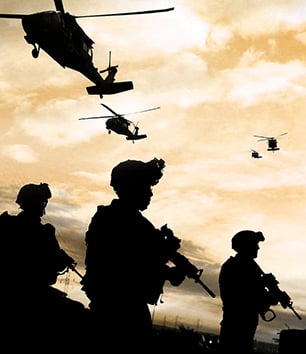
In March 2012, combined U.S.-South Korean forces carried out the largest amphibious landing operation exercise in 20 years, involving 13 naval vessels, 52 amphibious armored vehicles, 40 fighter jets and helicopters, and 9,000 U.S. troops.
The following month, South Korea’s Defense Department announced anew cruise missile capable of launching a precision strike anywhere in North Korea.
While North Korea was still mourning the death of Kim Jong-Il and transitioning to the leadership of Kim Jong Un, U.S. and South Korean hawks saw a prime opportunity to intensify pressure on North Korea to bring about what many in the west had been facilitating and anticipating for the past two decades—namely, the collapse of the North Korean regime.
The U.S. Pivot to Asia and the North Korean Quagmire
Addressing the Australian National Assembly in November 2011, Obama confirmed a shift in U.S. geostrategic priorities: “As the world’s fastest-growing region—and home to more than half the global economy—the Asia Pacific is critical to achieving my highest priority [of] creating jobs and opportunity for the American people.”
While still entangled in the Middle East, Obama promised that the United States would increase its presence and leadership role in Asia and the Pacific.
This same message was reflected in the United States’ 2012 Defense Strategic Guidelines, which outlined plans for rebalancing the U.S. Navy from a 50/50 to 60/40 split between its Pacific and Atlantic fleets.
As part of its “pivot” to secure key trade routes and economic advantage in the vast region, the United States has already begun to revive a network of old bases, including Australia’s Darwin base, Philippine’s Subic Bay, Vietnam’s Can Ranh Bay, and Thailand’s U-Tapao naval and air base, as well as tightening its ties with traditional allies, including South Korea and a remilitarizing Japan.
In 2012, the United States and Japan announced a major agreement to deploy a second advanced missile defense radar system in Japan, and for the first time, Japan’s Self Defense Forces and the U.S. Navy carried out combined landing and island defense exercises in Guam.
In Korea, although the United States disavows any interest in a controversial naval base currently under construction in Jeju, critics point out that the base is designed to accommodate Aegis destroyers that will likely become part of an integrated missile defense system under U.S. command.
A June 2012 Chosun Ilbo article reported that U.S. Forces in Korea (USFK) Commander James Thurman suggested maintaining the U.S.-ROK Combined Forces Command even after transferring operational control to South Korea in 2015, thereby ensuring South Korea’s status as a permanent U.S. garrison.
As the United States looks to Asia as its most valuable sphere of influence, North Korea serves as a convenient enemy, justifying a ratcheted-up, regional U.S. military presence.
But it also represents a policy quagmire. Not only has North Korea remained in the “cold” since the Soviet bloc collapsed, but it now also possesses two means of producing nuclear weapons and possibly long-range missile delivery technology.
Under Obama, the United States has dealt with other quagmires in the Middle East by toppling uncooperative regimes by force. North Korea, long the subject of regime-change fantasies, has little reason to believe that it is not in U.S. crosshairs.
Dangerously Close to War
USFK Commander James Thurman, formerly the Chief of Operations during the U.S. invasion of Iraq, and Special Operations Commander Eric Wendt, the former deputy commanding general in Afghanistan, have brought combat knowledge gleaned from experience in the Middle East to the Korean peninsula.
Mine-resistant vehicles used in Iraq and Afghanistan have now been deployed near the DMZ, still littered with mines from the Korean War.
And last summer, the Pentagon publicized the completion of precision-guided super bunker busters designed to attack North Korea’s nuclear facility.

The United States currently seeks to sell four Global Hawk surveillance drones to South Korea, whileincreasing South Korea’s ballistic range from 300 to 800 kilometers, thus enabling it to strike anywhere in North Korea.
Thurman proposed maintaining the 210th Fires Brigade, the core firepower in war scenarios against North Korea, close to the DMZ rather than transfer it to Pyeongtaek as originally planned. With no formal talks with the United States for almost a year, North Korea has good reason to be on edge.
In an August 2012 Foreign Ministry memo, North Korea, having reviewed its history of negotiations with the United States, concluded that it had no choice other than to buttress its nuclear program as a deterrent, not in order to trade it for aid but to counter U.S. regime-change moves.
“The principle of simultaneous action steps is not workable,” it stated, nullifying the “action for action” agreement reached through Six-Party talks. Rather, U.S. renunciation of its regime-change policy was, it declared, a “prerequisite for resolving the nuclear issue.”
Demonstrating that Obama’s policy of strategic patience has strained North Korea’s patience, Kim Jong Un declared on August 25: “Our patience has limits. We will not remain an onlooker to the enemies’ frantic moves for aggression, but will make every possible effort to protect the destiny of the country and the nation.”
If provoked, he added, North Korea would not only defend itself, but also act decisively to reunify the entire peninsula.
In the highly militarized West Sea, a site of frequent skirmishes between North and South, U.S. agitation for regime collapse and North Korea’s hardened stance may inadvertently trigger a war.
As Park Geun-hye, daughter of dictator Park Chung Hee, assumes power in South Korea and Obama begins his second term, they should remember that for the 75 million Koreans on both sides of the DMZ as well as those abroad whose roots and loved ones are on the Korean peninsula, an eruption of violence could generate catastrophic consequences.
When then-U.S. President Bill Clinton nearly attacked North Korea over its nuclear program in 1994, a Pentagon computer simulation projected 1 million deaths in the event of war on the peninsula. War is not an option.
Year One of Peace
Two decades ago, Clinton decided against attacking North Korea, and as a security assurance suspended Team Spirit, precursor to Key Resolve, in order to convince North Korea to abandon its nuclear ambitions.
Negotiations led to the freezing of North Korea’s plutonium production until George Bush reneged on U.S. agreements and denounced North Korea as part of an “axis of evil.”
Since then, neither Bush’s policy of aggression nor Obama’s so-called strategic patience has succeeded in halting North Korea’s nuclear program. On the contrary, Pyongyang has continued to enrich uranium and successfully launched a satellite into orbit.
As Leon Sigal points out, the lesson of U.S. nuclear diplomacy with North Korea is that “in trying to stop proliferation, cooperation worked where coercion failed.”
This year marks 60 years, a full life cycle in Korean tradition, since the signing of the Armistice Agreement that brought active fighting to a halt but did not end the Korean War.
 To mark the passing of a life cycle defined by war, Korean peace activists dubbed 2013 “Year one of peace.” As Obama enters his second term—a juncture when U.S. presidents historically “get vision” on North Korea—assessing the threat North Korea poses as a basis for U.S. policy is insufficient. “We, the people,”
Obama stated in his second inaugural address, “still believe that enduring security and lasting peace do not require perpetual war.” Meaningful gestures of cooperation—including suspending provocative war games, abandoning regime collapse scenarios, and returning to the negotiation table—are thus crucial first steps in a new direction.
Genuine peace, not war, is the only durable basis of U.S.-Korea relations, and peace talks to end the Korean War the only way forward.
Dr. Christine Hong is an assistant professor of transnational Asian American, Korean diaspora, and critical Pacific Rim studies at UC Santa Cruz. She is a steering committee member of the Alliance of Scholars Concerned about Korea, a coordinating council member of the National Campaign to End the Korean War, and a member of the executive board of the Korea Policy Institute.
Hyun Lee is a member of the Working Group on Peace and Demilitarization of Peace and the Asia Pacific, as well as the National Campaign to End the Korean War. She co-produces Asia Pacific Forum, a weekly radio show on culture and politics in Asia and the Asian diaspora.


No comments: