




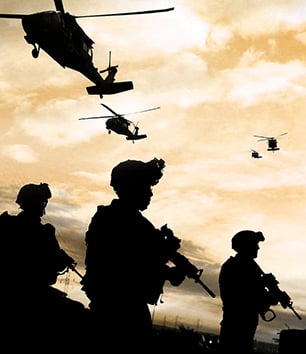




May 13, 2013 Three days later, the United Nations Security Council approved Resolution 2100, creating a policing mission beginning July 1, 2013. The mission is called by its French acronym MINUSMA. Its projected size is 11,200 soldiers and 1,440 police. France invaded the north of Mali with fighter aircraft and 4,000 soldiers on January 11. The Mali government and its French benefactor had lost control of the area in 2012 to Tuareg and other national groups fighting for autonomy and independence. Rightist Islamist forces that oppose the sovereignty aspirations of the national minorities then briefly rose to military dominance in the region. It is their presence that served as the key pretext for the French intervention and now for a foreign, military and police occupation of undeclared duration. Presently, there are some 6,000 soldiers from African countries serving in a "peacekeeping" role in the south of Mali, while French soldiers are engaged in combat with Islamists in the north. Also, what's called a military training mission by the European Union has some 200 soldiers on the ground and hundreds more providing supplies and equipment. The U.S. is a key backer of the French intervention. It has significantly boosted its military presence in West Africa during the past decade and recently opened a drone airbase in neighboring Niger. - - - - - - - - - - - - - - - - France discusses intervention The vote in France's National Assembly and Senate were required by Article 35-3 of the French Constitution, a revision from July 2008 arising from the long war in Afghanistan. French parliamentarians debated the Mali intervention on January 16 but no vote was taken. The first and only other time Article 35-3 has been invoked was in September of 2008 when legislators got around to approving France's Afghan intervention that began in 2001. In the National Assembly debate, Prime Minister Jean-Marc Ayrault called the Mali intervention a political and military success. Minister of Defense Jean-Yves Le Drian declared, "All of Mali's territory has been liberated" and the threat to the Mali's security has been "very strongly reduced." National Assembly deputies from the Left Front electoral coalition abstained in the vote. Jean-Jacques Candelier explained, "We want our [France's] contribution to be made solely through the military force to be created under the umbrella of the UN." He also argued that French aid should be reoriented in favor of local development. François Asensi, spokesperson for the Left Front in the Assembly, said the problem with the resolution presented by the government is its proposal for a French combat force that will be outside the control of the UN (Security Council). He also expressed concern that the precise goals of the intervention are unclear. "When will we say that out troops will have fulfilled their mission? What are the precise objectives of our military presence?...We do not accept a lengthy and permanent presence of France in Mali." But he concluded, "It goes without saying that we cannot vote against the presence of French troops in Mali, but we will abstain." ">An April 23 statement by the French Communist Party, an important constituent of the Left Front, voiced similar concerns about the government resolution, including that France risks being drawn into a quagmire with "regional repercussions." A party member writing on the party's website termed the decision to abstain in the National Assembly vote as "not very communist...Communists should OPPOSE military interventions that lead to imperialist wars." A member and correspondent with the New Anti-Capitalist Party (NPA) wrote a harsh assessment of the April 22 vote, in particular of the decision of the Left Front to abstain. The writer says there are abundant reasons to oppose the French intervention: "Four months of military intervention at a cost of 200 million euros; no political solution in sight; no handover to Mali foreseen; and the power of France's influence, as [Foreign Minister] Laurent Fabius has said, is strengthened. The article continues, "This shameful vote allows for a lengthy military presence in Mali that will become a full-fledged territorial occupation in the interests of France and the other big powers supporting it." - - - - - - - - - - - - - - - - The international plan for Mali The France/U.S./UN plan for Mali will see MINUSMA relegated to a policing ("peacekeeping") role. The force will stay out of combat because a large part of its ranks will come from African countries that are deemed to lack necessary training and resolve. Meanwhile, a separate French force of up to 1,000 soldiers will be dedicated to combat operations and will operate outside of any United Nations endorsement and control. Soldiers from Chad are the only African forces that have been fighting with French soldiers in the north, but that country has recently ended its combat role. Chad has suffered unacceptably high casualties and it says it is not equipped to fight the lengthy, counter-insurgency war that may be taking shape in Mali. [1] Chad's own political foundations are shaky and were likely a factor in its Mali decision. In March, the Union des forces de la résistance announced it was calling off a two-year cease-fire with the authoritarian government of Idriss Déby, due to the government's failure to engage in promised political dialogue. In early May, the Déby regime arrested some leading critics, including legislature member Saleh Makki of the Coordination des partis pour la défense de la Constitution. Déby has ruled Chad since 1990. - - - - - - - - - - - - - - - - Blunt assessment of foreign military "training" In an April 23 interview published in Le Monde, Col. Bruno Heluin of the French army provided a remarkably blunt assessment of the Mali army. He is assigned to the European military training mission. For now, the foreign plan for Mali assigns a very secondary role to the country's army. Mali was a founding member of the Trans-Sahara Counter-Terrorism Partnership that was created by the United States in 2005. The Partnership provides money, weapons and training to its 11 member-countries in West Africa and it conducts annual military exercises directed by the U.S., Europe and Canada. Three of those exercises have taken place on Mali soil. Notwithstanding all these years of training and equipping, Heluin says the 20,000-member Mali army lives "day to day." It lacks any training infrastructure, is under-financed and under-equipped, and it is plagued with corruption. He says much of the military training provided by the U.S. in recent years went to Tuareg-led army forces in the north. Many of these ended up joining the rebellion against the central government in 2011/12. Army leader Captain Amadou Sanogo was trained in the U.S. He led the overthrow of Mali's elected government in March 2012, and today, he retains key influence and power over the country. The army is presently recruiting 4,000 young people between the ages of 17 to 19. When asked about the support promised earlier this year at an international conference in Ethiopia to train and provision the Mali army, Heluin said not a penny has been received. The military contingents from the neighboring African countries present in Mali have received eight million euros ($11 million). Mali's army is stained with having overthrown a national government. Hence, the wariness of the large foreign powers to be seen engaging with it. Hence also the rush to get some kind of elected government back into office. Security Council Resolution 2100 calls for the holding of a national election as quickly as possible, preferably by July. This is one of the similarities to the Security Council occupation regime in Haiti, soon to enter its 10th year. In Haiti, there have been two national elections since MINUSTAH was created in 2004, in 2006 and in late 2010/early 2011. Each one featured the exclusion of progressive political forces. The dust from the January 2010 earthquake had barely settled before the big powers present in the country began to press for the second of those elections, notwithstanding the catastrophic, post-earthquake state of the country (which still prevails today). It recorded the lowest voter turnout in the modern history of the western hemisphere, including by far the lowest turnout in Haiti. Most serious commentators in Mali as well as internationally recognize that the country is nowhere near ready to hold a national election. The military situation is unstable, the army officers safely ensconced in the capital city Bamako remain in effective control, and the country is living a severe humanitarian crisis. - - - - - - - - - - - - - - - - Humanitarian situation That humanitarian emergency is detailed in a series of reports published recently. An IRIN agency news report says towns in the north are in a state of "complete chaos" with no governing or social infrastructure in operation. In Timbuktu, for example, not a single international aid agency is operating. The Guardian reported on April 29 that close to 300,000 people are internally displaced in Mali and some 125,000 people are living in refugee camps in neighboring countries. (Mali's population is 15.5 million.) Many are there due to ongoing drought conditions and the related, creeping desertification of the north of the country as the Sahara Desert expands inexorably southward. Food prices are spiraling and aid needs are not being met. In March, agencies found that one in five families in the north of Mali were suffering food shortages ranging from severe to extreme. The World Food Program is seeking to deliver food to half a million people around the country. Hector Calderon of UNICEF Mali says that this year in southern Mali, 210,000 children will suffer from life-threatening malnutrition and 450,000 will suffer a less severe but still debilitating form of malnutrition. Northern Mali will descend to emergency levels of food insecurity in less than two months if the security situation and humanitarian access to vulnerable communities does not improve, say dire warnings from four international aid agencies--Action Against Hunger (ACF), Solidarités International, Welthungerhilfe and Oxfam. "It is vital that we act before we reach a point of no return about the food situation," says Philippe Conraud, Oxfam Country Director in Mali. "While international attention is focused on the UN peacekeeping mission, we risk losing sight of the current alarming humanitarian situation." "Many big international donors which are not present in Mali have the impression that the military intervention was a success and the situation is back to normal," he said. "But we want to highlight the fact that this could become an emergency in a matter of months." A recent, A recent, troubling report on the human rights situation was authored by Human Rights Watch Director in France, Jean-Marie Fardeau. He writes that formal mechanisms of justice are "absent" from the north of Mali. "In all the small cities, villages and encampments, notably along the Niger River, the forces that are supposed to guarantee the rule of law are absent, while undisciplined and violent elements of the Mali army have exacted serious retribution." Fardeau says that 20 summary executions of civilians and an equal number of disappearances have been recorded, and that more are likely to be uncovered. Mistreatment and torture of prisoners by the Mali army is also reported. For the first time in the history of Mali, military officers, six in number, are being investigated for a human rights crime--the disappearance of five civilians in Timbuktu. Fardeau says it would be good if they could appear before a military tribunal, except that this institution has never convened. He also notes the recent creation of a national commission for dialogue and reconciliation. He does not have much hope for its effectiveness and says a full truth and reconciliation commission is needed instead. The serious allegations against the Mali army are a confirmation of the concern about that institution expressed by the Tuareg Mouvement national de libération de l'Azawad (MNLA) at the outset of the France intervention, including its call that the army should be prevented from reoccupying the north of the country. The concerns were ignored by France. As the French rulers settle in for a long occupation in Mali, they face difficult political conditions at home. The Guardian recently reports that polls are showing plummeting support for the Socialist Party government of President François Hollande. The one-year anniversary of the French left's return to the Elysée has been marked by disappointment on promises to cut unemployment, restore growth, contain the deficit and reverse Europe's one-size-fits-all austerity drive. Hollande's approval ratings have plunged to the lowest of any modern French leader...On May 5, tens of thousands of people marched in the streets of Paris against austerity and the captains of finance. The national rights struggle of the Tuareg and other national minorities in the north of Mali is decades old. It came to the fore again in 2011/12, prompted by the intransigence of the Mali government/military and by the upheaval in neighboring Libya. A cascade of disastrous political fallout then followed, including the military coup of March 2012 and the France intervention. The coup and the intervention have exposed the rotten edifice of neo-colonialism constructed in West Africa during the past 50-plus years. The peoples of the entire region are suffering deeply as a consequence. Increasingly, they are being dragged back into new forms of direct, colonial rule. But the new colonialism will continue to be met with deep resistance. The French rulers will find no salvation in West Africa to the decline of their economy at home and the challenges to their mini-empire abroad. - - - - - - - - - - - - - - - - Notes 1. Fighting in the north of Mali is lessening and France has recently repatriated several hundred of its soldiers. Accordingly, the Canadian government has suspended its airlift support. The quiet that surrounded that decision led Ottawa Citizen columnist David Pugliese to ask if Canada was abandoning its French ally. But Rear Admiral Peter Ellis replied to the newspaper, "While assistance is no longer required by France on a continuous basis, Canada remains committed to supporting our allies and will still transport French equipment and troops to Mali, when needed." First published at the Bullet. |


No comments: