









IMAP/OSF Report Calls for Investigation of Drug Given to All Guantanamo Detainees
By: Jeff Kaye
 Breaking
a three-year silence by the medical and human rights community, a panel
of doctors, attorneys, human rights professionals, university
professors and ethics experts have called for an investigation into the
use of mefloquine on detainees at Guantanamo Naval Prison. The prison
camp had instituted in very early 2002 an unprecedented policy of
administering full-treatment doses of mefloquine to all incoming
detainees at Guantanamo.
Breaking
a three-year silence by the medical and human rights community, a panel
of doctors, attorneys, human rights professionals, university
professors and ethics experts have called for an investigation into the
use of mefloquine on detainees at Guantanamo Naval Prison. The prison
camp had instituted in very early 2002 an unprecedented policy of
administering full-treatment doses of mefloquine to all incoming
detainees at Guantanamo.Mefloquine is an anti-malaria drug that has been very controversial over the years. It has been linked to severe neurological and psychiatric side effects, including depression, suicide, hallucinations, seizures, neurotoxicity as well as adverse and sometimes long-lasting central nervous system problems. The drug was also sold for years under the brand name Lariam in the United States, but Swiss manufacturer Hoffmann�La Roche ceased marketing it in here in August 2009.
The rationale for the Department of Defense policy on mefloquine at Guantanamo � ostensibly to counter a supposed threat of malaria brought in by the newly arriving detainees � underwent a withering analysis in a series of articles I wrote with Jason Leopold (see here, here, and here). At the same time, there was a strongly critical 2010 report by Seton Hall University School of Law�s Center for Policy and Research. This was followed by an article by Dr. Remington Nevin in the October 2012 edition of the medical journal, Tropical Medicine and International Health, entitled "Mass administration of the antimalarial drug meflouqine to Guantanamo detainees: a critical analysis" (PDF).
Nevin, a former Army doctor, concluded "there was no plausible public health indication for the use of mefloquine at Guantanamo," and suggested "the troubling possibility that the use of mefloquine at Guantanamo may have been motivated in part by knowledge of the drug�s adverse effects�."
The call to investigate mefloquine was made in the context of the report�s strong recommendation that President Obama "order a comprehensive investigation of U.S. practices in connection with the detention of suspected terrorists� [including] inquiry into the circumstances, roles, and conduct of health professionals in designing, participating in, and enabling torture or cruel, inhuman, or degrading treatment of detainees in interrogation and confinement settings and why there were few if any known reports by health professionals."
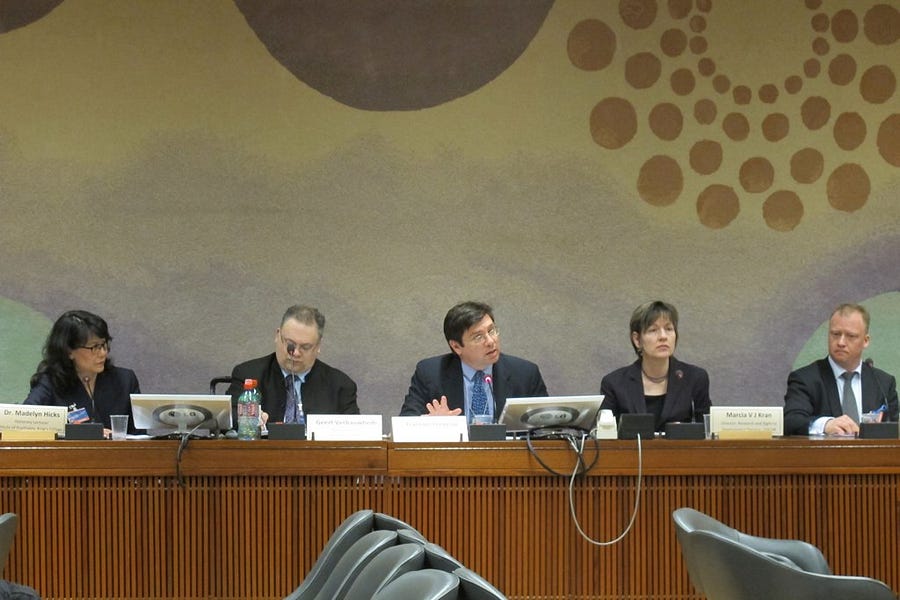
The report, Ethics Abandoned: Medical Professionalism and Detainee Abuse in the "War on Terror, was released last week by its sponsors, the Institute on Medicine as a Profession (IMAP) and the Open Society Foundations (OSF) [link to PDF of full report]. IMAP is a major player in the medical ethics field and is funded by a number of foundations, including the Open Society Institute, the Josiah Macy Jr. Foundation, Kaiser Foundation Health Plan, Inc., the Selz Foundation, and the The Pew Charitable Trusts. IMAP also plays a central role in funding Columbia University�s Center on Medicine as a Profession at Columbia University�s College of Physicians and Surgeons.
The bulk of the report described how the CIA and the Department of Defense, with the connivance of the Department of Justice and health professional organizations like the American Psychological Association, changed the rules and procedures surrounding the use of health care professionals in interrogations and national security detention centers such that doctors and psychologists were enlisted in the design, participation and enabling of torture and cruel, inhumane and degrading treatment of prisoners.
In an article on November 5 at The Dissenter, Kevin Gosztola looked at the ways doctors and other health professionals participated in unethical forced-feedings of hunger strikers. In a previous look at the report, I noted its call for a new executive order banning certain interrogation techniques currently used in the Army�s field manual on interrogation, which has been falsely sold to the public as "nonabusive."
The Role of Captain Shimkus
While labeling as "highly questionable" and "unexplained" the use of mefloquine at Guantanamo, the IMAP/OSF report did not investigate its use at length because, strangely enough, its task force panel included the former commanding officer at the Guantanamo Naval Hospital and chief surgeon (until summer 2003), Captain Albert Shimkus. Shimkus was the Guantanamo official who signed off on the mefloquine protocol to begin with.
IMAP/OSF report writers realized the dilemma they were in. Here�s what they wrote about it:
Asked to comment on Shimkus�s inclusion on the IMAP/OSF panel, and on the report�s recommendation on mefloquine, Dr. Nevin replied via email:Questions have arisen about the unexplained administration of an antimalaria drug with neuropsychiatric side effects to detainees at Guant�namo, including whether there were intelligence or security reasons rather than medical reasons for doing so. As the conduct of a member of the task Force has been questioned on this subject, the task Force does not address the matter here, but urges that the circumstances of the use of mefloquine, including the reasons for choosing it, be addressed as part of the full investigation of medical practices we recommend. [p. 48]
Dr. Nevin�s citation of The Constitution Project (TCP) report on detainee abuse is worth expanding upon, because Captain Shimkus was interviewed at length by TCP report investigators. Here�s how the mefloquine issue was handled in their report, issued earlier this year:"While the recommendations of the Task Force to investigate the highly questionable use of mefloquine among Guantanamo detainees is welcome and long overdue, the Task Force has missed an opportunity to further explore this issue independently owing to the remarkable fact that one of the Task Force�s own members, CAPT (Retired) Albert Shimkus, former commander of the Guantanamo detainee hospital, was critically involved in the formulation and administration of detainee mefloquine policy.
For years CAPT Shimkus has consistently defended the practice by denying any misuse of the drug, including in a report published this year by the Constitution Project. Given the seriousness of allegations of misuse of mefloquine and the reluctance of CAPT Shimkus to acknowledge his role in having facilitated its questionable use, the Task Force should have recused CAPT Shimkus of involvement in their work so that the remaining panel members may have independently investigated this practice themselves, free of overt conflicts of interest. The loss of this opportunity will only further delay obtaining answers to the question of why mefloquine was used, and lessens the value of this report relative to its full potential."
"�certain issues we were advised not to talk about"Among Shimkus� continuing critics are some who have suggested he aided interrogators by approving and initiating a regime of prescribing anti-malaria medication for all the detainees, at dosages far higher than those normally used for prevention rather than treatment of malaria. The drug, mefloquine, had side effects that could include paranoia, hallucinations, and depression, theoretically making recipients more vulnerable to interrogation. But Shimkus denied that this was the purpose of the anti-malarial medication, and the allegations that it was prescribed to assist in interrogation are speculative. Shimkus said he agreed with the medical decisions of others, including senior military medical officers, to conduct the medication program, and had consulted with officials at the Centers for Disease Control. He said that no one involved in the interrogation regime had any role in the decision or discussed the matter with him.
According to press reports from February 2002, malaria was far more prevalent in Afghanistan than in Cuba, where it was largely eradicated, and Cuban doctors had raised the issue of malaria prevention in meetings with Shimkus. In 2011, a Pentagon spokesperson told Stars and Stripes that the high doses of medication were appropriate because "[t]he potential of reintroducing the disease to an area that had previously been malaria-free represented a true public health concern. Allowing the disease to spread would have been a public health disaster." [p. 32, link to PDF of full report]
Shimkus appears to have gone out of his way to involve himself with investigations into detainee abuse, but his claims in the TCP report that he didn�t notice abuse of Guantanamo detainees because he wasn�t imagining any abuse would be taking place is just plain lame. (Shimkus was also a prominent positively portrayed figure in Karen Greenberg�s book, The Least Worst Place: Guantanamo�s First 100 Days.) His involvement in the mefloquine decision, including his explanations to this author about his motivations and actions, are, as the IMAP/OSF report indicate, matters for a full investigation.
For instance, rather than Shimkus�s claim that no one discussed the mefloquine matter with him, he told me in an interview in 2010 that he was told by unspecified others not to discuss certain aspects of the mefloquine decision.
"There were certain issues we were advised not to talk about," Shimkus told me, explaining the reason the policy was never publicly disclosed (see link).
Shimkus claims that he was worried about a possible "public health disaster." Yet he told me, in a separate interview from that noted just above, that he did not bother to discuss the malaria matter with KBR contract personnel or management when such workers were brought to Guantanamo in later 2002 to work on building Camp Delta, even though those workers mostly came from India and the Philippines, and areas where malaria can be endemic. So far as I was able to investigate, not one of those hundreds of workers could be documented to have taken mefloquine at Guantanamo.
No one knows the reason why mefloquine was mass administered at Guantanamo. Was it just poorly thought out medical policy? Was it covert testing on the side effects of mefloquine, a drug that was under fire at that same time at the Department of Defense (see link)? Was it an attempt to disorient or chemically weaken the detainees upon arrival?
The last question is not so strange when you realize that for years the CIA stockpiled another anti-malaria drug, cinchonine, to use as a chemical "incapacitating agent."
Many I speak to are not hopeful about the chances for a needed investigation. But I think that it would be premature to call over the struggle to fully unmask the torture that took place and get some form of accountability. More likely is that it would be part of, or even help spark a larger social struggle against the national security state and forms of injustice and inequality that plague this society.
Source


No comments: