








BLACKWATER FOUNDER REMAINS FREE AND RICH WHILE HIS FORMER EMPLOYEES GO DOWN ON MURDER CHARGES

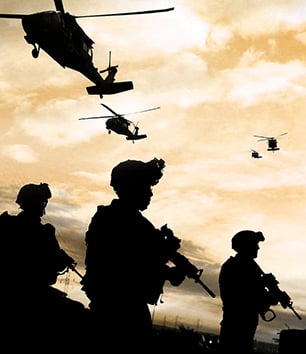
A federal jury in Washington, D.C., returned guilty verdicts against four Blackwater operatives charged with killing more than a dozen Iraqi civilians and wounding scores of others in Baghdad in 2007.
The jury found one guard, Nicholas Slatten, guilty of first-degree murder, while three other guards were found guilty of voluntary manslaughter: Paul Slough, Evan Liberty, and Dustin Heard. The jury is still deliberating on additional charges against the operatives, who faced a combined 33 counts,according to the Associated Press. A fifth Blackwater guard, Jeremy Ridgeway, had already pleaded guilty to lesser charges and cooperated with prosecutors in the case against his former colleagues. The trial lasted ten weeks and the jury has been in deliberations for 28 days.
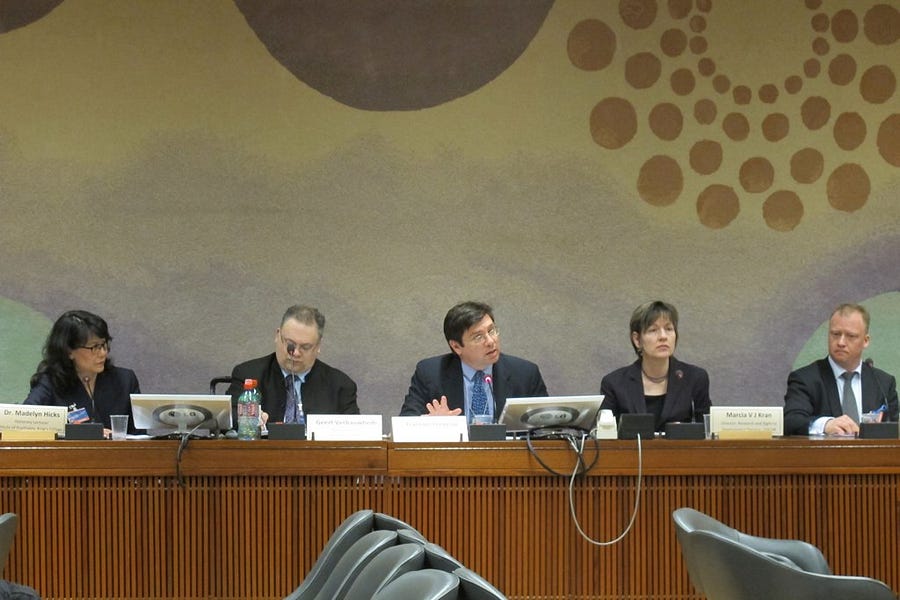
The incident for which the men were tried was the single largest known massacre of Iraqi civilians at the hands of private U.S. security contractors. Known as “Baghdad’s bloody Sunday,” operatives from Blackwater gunned down 17 Iraqi civilians at a crowded intersection at Nisour Square on September 16, 2007. The company, founded by secretive right-wing Christian supremacist Erik Prince, pictured above, had deep ties to the Bush Administration and served as a sort of neoconservative Praetorian Guard for a borderless war launched in the immediate aftermath of 9/11.
While Barack Obama pledged to reign in mercenary forces when he was a senator, once he became president he continued to employ a massive shadow army of private contractors. Blackwater — despite numerous scandals, congressional investigations, FBI probes and documented killings of civilians in both Iraq and Afghanistan — remained a central part of the Obama administration’s global war machine throughout his first term in office.
Just as with the systematic torture at Abu Ghraib, it is only the low level foot-soldiers of Blackwater that are being held accountable. Prince and other top Blackwater executives continue to reap profits from the mercenary and private intelligence industries. Prince now has a new company, Frontier Services Group, which he founded with substantialinvestment from Chinese enterprises and which focuses on opportunities in Africa. Prince recently suggested that his forces at Blackwater could haveconfronted Ebola and ISIS. “If the administration cannot rally the political nerve or funding to send adequate active duty ground forces to answer the call, let the private sector finish the job,” he wrote.
None of the U.S. officials from the Bush and Obama administrations who unleashed Blackwater and other mercenary forces across the globe are being forced to answer for their role in creating the conditions for the Nisour Square shootings and other deadly incidents involving private contractors. Just as the main architect of the CIA interrogation program, Jose Rodriguez, is on a book tour for his propagandistic love letter to torture, Hard Measures: How Aggressive CIA Actions After 9/11 Saved American Lives, so too is Erik Prince pushing his own revisionist memoir,Civilian Warriors: The Inside Story of Blackwater and the Unsung Heroes of the War on Terror.
While the Blackwater verdict is an important and rare moment of accountability in an overwhelmingly unaccountable private war industry, it does not erase the fact that those in power—the CEOs, the senior officials, the war profiteers—walk freely and will likely do so for the rest of their lives.
What is so seldom discussed in public discourse on the use of mercenaries are the stories of their victims. After the Nisour Square massacre, I met with Mohammed Kinani, whose 9-year-old son, Ali, was the youngest person killed by Blackwater operatives that day. As he and his family approached the square in their car:
“[T]hey saw one armored vehicle and then another, with men brandishing machine guns atop each one,” Mohammed recalls. The armored cars swiftly blocked off traffic. One of the gunners held both fists in the air, which Mohammed took as a gesture to stop. “Myself and all the cars before and behind me stopped,” Mohammed says. “We followed their orders. I thought they were some sort of unit belonging to the American military, or maybe just a military police unit. Any authority giving you an order to stop, you follow the order.” It turns out the men in the armored cars were neither U.S. military nor MPs. They were members of a Blackwater team code-named Raven 23.As the family waited in traffic, two more Blackwater vehicles became visible. Mohammed noticed a family in a car next to his—a man, woman and child. The man was staring at Mohammed’s car, and Mohammed thought the man was eyeing Jenan. “I thought he was checking my sister out,” Mohammed remembers. “So I yelled at him and said, ‘What are you looking at?’” Mohammed noticed that the man looked frightened. “I think they shot the driver in the car in front of you,” the man told him.Mohammed scanned the area and noticed that the back windshield of the white Kia sedan in front of him was shattered. The man in the car next to Mohammed began to panic and tried to turn his car around. He ended up bumping into a taxi, and an argument ensued. The taxi driver exited his car and began yelling. Mohammed tried to break up the argument, telling the taxi driver that a man had been shot and that he should back up so the other car could exit. The taxi driver refused and got back into his vehicle.At that point, an Iraqi police officer, Ali Khalaf Salman, approached the Kia sedan, and it started to slowly drift. The driver had been shot, and the car was gliding in neutral toward a Blackwater armored car. Salman, in an interview, described how he tried to stop it by pushing backward. He saw a panicked woman inside the car; she was clutching a young man covered in blood who had been shot in the head. She was shrieking, “My son! My son! Help me, help me!” Salman remembered looking toward the Blackwater shooters. “I raised my left arm high in the air to try to signal to the convoy to stop the shooting.” He said he thought the men would cease fire, given that he was a clearly identified police officer.“As the officer was waving, the men on the armored cars started shooting at that car,” Mohammed says. “And it wasn’t warning shots; they were shooting as in a battle. It was as though they were in a fighting field. I thought the police officer was killed. It was insane.” Officer Salman managed to dive out of the way as the bullets rained down. “I saw parts of the woman’s head flying in front of me,” recalled his colleague, Officer Sarhan Thiab. “They immediately opened heavy fire at us.”That’s how the Nisour Square massacre began.“What can I tell you?” Mohammed says, closing his eyes. “It was like the end of days.”Mohammed would later learn that the first victims that day, in the white Kia, were a young Iraqi medical student, Ahmed Haithem Al Rubia’y, and his mother, Mahassin, a physician. Mohammed is crystal clear that the car posed no threat. “There was absolutely no shooting at the Blackwater men,” he says. “All of a sudden, they started shooting in all directions, and they shot at everyone in front of them. There was nothing left in that street that wasn’t shot: the ground, cars, poles, sidewalks; they shot everything in front of them.” As the Blackwater gunners shot up the Rubia’ys’ vehicle, Mohammed said, it soon looked like a sieve “due to how many bullet holes it had.” A Blackwater shooter later admitted that they also fired a grenade at the car, causing the car to explode. Mohammed says the Blackwater men then started firing across the square. “They were shooting in all directions,” he remembers. He describes the shooting as “random yet still concentrated. It was concentrated and focused on what they aimed at and still random as they shot in all directions.”One of the Blackwater shooters was on top of an armored vehicle firing an automatic weapon, he says. “Every time he would finish his clip, he would throw it on the ground and would load another one in and would start shooting again, and finish the new one and replace it with another.” One young Iraqi man got out of his car to run, and as he fled, the Blackwater shooter gunned him down and continued firing into his body as it lay on the pavement, Mohammed says. “He was on the ground bleeding, and they’re shooting nonstop, and it wasn’t single bullets.” The Blackwater shooter, he says, would fire at other Iraqis and cars and then return to pump more bullets into the dead man on the ground. “He sank in his own blood, and every minute the [Blackwater shooter] would shoot left and right and then go back to shoot the dead man, and I could see that his body would shake with every bullet. He was already dead, but his body was still reacting to the bullets. [The shooter] would fire at someone else and then go back to shoot at this dead man.” Shaking his head slowly, Mohammed says somberly, “The guy is dead in a pool of blood. Why would you continue shooting him?”In his vehicle, as the shooting intensified, Mohammed yelled for the kids to get down. He and his sister did the same. “My car was hit many times in different places. All I could hear from my car was the gun shots and the sound of glass shattering,” he remembers. Jenan was frantic. “Why are they shooting at us?” she asked him. Just then, a bullet pierced the windshield, hitting Jenan’s headrest. Mohammed shows me a photo of the bullet hole.As gunfire rained on the SUV, Jenan grabbed Mohammed’s hair, yanked his head down and covered him with her body. “My young sister was trying to protect me by covering me with her body, so I forced myself out of her grip and covered her with my body to protect her. It was so horrific that my little sister, whom I’m supposed to protect, was trying to protect me.” Mohammed managed to slip his cellphone from his pocket and was going to call his father. “It’s customary that when in agony before death, you ask those close to you to look after your loved ones,” he says. Jenan demanded that Mohammed put down the phone, reminding him that their father had had two strokes already. “If he hears what’s happening, he’ll die immediately,” she said. “Maybe he’ll die before us.”At that moment, bullets pierced the SUV through the front windshield. A bullet hit the rearview mirror, causing it to whack Mohammed in the face. “We imagined that in a few seconds everyone was going to die–everyone in the car, my sister and I and our children. We thought that every second that passed meant one of us dying.” He adds, “We remained still, my sister and I. I had her rest her head on my lap, and my body was on top of her. We’d sneak a peek from under the dashboard, and they continued shooting here and there, killing this one and that one.”And then the shooting stopped.
Kinani thought his family had somehow miraculously survived the massacre. But then the silence of the aftermath was shattered by relatives in his car shouting, “Ali is shot! Ali is shot!”
Mohammed rushed around to Ali’s door and saw that the window was broken. He looked inside and saw his son’s head resting against the door. He opened it, and Ali slumped toward him. “I was standing in shock looking at him as the door opened, and his brain fell on the ground between my feet,” Mohammed recalls. “I looked and his brain was on the ground.” He remembers people yelling at him, telling him to get out while he could. “But I was in another world,” he says. Then Mohammed snapped back to consciousness. He put Ali back in the car and placed his hand over his son’s heart. It was still beating. He got in the driver’s seat of his car, tires blown out, radiator damaged, full of bullets, liquids leaking everywhere, hoping still that he could save [Ali’s] life. Somehow he managed to get the car near Yarmouk Hospital, right near the square. He picked up Ali and ran toward the hospital. He nearly collapsed on the road, and an Iraqi police officer took Ali from his arms and ran him into the hospital.Mohammed checked that the other children were safe and then dashed to the hospital. “I entered the emergency room, and blood was everywhere, dead people, injured people everywhere,” he remembers. “My son was in the last bed; the doctor was with him and had already hooked him with an IV line.” As Mohammed stood by Ali’s bed, the doctor told him that Ali was brain dead. “His heart is beating,” the doctor said, “and it will continue to beat until he bleeds out and dies.” The doctor told him that if there were any hope to be found, it would require taking Ali in an ambulance to a neurological hospital across town. The fastest route meant that they had to pass through Nisour Square. Iraqi police stopped them and told them they could not pass. “The US Army is here and won’t let you through,” the officer told them. The driver took an alternate route and was going so fast the ambulance almost crashed twice. When they got to the hospital, Mohammed offered to pay the driver–at least for the gas, which is customary. The driver refused. “No, I would like to donate blood to your son if he needs it,” he told Mohammed. A few moments later, Mohammed stood with a doctor who told him there was nothing they could do. Ali was dead.
Filmmaker Richard Rowley and I produced a 30 minute documentary on the Nisour Square massacre and the story of Ali Kinani for Democracy Now! andThe Nation magazine:
Photo: Susan Walsh/AP
Email the author: jeremy.scahill@theintercept.com


No comments: