









‘Cancer Causing Aircraft’
Pilots, cabin crew and passengers are inhaling air that could be tainted with toxic chemicals, often without awareness, impacting their health and the safety of flights.
The world witnessed with shock the alarming Alaska Airlines plane incident involving Flight 1282, a Boeing 737-9 MAX, where a fuselage door plug blew off mid-flight near Portland, Oregon, USA earlier this year.
The disturbing event follows closely after the tragic 2018 and 2019 crashes involving two Boeing 737 MAX 8 jets, claiming the lives of 346 individuals due to flawed flight control systems that caused fatal nosedives.
In the aftermath of these incidents, profound concerns about the overall safety of aircraft have surged, demanding urgent attention and scrutiny. Another worrying and often overlooked matter impacting the safety of our flights involves potential contamination of the air circulating within the cabin and cockpit with toxic chemicals.
Pilots
Jet powered aircraft require the use of synthetic engine oils and hydraulic fluids, which can potentially seep into the air supply in modern aircrafts, except for the Boeing 787 Dreamliner. The air supply, known as “bleed air”, is drawn unfiltered from the engine or auxiliary power unit (APU), contaminating the aircraft’s internal air with toxic substances.
Inhaling oil and fluids that leak into the aircraft breathing air supply can result in both immediate and prolonged neurological, cardiological and respiratory health issues. This set of symptoms, arising from exposure of toxic air, is referred to ‘aerotoxic syndrome’.
During a June 2022 interview on the Seth Meyers show, actor Miles Teller shared his experience and response after being exposed to toxic fumes in a jet while filming ‘Top Gun’:
“And so we landed. I’m just like, man, I’m not feeling too good, and I was really hot and I just started itching like crazy, so I get out of the jet and I’m just covered in hives, like head to toe. Instantly, I go to a doctor. I do like a blood analysis, this, that, whatever. I go to the doctor and my bloodwork comes back and I have flame retardant pesticides and jet fuel in my blood.”
Since the 1950s, pilots, cabin crew, and passengers have consistently raised concerns about inadequate cabin air quality and potential contamination of aircraft air supplies. This is typically identified by a peculiar but often subtle ‘dirty sock’ odour. In instances of severe contamination, visible smoke may be present.
Red Alert
These are often called ‘fume events’ in the aviation industry. Fume events are highly concerning, as they have the potential to impair or incapacitate pilots and cabin crew during a flight, thereby jeopardising the lives of both the crew and passengers.
The air provided to pilots, crew members, and passengers, originates from the engines. Due to the high temperatures during engine operation, any engine oil leakage has the potential to transform into a mist of chemicals that can be inadvertently inhaled by pilots, crew members, and passengers.
Numerous reports from pilots, crew members, passengers, organisations, and scientists suggest that these occurrences are more frequent than commonly acknowledged.
In some cases, pilots have been compelled to resign from their positions entirely because of the adverse health effects arising from these fume events. Many pilots and crew members hesitate to officially document and disclose such occurrences, in fear of losing their jobs.
In 1997, Dr Susan Michaelis, a former pilot and authority in aviation safety, had to retire from her profession at the age of 34 due to illness that made her unfit to fly. Since then, she has dedicated her efforts to researching the field.
Breast Cancer
Reflecting on her personal experience as a pilot, Dr Michaelis explains:
“I began my aviation career in 1986, and after eight years, in 1994, I secured a position as a regional airline pilot in Australia, operating the BAe 146. Shortly after starting this role, I consistently detected an unpleasant odour resembling that of a dirty sock inside the aircraft.
“This occurrence became a regular experience whenever changes occurred with the engines, APU, air supply, or when different stages of flight were initiated. The fumes were typically temporary but recurred almost every flight. Subsequently, I started experiencing headaches, a sore throat, difficulty in speaking and concentrating, as well as feelings of fatigue and nausea.
“The situation deteriorated progressively, and during a two-day period in mid-1997, the condition seemed a bit more challenging. Unbeknownst to me then, those two days marked my final flight as a pilot. The symptoms I had been experiencing for nearly three years at work reached a point where, at the age of 34, I was no longer able to continue flying. Eventually, my pilot medical certificate was revoked, and I have not flown as a commercial pilot since then.”
Dr Michaelis revealed the long-term health effects and consequences of continuous exposure to fume events:
“I am currently dealing with stage 4 incurable lobular breast cancer, and I attribute it to the consistent exposure to these fumes over the years.
“The fumes contain chemicals and contaminants recognised as endocrine disruptors that mimic oestrogen. This is particularly significant in the context of oestrogen-driven breast cancers, which is the type I have.
Health
“Despite not flying at high altitudes, across time zones, or working night shifts, I was exposed to bleed air fumes. This exposure not only ended my career but, I fear, will ultimately lead to the end of my life, given the nature of this incurable form of breast cancer.”
Based on Dr Michaelis 2017 study, among 274 surveyed pilots, 63 per cent reported experiencing adverse health effects, with 44 per cent reporting symptoms persisting for days or weeks post-exposure, 32% experiencing symptoms lasting for weeks to months, and 13% facing chronic ill health that resulted in permanent disqualification from flying due to fitness issues.
In 2018, the Federal Aviation Administration (FAA), issued a safety alert to operators providing guidance that “inflight odour, smoke and/or fume events can occur without other visual and/or olfactory cues. To mitigate health consequences to passengers and crew, prompt and decisive action is critical.”
Aircraft manufacturers ensure the re-circulation of at least 50% of the air inside the aircraft by installing HEPA filters. These filters are effective in eliminating bacteria and viruses from the recirculated air. However, they are not designed to remove heated engine or hydraulic fluid fumes.
Contaminants in bleed air can involve various harmful chemicals, including organophosphates (OP) like the flame retardant tricresyl phosphate (TCP), a variety of volatile organic compounds (VOC) such as aldehydes and solvents, as well as carbon monoxide and other toxic substances.
Neurological Damage
While a variety of chemicals can contaminate the cockpit and cabin air, the primary source of concern has been organophosphate TCP, a neurotoxin found in engine oils, and ultra-fine particles (UFPs), which are composed of fine droplets in the bleed air.
According to a study published in December 2023 at the International Journal of Environmental Research and Public Health, ongoing exposures to organophosphates might lead to neurological damage through other mechanisms, including alterations in gene expression, heightened oxidative stress, neuroinflammation and disruption of the endocrine system.
Exposure to contaminants in bleed air and adverse effects reported by aircrew include a pattern of acute and long-term adverse health effects. Like any toxic substances, the symptoms experienced are dependent upon the level and duration of exposure.
Various clinical factors, including diet, smoking and alcohol consumption, age, comorbidities, medication, and genetics, may also play a role in determining individual reactions to fume events.
Initial symptoms initially associated with fume events encompass dizziness, fogginess, impaired short-term memory and cognitive thinking, nausea, tremor, fatigue, lack of coordination, breathing difficulties, balance impairment, cough, chest pain, and irritation of the eyes, nose, and throat.
Symptoms
While some individuals experience short-duration symptoms, for others, it may take hours, days, weeks, months, or even years to recover fully, and in certain cases, a complete recovery may not occur.
Exposure to fume events may be linked to a variety of enduring health conditions, including complaints related to the central and peripheral nervous systems, cough, respiratory issues, lung disease, cognitive dysfunction, toxic encephalopathy, asthma, chronic bronchitis, sinusitis, vocal cord polyps, irregular heartbeat, elevated blood pressure, tremors, muscle weakness, numbness in limbs, peripheral neuropathy, loss of temperature control, neurodegenerative diseases (such as Parkinson’s and Alzheimer’s), depression, anxiety, fertility issues, eye disorders, and cancer.
In 2023, 16 international experts released a medical protocol designed for examining aircrew and passengers who have been exposed to contaminated air and fume events. However, according to Dr Michaelis, there’s still lack of interest from the aviation industry in collecting epidemiological data from people exposed to contaminated air in aircraft.
Former airline captain and film producer, Tristan Loraine, highlighted a possible solution to fume events:
“Adjusting the method of supplying air to the cabin is a possibility. Unlike the 787, which use electrical compressors, every other airplane utilises the flawed bleed air approach.
“Several years ago, Airbus and the German company Liebherr Aerospace collaborated on exploring the possibility of converting an A320 to a bleed-free system, like the 787, employing electrical compressors to draw in outside air.
Warning Systems
“However, due to the substantial electrical power consumption of the electric compressors, they faced challenges in generating enough power to operate two large compressors.
“Consequently, the project did not progress beyond making one half of the aircraft ‘bleed free’. Looking ahead, as advancements in electrical power generation develop, this approach could potentially become a promising solution—perhaps even the optimal one. Unfortunately, there is currently no serious effort to develop this technology.”
The monitoring of fume events is a crucial aspect of research; however, the lack of systems for detecting contaminated air presents a challenge in identifying the source and quantifying the presence of pollutants inside aircrafts.
The Spanish Airline Pilots Union (Sepla) and the Global Cabin Air Quality Executive (GCAQE), an entity advocating for the interests of aircrew, are urging the immediate installation of warning systems for contaminated air in the cockpit.
There is an immediate need to adopt an international medical protocol that recognises the adverse health effects associated with fume exposure inside aircraft cabins and cockpits. One has recently been published by Dr Michaelis and her team. However, the industry has yet to adopt it.
Protocols
Presently, there is no existing global reporting system; however, the GCAQE has proactively created the Global Cabin Air Reporting System (GCARS). This new confidential global reporting system is offered free of charge and is accessible for both crews and passengers to report incidents of contaminated air on aircraft.
Introducing training protocols for aircrew during fume events can enhance awareness and address under-reporting issues. Furthermore, improved training and reporting on bleed air and supply air contamination are necessary for maintenance staff, manufacturers, airline operators, and senior management.
“Several individuals in the industry inform us that airline executives and engineering departments prioritise eliminating odours over addressing the presence of chemicals, simply to avoid passenger complaints.
“From a flight safety perspective, we argue that this approach is problematic, as it lacks warning indicators. It’s comparable to consuming alcohol without manifesting any immediate side effects, until you collapse”, explained Loraine.
The Federal Aviation Administration (FAA), the European Union Aviation Safety Agency (EASA), and the UK Civil Aviation Authority (CAA), were contacted to comment on their protocols and planned measures for handling fume events. The FAA responded with an exact reproduction of the content found on their Cabin Air Quality website page.
Denial
Part of EASA’s response included:
“A number of investigations and research projects have been conducted by various scientific teams, involving in-flight measurements, but did not allow so far to obtain the complete characterisation of the chemical compounds involved in single cabin/cockpit air contamination (CAC) events, to determine the sources and exposure levels to contamination and to perform comprehensive toxicological risk assessment for such events.
“Due to the lack of an established relationship between CAC event exposure and potential health impairments, no standardised medical protocol is defined to evaluate affected aviation professionals.”
The CAA commented:
“Based on the available data submitted through our Mandatory Occurrence Reporting process, occurrences relating to engine bleed air are rare, forming only a very small proportion of the total number of fume event reports we receive each year.
“Sensor technology to detect fume events remains at a proof-of-concept stage. There are many sources of ‘contaminants’ in a cabin which can be detected by sensor devices, including those from catering or passengers. Until the technology has been proven to work in an aviation context, we would not advise their use at this time.”
Dr Michaelis detailed how the aviation industry perceives and addresses fume events:
“Airlines, regulators, manufacturers, and the broader aviation industry do their very best to ignore much of the scientific literature that refers to adverse effects in people exposed to bleed air contamination.
Elusive
“Inappropriately, they insist that fume events are rare and assert there is no data establishing a link between exposures and reported adverse effects. Instead, they engage in additional scientific studies and further inquiries that fail to pose appropriate research questions or lead us in circles, repeatedly calling for more research, while dismissing the extensive data that continues to be documented.”
Dr Michaelis shares a final message to airlines, regulators, manufacturers, governments, pilots, crew members and passengers across the world:
“The breathing air in aircraft is routinely contaminated by low levels of engine oils and hydraulic fluids.
“This practice began in the 1950s and has been thoroughly documented and acknowledged. Despite the overwhelming evidence, the aviation industry has focused on denial and obfuscation, refusing to investigate the effects on people.
“The available information is compelling, and no amount of sophisticated committees can delay addressing this problem any longer. The era of maintaining this open secret has concluded. Solutions to mitigate risks could be within reach if there is determination or a proactive approach adopted.”
Meanwhile, pilots, cabin crew and passengers continue to inhale air that could be tainted with toxic chemicals, often without awareness, experiencing the repercussions of fume events that impact their health and the safety of flights. Unfortunately, a resolution for this issue remains elusive.
Right of Reply
A Boeing spokesperson told The Ecologist:
“Safety is our top priority. The cabin air inside commercial airplanes is safe. While no indoor environment is free from contaminants, several independent studies have found that air quality on Boeing aircraft compares favorably to other indoor air environments like schools, office buildings, and homes. Cabin air is exchanged every two to three minutes. In addition, all Boeing airplanes use hospital-grade HEPA filters to remove essentially all particles from air that is re-circulated to the cabin. On modern aircraft, cabin supply air is a mixture of about 50 percent outside air and 50 percent filtered/re-circulated air. Independent researchers, universities, industry groups, and government agencies have conducted extensive research on cabin air quality. The results repeatedly demonstrate that contaminant levels generally are low and that health and safety standards are met. Based on that research, the world’s five leading aerospace medical associations have rejected a connection between cabin air and significant health effects, and no aviation regulator has determined that additional safety regulations are required. Nevertheless, Boeing continues to work with scientists to improve our understanding of cabin environmental factors and to study potential technologies such as sensors and advanced filtering.”
*
Note to readers: Please click the share button above. Follow us on Instagram and Twitter and subscribe to our Telegram Channel. Feel free to repost and share widely Global Research articles.
Monica Piccinini is a freelance writer, focused on environmental, health and human rights issues.
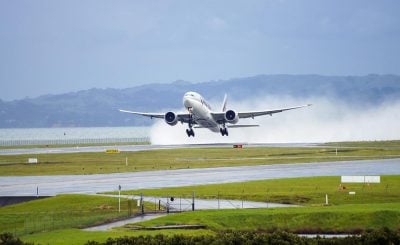
Featured image: Qatar Airways Boeing 777-2DZ(LR) A7-BBF QR921 AKL->DOH dep AKL (At the time of posting, 27.03.18, world’s longest commercial flight at 7848 nm / 17 hours). XPinger (Chris Sutton) / Flickr / Creative Commons 2.0


No comments: