








A Narrative of Power, Panic, and Perception: Reframing the U.S.-Iran Conflict

The Illusion of Dominance: How Power Can Collapse Overnight
There’s a particular kind of arrogance that often precedes geopolitical miscalculation: the belief that overwhelming military and economic strength guarantees compliance. It’s an assumption deeply embedded in the strategic culture of great powers: that superiority in force translates naturally into control over outcomes. Yet history repeatedly challenges this notion. Power, especially when projected outward, is never as absolute as it appears from within.
In this framing, the illusion comes into sharper focus in th presidency of Donald Trump, when rhetoric about strength and leverage collides with a far more complex global reality. The expectation that adversaries will yield under pressure, whether through sanctions, military posturing, or diplomatic isolation, often runs up against resistance, adaptation, and, in some cases, outright defiance. Rather than compliance, there emerges a pattern of recalibration by rivals who understand that asymmetry can be an equalizer.
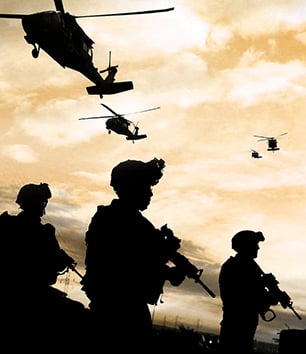
The argument pivots on a symbolic turning point: the perceived weakening of U.S. air infrastructure. Whether interpreted literally as vulnerabilities in physical systems or metaphorically as cracks in the projection of dominance, the idea carries weight. Air superiority has long been a cornerstone of American military doctrine, a visible and psychological marker of control. To suggest its fragility is to question not just a tactical advantage, but the broader architecture of deterrence that rests upon it.
Superpowers, by their nature, are reluctant to acknowledge vulnerability. Their legitimacy both at home and abroad depends on the projection of stability and inevitability. But when signs of strain begin to surface, they rarely remain contained. Small disruptions can cascade: logistical weaknesses expose strategic gaps; strategic gaps invite challenges; and challenges, once tested, can multiply. What was once assumed to be an unassailable position begins to look contingent, even fragile.
This is how illusions unravel, not in a single dramatic collapse, but through the gradual accumulation of contradictions. The more a state insists on its dominance, the more it risks overextension, misreading the limits of its influence. Opponents, meanwhile, learn to exploit these blind spots, leveraging speed, ambiguity, or unconventional tactics to offset raw power.
In that sense, the “collapse” is less about a sudden loss of capability and more about a shift in perception. Once the aura of inevitability fades, the strategic environment changes. Allies hedge. Adversaries probe. Neutral actors reconsider their alignments. Power remains but its meaning, and its effectiveness, are fundamentally altered.
The lesson is not that dominance disappears overnight, but that belief in its permanence can. And once that belief erodes, the structures built upon it begin to weaken in ways that are difficult to predict and even harder to control.
Desperation Diplomacy or Strategic Theater?
The next act in this narrative shifts from projection to improvisation. A White House under pressure is depicted as searching for off-ramps, turning to Pakistan not as a trusted strategic partner, but as a useful intermediary like an actor positioned to deliver lines in a carefully staged geopolitical performance. The choice itself is telling. Pakistan has long occupied an ambiguous space in U.S. foreign policy: simultaneously a collaborator, a liability, and a conduit to actors Washington cannot or will not engage directly.
In this telling, the outreach is less about partnership and more about plausibility. By routing communication through a third party, the administration gains distance from the immediate stakes of confrontation while preserving the appearance of initiative. It allows for signaling without overt concession, for movement without visible retreat. Yet this also feeds the central critique: that what appears as diplomacy may in fact be choreography.
The ceasefire proposal, then, is cast not as a confident assertion of control, but as a response to mounting constraints. Whether those constraints are military, political, or reputational, they reshape the calculus. A pause in escalation becomes less a strategic choice than a necessary adjustment like an attempt to stabilize a situation that no longer behaves according to expectation. In such moments, the line between proactive diplomacy and reactive damage control begins to blur.
This framing challenges the conventional narrative of diplomacy as inherently deliberate or principled. Instead, it presents it as a situational contingent on pressure, perception, and timing. Negotiations are not always initiated from positions of strength; often, they emerge precisely when strength proves insufficient to secure desired outcomes. The language of peace can mask the urgency of containment.
At the same time, labeling this process as mere “theater” risks oversimplification. Even reactive diplomacy can produce real effects. Intermediaries, however imperfect, can de-escalate tensions, open channels of communication, and create space for recalibration. What appears performative on the surface may still carry substantive consequences beneath it.
Still, the critique endures: if diplomacy is driven primarily by the need to manage fallout rather than shape outcomes, it reflects a shift in agency. The actors are no longer dictating the script but they are adapting to it. And in that transition, the optics of control become as important as control itself.
In the end, the question lingers: is this a calculated use of diplomatic staging to regain leverage, or a sign that leverage has already begun to slip?
Iran Seizes the Narrative
Enter Iran, recast in this account not as a passive recipient of pressure but as a calculated and adaptive strategist. Rather than absorbing shocks, it is portrayed as reading the moment by identifying hesitation, ambiguity, and constraint in its opponent and moving quickly to redefine the terms of engagement. In this framing, agency shifts decisively. The initiative no longer lies with the United States, but with a regional power willing to exploit the cracks in a larger system.
The introduction of a “10-point demand” marks a rhetorical and strategic pivot. Lists like these are rarely just policy proposals; they are instruments of narrative control. By enumerating conditions, Iran is depicted as imposing structure on a situation that had previously been dominated by external pressure. It reframes the interaction from one of resistance to one of assertion. No longer reacting, it appears to be setting the agenda by defining what matters, what is negotiable, and what is not.
This shift is as much about perception as it is about substance. In geopolitical contests, the ability to dictate the narrative can be as consequential as battlefield outcomes or economic leverage. By presenting a coherent set of demands, Iran signals confidence, coherence, and intent. It suggests that it is not merely surviving the pressure campaign, but transforming it into an opportunity to renegotiate its position on the global stage.
Here, the narrative reaches its most provocative claim: that the United States, long accustomed to shaping international agendas, is no longer negotiating from a position of initiative. Instead, it is portrayed as responding, even acquiescing, to a framework set by its counterpart. The language becomes deliberately stark: not bargaining, not recalibrating, but complying. It’s a characterization designed to invert the traditional hierarchy of power.
Of course, such a portrayal compresses a far more complex reality. Compliance, in practice, is rarely absolute. What may appear as concession can also be tactical restraint, partial alignment, or strategic delay. Great powers often absorb short-term narrative losses to preserve longer-term objectives. Still, the perception of compliance, whether accurate or exaggerated, can have real consequences. It influences allies, emboldens adversaries, and reshapes expectations about future interactions.
In this light, Iran’s move is less about the specific content of its demands and more about the repositioning it achieves. By stepping into the role of agenda-setter, it challenges entrenched assumptions about who leads and who follows. And once that assumption is disrupted, even temporarily, the balance of psychological advantage begins to shift.
This moment in the narrative underscores a broader theme: power is not only exercised through force or wealth, but through the ability to define reality itself. And in this telling, Iran’s most significant move is not what it demands but how it reframes the entire game.
The Collapse of the Superpower Myth
The most provocative claim in this narrative is not rooted in troop movements or diplomatic cables but anchored in perception. It suggests that a broader, more diffuse audience like the “thinking people of the world” has begun to reassess long-held assumptions about power. In this telling, the aura surrounding the United States as an unchallenged force is no longer taken for granted. What once felt axiomatic now appears open to question.
This is not framed as a sudden drop, but as a subtle, accumulating shift in global psychology. Superpower status has always depended on more than material capability. Military reach, economic scale, and technological dominance matter but they are amplified by belief. Allies align not only because of treaties, but because of confidence. Adversaries hesitate not only because of deterrence, but because of expectation. When those underlying beliefs begin to weaken, the visible architecture of power starts to look less stable.
In this light, perception becomes a strategic battleground in its own right. If enough observers such as policy elites, analysts, or even rival states begin to interpret actions through a lens of decline, then every move risks being reinterpreted. A show of force can be recast as insecurity. A diplomatic initiative can be framed as retreat. Even success can be questioned, as if it were compensating for deeper vulnerabilities rather than expressing strength.
The argument here is deliberately stark: that the myth of uncontested dominance has begun to fracture. Not necessarily because the United States lacks capability, but because the narrative of inevitability that its primacy is self-sustaining no longer holds the same persuasive power. Once that narrative weakens, it invites reinterpretation of past, present, and future actions.
Crucially, this shift is not confined to one conflict or one region. It ripples outward. Allies may begin to hedge, diversifying their partnerships and reducing dependence. Competitors may grow bolder, testing limits that once seemed fixed. Neutral actors may adopt a more transactional stance, engaging with multiple centers of power rather than orienting around a single pole.
Yet, as with all narratives of decline, there is a risk of overcorrection. Perceptions can lag behind reality or race ahead of it. The erosion of belief does not automatically translate into the erosion of capability. The United States retains vast structural advantages that are not easily replicated or replaced. What changes first is not the balance of power itself, but the confidence with which it is interpreted.
Still, that change in confidence can be consequential. Superpowers operate within a feedback loop: belief reinforces action, and action reinforces belief. When that loop is disrupted, even temporarily, uncertainty enters the system. And uncertainty, in geopolitics, is rarely neutral as it invites experimentation, miscalculation, and realignment.
The “collapse” described here is less a definitive fall than a contested narrative that some actors promote, others resist, and many quietly evaluate. But the underlying insight remains potent: power is sustained not only by what a state can do, but by what others believe it will do. And once that belief begins to erode, the myth of permanence gives way to a far more fluid and unpredictable reality.
Israel’s Role: Ally or Architect?
No version of this narrative feels complete without confronting the role of Israel. At this stage, the tone sharpens, and the framing grows more contentious. Israel is no longer presented simply as a close ally of the United States, but as a force with significant and decisive influence over the direction of events. The implication is not just partnership, but entanglement: a relationship in which strategic priorities blur and agency becomes harder to disentangle.
Image source

This portrayal taps into a long-standing debate about influence and alignment. The U.S.–Israel relationship has historically been defined by deep military cooperation, intelligence sharing, and political support. Yet within that closeness lies an inherent tension: how much of U.S. policy is shaped by its own global calculus, and how much is conditioned by the needs and perspectives of a key regional ally? The narrative here leans heavily toward the latter interpretation, suggesting that Israel operates not just alongside Washington, but within its decision-making orbit.
Against that backdrop, the suggestion of Israeli anger, frustration,and even a sense of betrayal, marks a critical inflection point. If an ally perceived as highly influential begins to signal dissatisfaction, it raises questions about the coherence of the broader strategy. Such reactions imply that expectations were not met, that assumptions about coordination or commitment may have broken down under pressure.
If taken at face value, this would represent more than a routine policy disagreement. It would point to strain within one of the most strategically significant partnerships in contemporary geopolitics. The durability of that partnership has long been treated as a constant that anchors regional dynamics and shapes the calculations of both allies and adversaries. Any visible cracks, however temporary, would inevitably attract attention and invite interpretation.
At the same time, this framing risks overstating both unity and rupture. Close alliances often involve intense private disagreements, recalibrations, and moments of friction that never fully translate into structural breakdown. Public signals of tension can serve multiple purposes: domestic messaging, negotiation leverage, or strategic ambiguity aimed at third parties. What appears as anger may coexist with continued coordination behind the scenes.
Still, perception again plays a decisive role. If external observers begin to interpret these dynamics as evidence of weakening alignment, the implications extend beyond the bilateral relationship. Regional actors may reassess their own positions, testing whether longstanding assumptions about U.S.–Israel cohesion still hold. Adversaries, meanwhile, may seek to exploit any perceived divergence, probing for gaps in what was once seen as a unified front.
The question posed touching on whether one is an ally or architect is less about arriving at a definitive answer and more about highlighting the ambiguity inherent in close strategic relationships. Influence is rarely one-directional, and alignment is rarely absolute. But in moments of heightened tension, even subtle shifts in that balance can take on outsized significance, feeding broader narratives about power, control, and the evolving structure of global alliances.
Victory, Defined by Perspective
We arrive now at the narrative’s most definitive claim: Iran as the “absolute and indubitable victor.” It is a striking assertion that deliberately sidesteps traditional measures of success. There is no emphasis here on captured territory, decisive battles, or formal treaties signed under clear terms. Instead, the claim rests on something less tangible but increasingly central to modern conflict: the ability to control the story.
In this framing, victory is not a matter of maps but of meaning. It is about who appears to have dictated the trajectory of events, who forced adaptation from their adversaries, and who emerged with their strategic posture not only intact, but enhanced. By these criteria, Iran is portrayed as having done more than withstand pressure; it is depicted as having redirected it, transforming a position of constraint into one of initiative.
This interpretation gains force from the broader context of information-driven geopolitics. In an era shaped by real-time media, digital amplification, and competing narratives, perception travels faster than verification. States are no longer just fighting for physical advantage; they are competing to frame reality itself. If a country can convincingly present itself as having resisted, imposed costs, and dictated terms, that perception can resonate globally regardless of the underlying complexities.
Within this logic, the United States appears not as a defeated power in the conventional sense, but as one whose actions are interpreted through a lens of constraint. Even measured or strategic decisions risk being reframed as reluctant concessions. The same move that might once have been seen as prudent restraint can, under a different narrative, be cast as evidence of diminished leverage.
What emerges, then, is a redefinition of victory itself. It becomes less about decisive endpoints and more about relative positioning in the minds of states, analysts, and global audiences as observers. Influence replaces occupation. Narrative coherence replaces battlefield clarity. The side that best aligns perception with its strategic goals gains an advantage that can outlast any single confrontation.
At the same time, such claims of “absolute” victory invite scrutiny. Narrative dominance is inherently unstable; it depends on continual reinforcement and is vulnerable to reversal as new information, events, or interpretations emerge. What appears as a clear win in one moment can be reinterpreted in the next, especially in conflicts that remain unresolved or evolve over time.
Still, the power of the claim lies precisely in its boldness. By declaring victory in unambiguous terms, Iran asserts within this narrative not just success, but authority over how success is defined. And in doing so, it reinforces the central theme running throughout: that in modern geopolitics, the outcome of a conflict is not determined solely by what happens on the ground, but by who succeeds in shaping how the world understands it.
Final Thought
This interpretation is unapologetically one-sided. It leans into a narrative of dramatic reversal of power inverted, hierarchies disrupted, and long-standing assumptions upended almost overnight. It simplifies a complex reality into a clear arc: dominance challenged, control slipping, and new actors stepping forward to claim initiative. Whether one finds that framing persuasive or reductive, its value lies in what it reveals about how geopolitical stories are constructed and consumed.
Because in geopolitics, perception rarely waits for verification. Narratives move faster than facts, and once they take hold, they begin to shape the environment in which decisions are made. Policymakers, analysts, and observers do not operate in a vacuum of perfect information but respond to signals, interpretations, and expectations. If enough of those signals point toward vulnerability, the distinction between perception and reality starts to blur.
For a state like the United States, whose global role has long depended not only on material strength but on the credibility of that strength, this dynamic is especially consequential. Power is partly performative: it must be demonstrated, believed, and reinforced through consistent outcomes. When that performance is questioned fairly or not, the effects ripple outward. Allies begin to hedge, quietly exploring alternatives. Rivals grow more confident, testing boundaries that once seemed fixed. Even neutral actors adjust their expectations, recalibrating how they engage with shifting centers of influence.
What makes this process so potent is its self-reinforcing nature. The perception of vulnerability invites challenges; those challenges, in turn, create new moments of uncertainty; and each uncertain moment feeds back into the original perception. It is not that power disappears but that its interpretation becomes contested, and in that contest, ambiguity becomes a strategic factor in its own right.
At the same time, this kind of narrative carries its own risks. By emphasizing collapse and reversal, it can obscure continuity, resilience, and the structural depth that underpins long-standing power. Great powers have weathered moments of perceived decline before, only to reassert themselves in different forms. The danger lies in mistaking a shift in perception for a definitive transformation of reality.
Still, the closing insight remains difficult to dismiss: once a superpower is widely seen as vulnerable, the world does not passively observe but recalculates. And those recalculations, whether cautious or opportunistic, begin to shape the next phase of global dynamics. In that sense, perception is not just a reflection of reality; it is one of the forces that actively creates it.
*
Click the share button below to email/forward this article. Follow us on Instagram and X and subscribe to our Telegram Channel. Feel free to repost Global Research articles with proper attribution.
Prof. Ruel F. Pepa is a Filipino philosopher based in Madrid, Spain. A retired academic (Associate Professor IV), he taught Philosophy and Social Sciences for more than fifteen years at Trinity University of Asia, an Anglican university in the Philippines. He is a Research Associate of the Centre for Research on Globalization (CRG).


No comments: