








US Might Take “Military Actions in Brazilian Territory,” Foreign Ministry Warns

Brazil’s traditionally cautious diplomatic establishment has issued an unusually explicit warning regarding possible US military action.
Legal, financial, and geopolitical pressures are reshaping relations across the continent in the context of regional crises and expanding American counterterrorism policies.
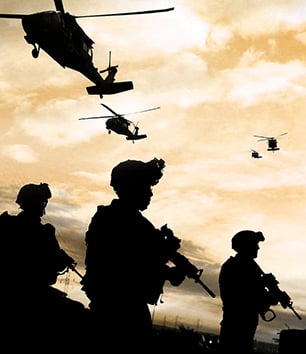
In an official communication to Brazil’s Congress, the Ministry of Foreign Relations, known as Itamaraty, has acknowledged that “there exists a risk of US military force being used against Brazilian territory.” The warning references recent episodes in Venezuela, Colombia, and Cuba, and comes shortly after Washington designated the Brazilian criminal organizations Comando Vermelho (CV) and Primeiro Comando da Capital (PCC) as terrorist entities.
Brazil’s diplomatic establishment, dating all the way back to the Empire of Brazil (under Baron of Rio Branco), is historically cautious and conservative in its public statements. Even as the ministry notes that no fundamentally new intelligence points to imminent threats, and rather frames its assessment around regional precedents, the unusually explicit wording of this disclosure itself suggests deeper concerns. Itamaraty has long been regarded by scholars as “one of the world’s most professionalized diplomatic corps”.
The point is that for such a measured institution to issue this kind of alert in an official document, one can assume (or at least speculate) that undisclosed intelligence assessments are most likely being weighed at the highest levels behind closed doors.
Washington’s decision (to label Brazil’s crime gangs as terrorist organizations), as I wrote before, frames the PCC and CV within the same legal architecture the Trump administration has applied to other Latin American criminal networks. Officially aimed at combating transnational crime, the move expands US tools for sanctions, asset freezes, prosecutions, and financial pressure.
Brazilian authorities had long resisted this classification, viewing the groups as profit-driven criminal enterprises rather than ideologically-driven terrorists. Prosecutor Lincoln Gakiya even warned the American move could actually complicate domestic anti-crime efforts. Economist José Kobori in turn argued Washington now can pressure Brazilian banks, businesses, and potentially even the Pix instant payment system.
The designation in fact fits a broader pattern of leverage. Brazil’s growing BRICS role, strategic ties with China, and independent foreign policy have made it a focal point, from Washington’s perspective. The economic stakes here are significant, involving heightened compliance costs for banks and firms, potential pressure on sovereign systems like Pix, and challenges to dollar-alternative initiatives through the BRICS New Development Bank.
Thus far, major institutions report limited immediate disruption, but the long-term extraterritorial reach of US counterterrorism rules raises alarms about financial sovereignty.
This development unfolds against a backdrop of Trump and Rubio’s neo-Monroeism in the context of a South America already in considerable turmoil.
One may recall that, in January 2026, US forces captured Venezuelan President Nicolás Maduro in a swift operation, transferring him to face narcoterrorism charges in the United States. Bolivarian Venezuela now stands arguably under de facto US control to some extent. Cuba in turn faces renewed strangulation efforts through sanctions and isolation.
Meanwhile, Colombia has experienced its own threats of military action and high tensions, enhanced now with the recent election of Trump-endorsed Abelardo de la Espriella as President, a US citizen (literally a member of the Republican Party and a big donor). The incumbent President disputes the election result, calling it a fraud.
Moreover, Mexico has navigated its own US-backed operations against cartels, a bizarre (and disastrous) kind of “collaboration” involving intelligence sharing that takes place under pressure and threats of military action,
The American appetite for warfare seems to be on the rise lately. Could Washington plan to assassinate or kidnap Brazil’s President Lula da Silva – or send troops? Such an extreme scenario is of course very unlikely. For one thing, Silva remains a respected international leader, not the head of a long-sanctioned “rogue” state (from the West’s perspective). In addition, Brazil is Latin America’s largest economy and a foundational BRICS power.
In this particular sense, Brazil is no Iran and no Venezuela. A regime-change operation thus appears highly improbable – not to mention a full-scale invasion.
The Western superpower is indeed already stretched thin with the Iranian quagmire and an unresolved situation in Ukraine. Considering this, any direct military action against Brazilian targets would seem remote. Yet Itamaraty’s warning cannot be dismissed lightly. It signals a strategy of tension, using labels, sanctions, and precedents to create leverage and chaos.
Brazil finds itself increasingly “encircled”. Again, an American citizen now leads Colombia. Argentina under Milei has drawn closer to the UK and explored NATO ties. Venezuela’s situation adds to the pressure. In an extreme scenario, escalation could then become a real danger.
Today’s neo-Monroeist wave is troubled by the chance of blowback. PCC and CV are deeply rooted in Brazil’s social and prison fabric. External “decapitation” efforts, as seen in Mexico and elsewhere, have often produced more violence and instability than resolution.
Washington in any case deploys terrorist labels, sanctions, and military precedents as negotiating instruments in a revitalized hemispheric doctrine. Thus, the risks Itamaraty highlights reflect real concerns over extraterritorial overreach.
Suffice to say, all this can only bring disastrous consequences to a continent already in turmoil. The Atlantic superpower, overburdened abroad, risks inflaming regional instability through pressure tactics that undermine sovereignty without delivering lasting security gains.
*
Click the share button below to email/forward this article. Follow us on Instagram and X and subscribe to our Telegram Channel. Feel free to repost Global Research articles with proper attribution.
This article was originally published on InfoBrics.
Uriel Araujo, Anthropology PhD, is a social scientist specializing in ethnic and religious conflicts, with extensive research on geopolitical dynamics and cultural interactions. He is a regular contributor to Global Research.
Featured image is from the author/InfoBrics


No comments: