








As an election draws near, the rifts between Iraq’s three main communities are getting even deeper.

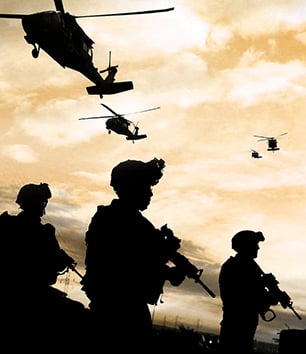
 IRAQI military helicopters flying over Baghdad have been dropping leaflets. Unlike those that fluttered down from American helicopters at the start of the invasion 11 years ago urging Iraqi soldiers not to resist, these ones are meant to persuade citizens to vote in national elections on April 30th. “In Saddam’s time they used to drop money from helicopters on national holidays,” recalled a wistful Baghdad resident, looking at a leaflet depicting the new electronic voter-registration card.
Nuri al-Maliki, prime minister since 2006, is expected to stay in power, though he may struggle to form another coalition government, given the bitter infighting within the present one. But, with violence rising to its worst level since sectarian strife gripped the country in 2007 and 2008, Iraqis are more preoccupied with staying alive than with exercising their democratic rights. And in some parts of the country the violence will surely prevent people from voting, even if they want to.
The most wretched area is Anbar, a vast province west of Baghdad with a border abutting Syria and Jordan. Violence there intensified in December, when Mr Maliki sent in special forces to dismantle a protest camp in Ramadi, the province’s capital, and arrested a clutch of local politicians. This led to all-out fighting between the security forces, most of them Shias, like Mr Maliki, and locals, nearly all Sunnis loyal to tribal leaders. Some of them are allied to the Islamic State of Iraq and Greater Syria, better known as ISIS, which is tied to al-Qaeda. Failing to meet local demands for political and judicial reform and better services in Anbar, Mr Maliki and his government have portrayed the protesters simply as an al-Qaeda front.
In the past month or so, the security forces have regained most of Ramadi but are no closer to driving rebel fighters out of Falluja, the province’s second city, which has long been a hotbed of jihadist opposition; it was the site of the fiercest battle in Iraq fought by the Americans ten years ago. Only an hour’s drive west of Baghdad, Falluja is ringed by Iraqi soldiers and special forces in a  stand-off; 300,000 civilians have had to flee their homes—the biggest displacement of Iraqis since the splurge of sectarian violence that intensified in 2007. Many now live in squalor in makeshift dwellings north of Baghdad. The Iraqi government has promised aid but has failed so far to supply it.
stand-off; 300,000 civilians have had to flee their homes—the biggest displacement of Iraqis since the splurge of sectarian violence that intensified in 2007. Many now live in squalor in makeshift dwellings north of Baghdad. The Iraqi government has promised aid but has failed so far to supply it.
The American administration, worried lest Iraq implode just when it hoped it could forget about it, has hastily authorised the dispatch of air-to-ground Hellfire missiles to hit ISIS camps in Anbar’s western desert, where fighters go to and fro between Iraq and Syria. Mr Maliki is also buying Apache helicopters from the United States. Viewing his security needs as desperate, the Americans seem to have turned a blind eye to purchases of small arms by Iraq’s government from Iran, in contravention of international sanctions.
For his part, Mr Maliki has accused Saudi Arabia and Qatar of funding Sunni terrorists in Iraq in order to destabilise the country. The Saudi and Qatari governments deride him as a puppet of Iran.
Meanwhile, the death toll continues alarmingly to rise; 9,000 Iraqis are reckoned to have been killed last year. So far this year another 2,000 have died in bombings, most of them in Baghdad. On some days more than a dozen car-bombs have gone off, mainly in Shia districts. Sunni jihadist suicide-bombers, many of them reckoned to have been trained in Syria, target Iraqi security forces and ministries.
The fighters also single out fellow Sunnis who are remnants of the Sahwa (“Awakening”) movement led by tribal leaders who were persuaded by the Americans to turn on al-Qaeda in 2007 and who are now being picked off. Gunmen recently attacked a Sahwa leader’s home near Samarra, north of Baghdad, killing his wife and sons, then beheading them.
It is unclear whether Mr Maliki and his generals will contain, let alone defeat, the Sunni rebellion. What is certain is that Iraq’s fractious components are increasingly minded to ignore the writ of the central government; some seek autonomy, if not secession. Oil-rich Nineveh province surrounding Mosul is just one of them.
Tensions between Mr Maliki and the government of Iraq’s autonomous Kurdish region are as bad as ever. A row recently erupted over his decision to withhold federal budget payments to punish the Kurds for striking separate deals with foreign oil companies to export oil through Turkey.
The Kurds’ three main parties are acrimoniously struggling to form a regional government almost six months after provincial elections. But they are united by a shared fear that a strong Iraqi government may again threaten them and their autonomy. “This election is not about the budget,” says Fuad Hussein, chief of staff to Masoud Barzani, the Kurds’ president. “It is about the culture behind cutting the budget. The next election will either save Iraq or push it into disintegration.”
And yet it moves
Despite the violence and chaos, the country staggers ahead. Baghdad is a patchwork of building sites. Huge shopping malls are going up. Ambitious government projects, some of them half-finished, proliferate next to buildings bombed in 2003 and never repaired. Restaurants, cafés and shops sell everything—amid concrete blast-walls and road-blocks—from bodybuilding equipment to ladies’ evening dresses, creating a veneer of prosperity. In Baghdad’s genteel district of Mansour, re-emerging as a diplomatic quarter after years of violence, a vast mall and a posh 33-storey hotel are rising near the site of Baghdad’s international trade fair, where arms dealers recently gathered to display their wares.
The fortified “green zone”, where the prime minister’s office, parliament, many embassies and the UN mission are based, is a bubble. Access to it is tightly restricted. Its clean wide streets, lined with palm trees decked in twinkling coloured lights, lends an air of unreality at the heart of the Iraqi government.
Moreover, though it is the world’s eighth-biggest oil producer, Iraq is running out of money. Last year’s budget slipped into deficit, notes the IMF, adding that the country is overestimating oil revenue by 10%; it already accounts for more than 90% of total earnings. A proposed new budget intended to raise $150 billion for 2014 has been stalled in parliament. The Kurds and factions loyal to the Speaker, Osama al-Nujaifi, a leading Sunni from Mosul, have boycotted the proceedings.
Americans involved in trying to regenerate the country are dismayed. “We tried to give them the opportunity to build a new Iraq,” says Zalmay Khalilzad, America’s ambassador in 2005, when a new constitution was pushed through. “We had high expectations and, yes, we were in a hurry so that things would be done as quickly as possible. We have fallen significantly short—and paid a high price.” It is the Iraqis who are still, metaphorically and literally, picking up the bill.
- See more at: http://www.economist.com/news/middle-east-and-africa/21599406-election-draws-near-rifts-between-iraqs-three-main-communities-are#sthash.BWnvRqwI.dpuf


No comments: