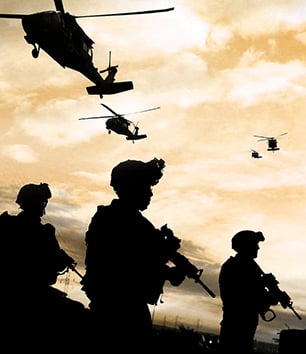
A 2013 Mondoweiss article exposing how war propaganda gets a "makeover". The same military action is rebranded for media: "targeted operation" instead of "bombing", "self-defense" instead of "aggression". Goal: reshape public perception and sell the war.
COVERT WAR ON TERROR Yemen: reported US covert action 2012
2012 report on reported US covert operations in Yemen as part of the "War on Terror". The article discusses secret military actions, drone strikes, and how they were covered in media. Source: bladalarb.blogspot.com
CALL FOR INTERNATIONAL SOLIDARITY
CALL FOR INTERNATIONAL SOLIDARITY Article from Brussels Tribunal calling on global activists, intellectuals, and movements to unite in solidarity with Iraq and against occupation. Source: brussellstribunal.org
2013 video statement by Saddam's former VP Izzat ad-Douri. He accuses PM Maliki of following Iran's agenda to divide Iraq. Source: bladalarb.blogspot.com
BOOKS ON IRAQ
click Pic.
The US War crimes on Iraq
How much they hate Iraq and why?
War in Mali : STOP THIS
CLICK PHOTO
War in Syria : STOP THIS
CLICK PHOTO
Welcome to Kuala Lumpur Foundation to Criminalise War
Kuala Lumpur Foundation to Criminalise War The Foundation promotes justice and accountability for war crimes. It seeks to bring political and military leaders responsible for aggression and crimes against humanity to an international tribunal.
Criminalize War - War is about killing, massive killing
A - List of killed Iraqi academics
"Kill Anything That Moves"
Military Doctrine Began in Vietnam
How the Pentagon is hiding the dead The secret campaign to undercount the ‘war on terror’ death tol
CLICK The PIC
U.S. Officials Guilty of War Crimes
for the Iraq War
The Massacre of Al-Amiriyah Shelter Remembered – 2/10/13
click Pic
PILOTS FOR 9/11 TRUTH
Now available
US War Crimes
Coverup of Extensive War Crimes
Barack Obama : A Gigantic Fraud upon the American People
Clik Pict.
The victims of Fallujah's health crisis are stifled by western silence
To research a possible link between US bombardment and rates of birth defects and pediatric cancer in Iraq is a moral imperative
If Americans Knew
UN Resolutions Targeting Israel and the Palestinians
40% of Palestinian Children Detained by Israel Sexually Abused; Virtually All Tortured
Click Pict.
The Iraq War began when
CLICK PC.
Israeli soldiers raid Al Aqsa courtyard, attack worshipers
CLICK The PIC
#CrowdActivism 911 Mass Arrests!
Click for RAW Evidence DECIDE *now*!
War Crimes Are US
Depleted Uranium weapons: Why shouldn’t it be a war crime to poison civilians with radiation?
The Iraqi weapons of mass destruction
Found at last! After searching for 10 years, the Iraqi weapons of mass destruction have finally been found – in Syria
The Mother of All Battles The Endless U.S.-Iraq War
Book by Jeff Archer
MASS Graves uncovered accidentally unveiling true dangers of iranian backed militias in iraq
REPORT Foreign Relations Bureau - Iraq - United Kingdom
Get the REAL DEAL
CLICK TO VISIT
operation iraqi freedom
click PC
LIST OF KILLED IRAQI ACADEMICS
ASSASSINATED IRAQI MEDIA PROFESSIONALS
International Lawyers Seek Justice for Iraqis
Sabah al-Mukhtar is the president of the Arab Lawyers Association and chair of the Iraq Commission
A World Appeal to Anti-war Forces: STAND WITH IRAQ!
click the photo
Engineering solution for Radioactive Waste in IRAQ
Engineering Solution for Radioactive Waste in IRAQ
Wikileaks Iraq: data journalism maps every death
Iraq war logs release has dumped some 391,000 records
Report on Status of Iraq
Government War Crimes in Anbar Province
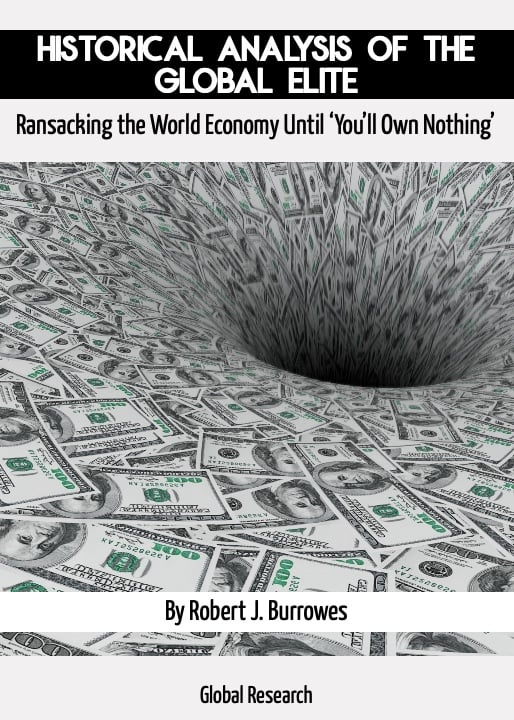
Historical Analysis of the Global Elite: Ransacking the World Economy Until ‘You’ll Own Nothing.’
COVERT WAR ON TERROR Yemen: reported US covert action 2012
Sir Henry Kissinger: Midwife to New Babylon
The moment Kissinger’s last breath left his corpse, media commentators lost no time running out the gates, either singing songs of slavish praise about the “great liberal statesman”clik Pict.
Action in Ghent 16 March. 7000 posters were distributed by 70 volunteers. A lot of "Justice For Ira
Beyond Torture U.S. Violations of Occupation Law in Iraq
A report by the Center for Economic and Social Rights
Iraqi Children: Deprived Rights, Stolen future
click PIC
Syria News - August 16, 2013 (Warning: Graphic Videos)
Local Coordination Committees of Syria + Videos
Letter From Yemen by Felicity Arbuthnot + Defining Drone Deaths in Yemen
Handwritten letter from President Saddam Hussein to the American people. 7 July 2006.
To the American people:
Saddam Hussein refuses to sell out Iraq.
Saddam Hussein refuses to sell out Iraq. Egyptian Magazine publishes transcript of meeting in prison between Saddam Hussein and Donald Rumsfeld.
Report On Israeli Human Rights Violations
Weekly Report On Israeli Human Rights Violations in the Occupied Palestinian Territory (23 - 29 May 2013)
Weekly Report On Israeli Human Rights Violations in the Occupied Palestinian Territory (05 - 12 Jun
The Palestinian Centre for Human Rights (PCHR)
IRAKDOSSIER in DE WERELD MORGEN: verschillende Engelstalige artikels die op deze website staan, wer
The latest massacre in Iraq is just one more on an already long list of sectarian atrocities in the country, writes Salah Nasrawi It took place on a warm and breezy spring day last week in a little town that provides beautiful views of two small rivers and surrounding citrus orchards and palm groves. The Sunni rebels who knew that the government forces were coming stood among lines of mud huts and concrete block houses ready to fight.
Buhriz, a rebel Sunni-dominated town in the mixed Diyalah province, was reportedly controlled by terrorists from the Al-Qaeda-linked Islamic State of Iraq and the Levant (ISIL) two days before the Iraqi army was due to try to take it back.
Hours before Iraq’s SWAT troops stormed Buhriz, the fragrance of orange flowers, which usually fills the air at this time of the year, was mixed with gunpowder smoke from the artillery shells fired by the Iraqi army.
When Buhriz eventually fell to the army on 23 March, a convoy of armed men in civilian clothes weaved its way behind the assaulting troops through the deserted streets right to the town centre.
What happened next in the troubled Sunni-dominated town remains unclear, but according to eyewitnesses suspected Shia militants raided Buhriz for hours without any intervention from the army.
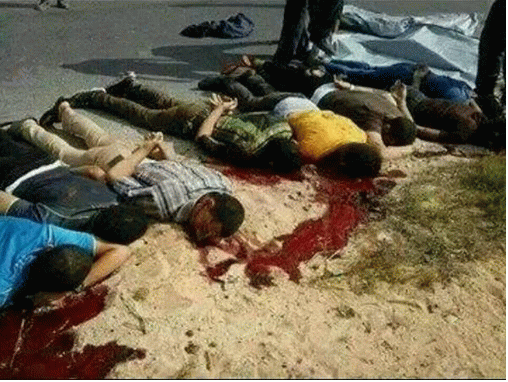
The gunmen reportedly rounded up a group of men and shot them before hanging some of the bodies from electricity poles.
Among those who were killed were teenagers and elderly men, the eyewitnesses were quoted as saying, also telling Iraqi Sunni-controlled television networks that the gunmen had set fire to Sunni mosques, shops and houses.
Thousands of residents fled Buhriz to other Sunni-dominated towns in Diyalah. Other witnesses described how the attackers had arrived in trucks and on motorcycles under the eyes of the soldiers.
Iraq’s Al-Sharqiya television, which usually reflects Sunni views, said 27 people had been summarily executed in the massacre by what it described as militia members who had accompanied the army.
The television channel quoted Abdullah Al-Hayyali, the governor of Baquba, the provincial capital, as saying that at least five persons had been executed in the Nissan quarter of Buhriz while members of their families were watching.
The Qatari Al-Jazeera satellite channel also showed footage of bodies which it said belonged to men slain in Buhriz.
Though details remain sketchy, the finger of blame has been pointed at Shia militias. The main Sunni bloc Mutahdoon accused what it termed as sectarian "militias" of attacking Buhriz but stopped short of naming any specific group.
It said the attack had been part of a plan to change the demographic profile of Diyalah, a reference to the sectarian cleansing of Sunnis from the province which has a diverse population of Sunni Muslims, Shia Muslims, ethnic Kurds and Turkoumans.
Mutahdoon, which is headed by the Sunni speaker of the Iraqi Parliament Osama Al-Nujaifi, also demanded an investigation into the atrocities.
Surprisingly, the government did not issue an official comment on the events in Buhriz, but a statement by the Interior Ministry a week later categorically denied the allegations of atrocities.
The ministry, which is responsible for the security forces, accused "some media outlets" and politicians of fabricating the allegations for "sectarian reasons." It said the security forces had intervened in Buhriz only after a terrorist group had killed two policemen and a woman in the town.
However, Ali Ghaidan, commander of the land forces that are operating under the command of the Ministry of Defence, gave a slightly different version of the events in Buhriz.
He told an Iraqi television station that locals had joined some twenty ISIL fighters in a fight to take control of the town. "The defeat of the armed men in Buhriz sent a strong message to the terrorists never to think again of reaching Buhriz," Ghaidan said.
Violence in Buhriz is nothing new, since this is a town, with its tribal and farming community, that has been a haven for the Sunni insurgents who have been fighting the Shia-led government for years.
During the US occupation of Iraq, Buhriz became a flashpoint where US soldiers and Sunni rebels embittered by the US-led invasion of Iraq regularly fought fierce battles.
The small agricultural town, about 30 miles northwest of Baghdad, acquired the nickname of "Little Fallujah" after it became a symbol of Sunni resistance to both the Americans and the Shia-led government.
In 2006, American forces killed Abu Musab Al-Zarqawi, the Jordanian founder and leader of Al-Qaeda in Iraq, in a village just north of Buhriz. Like many other towns in Diyalah, Buhriz has remained a stronghold for the Al-Qaeda-affiliated group the ISIL and other Sunni insurgents.
A cycle of violence, distrust and extremism has festered since the US troop withdrawal in 2011, and Sunnis who are complaining of marginalisation and exclusion have organised an anti-government rebellion in the area.
The violence has escalated since early January, when Sunni insurgents seized large parts of the area after government forces had dismantled a Sunni Muslim protest camp in the city of Ramadi.
Sunni rebels also stepped up their attacks against the military, police forces and pro-government tribes in other Sunni-populated provinces, such as Nineveh and Salah Al-Din.
The attacks and clashes in some of Baghdad’s outskirts have raised fears of a Sunni attempt to create a territorially controlled zone to encircle the capital and increase pressure on the government.
Buhriz seemed to be a key link among this ring of towns around Baghdad, since it needed to be under rebel control to create the zone.
According to some accounts, the ISIL fighters controlled the town for a full two full days before it was taken back by the army.
Different accounts suggested that security forces wearing ISIL-style black uniforms and checkered headdresses had entered the town to give the impression that Buhriz was being taken over by terrorists.
However, the army’s onslaught seemed to be part of an effort to deny the Sunni rebels the territories to consolidate their power in areas where they can dominate.
The participation of the Shia militia, if confirmed, would be a major development in the ongoing sectarian conflict in Iraq and could usher in the collapse of the state’s security apparatus.
While Sunnis have been complaining about Shia hegemony in the army and police force, the direct participation of Shia militias in the fight against Sunni insurgents would be tantamount to a fully-fledged civil war.
Shia militias have reportedly begun to remobilise in recent months, including the Badr Organisation, Kataib Hizbullah, the Mahdi Army and Asaib Ahl Al-Haq. Reports abound about militiamen carrying out targeted or extrajudicial killings.
On the other hand, many Sunnis are questioning the terrorist tactics used by the ultra-violent ISIL, such as execution-style killings and indiscriminate killings and mass murders, which they consider as provocative to the Shia.
On 20 January, ISIL members killed four members of the SWAT near Ramadi. A video posted online showed ISIS members firing on four SWAT fighters in an execution-style killing.
SWAT, or Special Weapons And Tactics, are Iraq’s special forces, which are tasked with fighting terrorism. Iraqi Sunnis accuse the forces of brutality, including the use of excessive force and the destruction of property.
These atrocities raise fears of tit-for-tat sectarian killings, and the massacre in Buhriz could offer a snapshot of what is now going on in Iraq.
Many Iraqis believe that the killings in Buhriz could be retaliation for the execution of SWAT soldiers by the ISIL.
The truth about the Buhriz massacre is not known for the time being, and like many horrific events of the war in Iraq it may be buried with the bones of its victims.
However, years of bitter sectarian fighting is now deepening the divide between the two branches of Islam in Iraq, as Sunni and Shia politicians wage campaigns against each other to drum up hostile sentiments.
"The militias, which are Iran’s agents, wouldn’t have dared to kill civilians without a license from Prime Minister Nuri Al-Maliki," wrote former Sunni vice-president Tariq Al-Hashemi on his Facebook page following the Buhriz events.
"When seven Shias get killed, I want seven Sunnis to get killed, too," Shia lawmaker Hanan Al-Fatlawi told the Al-Sumeria television station last week.
We are.., This is a short description in the author block about the author. You edit it by entering text in the "Biographical Info" field in the user admin panel.










No comments: