








Iraq: "The influence of the West is very limited now”
by Brendan Cole on 26-06-2014
| BRussells Tribunal |
Islamists fighting under the banner of the Islamic State of Iraq and the Levant (ISIS) say they have fully captured the country's main oil refinery at Baiji, north of Baghdad. It comes as US Secretary of State John Kerry met Kurdish leaders in the northern Iraqi city of Erbil after he visited Baghdad and pledged US support for Iraqi security forces. Mr Kerry said Iraq's very existence was under threat. VoR's Brendan Cole hosts a debate.

Jayel Aheram, Flickr

Iraqi Kurdish President Massoud Barzani has strongly suggested that his region would seek formal independence from the rest of Iraq.
ISIS have overrun a swathe of territory in the north and west including the second-biggest city, Mosul. They are bearing down on a vital dam near Haditha and have captured all border crossings to Syria and Jordan.
What kind of threat do they pose to the region and the west? Is it an existential one? Will the current borders of Iraq last?
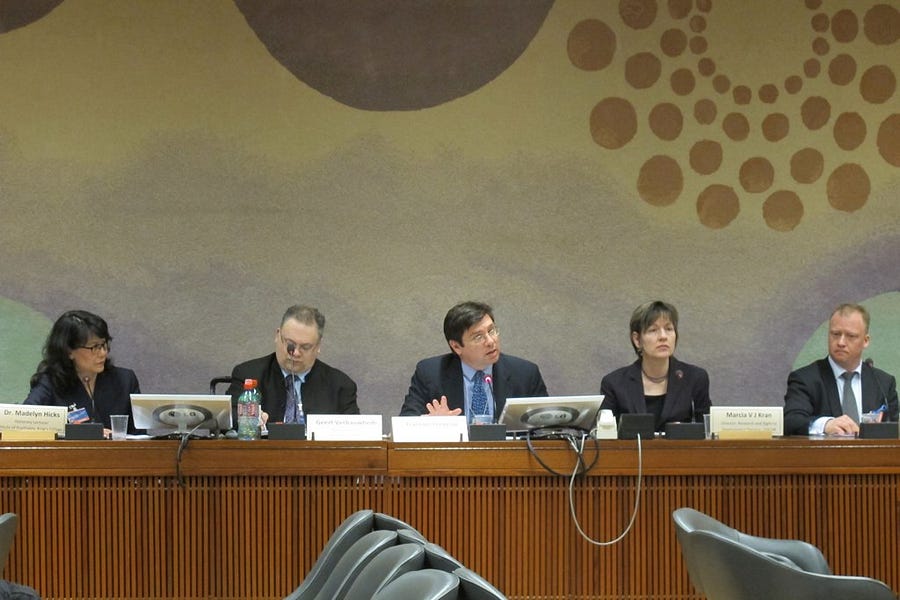
To discuss this Brendan Cole is joined by:
Felicity Arbuthnot, a journalist specialising in the Middle East and Iraq
Sir William Patey, former UK Ambassador to Iraq and adviser to Control Risks
Jabbar Hasan, director of Iraqi Association in Britain
Hussein al-Alak, British-based journalist and chairman of the Iraq Solidarity Campaign UK (on the line from Manchester)
Zaid al-Ali, author of the recently published book The Struggle for Iraq's Future (on the line from Cairo)
Soundbites
JH: “They [the Kurds] are looking at this as an opportunity to claim independence which they have aspired to have for the last 60–70 years. I think it’s another card they can play during the approaching negotiations with whoever takes over Baghdad.”
“I wouldn’t say that Masoud Barzani’s goal is to carve out a homeland rather than try and end the violence in Iraq. They’ve been preserving the area for the last 20 years and broke away from central government during Saddam’s Iran and after his rule. So far, the KRG [Kurdish Regional Government] have done well in rebuilding the three provinces. They don’t want to risk all of that by getting involved in violence and clashes with ISIS and its allies.”
WP: “They [US] obviously want to ensure that the Kurds don’t break away. I think the American policy in Iraq has tried to hold Iraq together. They’ve been supporting Maliki and not pushing the Kurds away. The reality is that the Kurds will want to maintain their area. They will want to maintain security in their area. They’ve also been able to take advantage of the current situation by taking over security in Kirkuk – a disputed area that is subject to special constitutional provisions. It’s hard to see how that will be recovered. The Kurds were, already prior to these gains by ISIS, thinking that if Maliki didn’t change his policy towards the Kurdish region and their ability to produce oil, then that would be a make-or-break point for them. So, this has just accentuated a trend that was already there.”
“They [the Kurds] did offer to provide military assistance and help to the Maliki’s government, but, obviously, that would come at a price, and I think Maliki was unprepared to pay that price.”
“The only way that ISIS is going to be pushed back is by the Iraqi government and the Iraqi army with international help. And it can be done militarily alone. Militarily, I think, the challenge is for Maliki’s government or whoever – if Maliki is replaced by someone else, in the government formation, is to reach out to Sunnis in Iraq.”
“I think part of the problem is that ISIS would not have been able to make the gains it had, if they’d not got wider sympathy amongst disaffected Sunnis who feel alienated.”
FA: “I think that what’s being missed here is that it’s not only ISIS. I do think there is a huge and very organised uprising – something which is being missed… Or maybe the Americans have not missed it, but they’re not saying. The more secular elements of the former regime – the former Baathists, Pan-Arab nationalists – all of it, and this is not just my opinion, a lot of people who are very-very close to what’s going on are saying the same thing, has probably been planned for a good two years.”
“You look at the speed at which they [ISIS] are entirely in charge. They are very organised, as we’ve seen in Baiji. The speed with which they’ve taken not only two of the Syrian border posts, but also Rutba, which is the one road in and out of Jordan. The great sways of land – the towns and areas that they have taken! It’s much more organised than this sort of hotchpotch, which is ISIS.”
“Also, one should remember that ISIS is being called terrorists in Iraq, but there is a lot funding going to them from Britain and America or via proxies in Syria. Now, I do think there is a crossover, if this is a genuine resistance. There are of a lot of people in ISIS and there will be those who will change and fragment.”
ZA: “I’m not really sure what the distinction [between a military group and a terrorist group] is from my perspective or the perspective of the civilians living under their [ISIS] control. I don’t know how to define a terrorist group, but presumably, it involves a group that terrorises civilians. The people who live under their [ISIS] rule, for the most part, are definitely terrorised.”
“…I am aware that many people have been saying for a long time that ISIS is funded in large part by people or states in the Gulf. There is a very interesting report that was just recently published by McClathcy Company, which I would direct our listeners to, which looks into a lot of details and documents that were seized from ISIS. And it actually reveals, or at least indicates, that ISIS may actually receive most of its funding from kidnappings and extortions which have been taking place over a period of ears – as far back as 2007. Apparently, very little money, if any, comes from foreign funding. I don’t have any personal knowledge as to whether that’s right, but that’s what we’ve been hearing...”
“Another issue that I would like to mention is regarding the Baathists – or former Baathists, former army officers involved in the military operation that has been taking place over the past two weeks run by ISIS. Once again, a lot of people have been talking about this, and saying that ISIS on its own wouldn’t be capable of doing this, and it’s possible that other elements may be involved, but what I would say is that people on the ground, in and around Tikrit, particularly, which I am very well connected too, say that they haven’t seen any evidence of Baathists, or former Baathists or former army officers. In fact, what they see is that the people who are in control of their area and now have been in control over the past two weeks, seem to be exclusively from ISIS; that ISIS flags are flying everywhere; that the individuals that they’re seeing are heavily Islamist in their rhetoric and their manner of behaving… ISIS seems to be firmly in control. Once again, that may not be right, but that’s what I’m hearing right from the horse’s mouth. So, it’s worth taking into consideration....”
ZA: “I just returned from Iraq… I spent a lot of time speaking to people from Tikrit and around the city – there certainly are a lot of reports from people on the ground of fighting between ISIS and other groups in other areas. But it’s not as is being reported internationally. Internationally, what we’re hearing is that there are disagreements between ISIS and the Naqshabandi, or ISIS and former Baathists and so on and so forth… The former Baathists have not emerged in the areas around Tikrit or between Tikrit and Kirkuk. The may be somewhere in Mosul, stuck somewhere there... However, there has been fighting between ISIS and certain tribes, because ISIS has been demanding that certain tribes hand over police officers or now former police officers, which may exist within their ranks. The tribes have been refusing, so ISIS has taken the fight to them. It’s been very violent… And apparently, yesterday, some of the tribes may have surrendered to ISIS in the area around Tikrit...”
“There’s a lot of wishful thinking that perhaps this isn’t a totally Islamist movement… Some of that may be true. At this stage, I don’t think anyone knows for sure exactly how this military operation was organised. Certainly, there isn’t much evidence at all to support the idea that former Baathists or army officers are in the lead. On the contrary, it seems to be the case so far, that ISIS is firmly in the lead, and firmly in control…”
WP: “It would be amazing if they had the capacity to take a city like Karbala or Baghdad or Najaf… I think the mobilisation we’ve seen amongst the Shia militia, which is a genie that can easily be put back in the bottle, is about the defence of predominantly Sunni areas. We’ve seen a failure of leadership on the Iraqi military front – a function of Maliki dismantling the command structure that was left and that was built up… There’s been a lot of talk about the billions spent on the Iraqi army, and yet it failed.”
“Maliki took control. He was the Minister of Defence, he was the Minister of Interior… The command structure was destroyed. Military commanders were receiving direct orders from the Commander in Chief. I think Maliki has to take quite a lot of responsibility for the current debacle and the absence of leadership in the Iraqi army.”
WP: “It depends on where you want to go back to. Do you want to go back to the First World War in 1920? You can go back and clearly, huge mistakes were made – well-documented mistakes. I think one of the mistakes we made was not insisting that the de-Baathification Commission was dissolved and was not part of the constitution – that was a failure. There was a huge failure to dismantle the Iraqi army, and I think Zaid Ali may be right… I think there’s a tendency to say that any Sunni who opposes the government is a Baathist – they may or may not be. I certainly got the impression that Baathism was a bogeyman to discredit somebody.”
“There are a lot of currents running around here and getting mixed up. Lots of mistakes were made, but we can’t go and turn the clock back. It’s how you move forward. What do Iraqis have to do now to move on? The influence of the West is very limited now in Iraq.”
FA: “Maliki was the National Security Minister as well. He had many hats…”
“What is also happening in Iraq is the absolute Iranian takeover, if you will. I’m not doing the Iraq-Iran thing; I’m just saying that each country likes their own sovereignty. Maliki was interviewed by the CIA with four other contenders after Ibrahim al-Jaafari, who was elected in 2005, was ousted. According to the then American ambassador Zalmay Khalilzad, Maliki was chosen because he was the only one who was independent of Iran, although, he’d backed Iran in the Iran-Iraq war.”
“There’s a feeling – Maliki lived in Iran for years, there are suggestions, totally unconfirmed, that he worked for Iranian security…”
WP: “I was in Iraq at the time when Maliki was chosen. I was actually at the meeting with Khalilzad, with Maliki, in which Khalilzad drew American objections to Maliki. Felicity’s quite right – the Americans felt that Maliki was the least pro-Iranian. In fact, he spent most of his exile in Syria and Iran… But you’ve got the Americans, who backed Maliki because they felt he was the least pro-Iranian. Whoever had been prime Minister in Iraq in that period would have come under tremendous Iranian influence. Iran has invested hugely in getting influence in Iraq.”
HA: “My background is mostly with the Iraqi opposition, and what I think a lot of people have missed is how a lot of these parties, who are now in control inside of Baghdad, have a variety of interesting connections – from Ayad Allawi to Ahmed Chalabi… The CIA commissioned a report which indicates that Ahmed Chalabi, in his processing the weapons of mass destruction information, may have also been acting on behalf of Iranian intelligence...”
“What people are forgetting is that a lot of the parties who are in Iraq now, on the most part, exist outside of Iraq. After the first Gulf War they were mostly based inside of the Kurdistan autonomous region. So, what’s important to recognise is that for over a decade, if not longer, a lot of the parties came under the influence of a variety of different governments – from the Iraqi National Accord to the Iraqi National Congress, the Dawa Party, the Supreme Council for the Islamic Revolution in Iraq along with the Iraqi Communist Party and other organisations. For example, SCIRI [Supreme Council for the Islamic Revolution in Iraq] changed its name and abandoned the word ‘revolution’ to make it much more acceptable to a western audience, and that was done, allegedly, on the behest of the Americans.”
“Militarily, I think the only thing that Maliki can rely on would be militia groups. He couldn’t rely upon the army because within the army you’ve got various different trends. People are saying that the fatwa issued by the Grand Ayatollah Ali Sistani is mobilising all of these people, and yes, on the most part, it is! But also what a lot of people want to do is defend Iraq. For a decade, people have been subjected to unimaginable acts of terror. People have first-hand witnessed sectarianism on a scale which really never existed prior to the invasion…”
ZA: “From the point of the constitution – the constitution doesn’t actually require the prime minister to be chosen within a specific time frame. What needs to happen, first and foremost, at that first parliamentary meeting, is for the speaker of parliament to be selected and after that, for a president to be elected. Finally, the president has a certain period of time to nominate a prime minister. Depending on how things go, there is still some leeway as to when the prime minister is to be chosen.”
“In terms of Maliki and his position – vis-à-vis Iran, I don’t think there was ever the main problem with Maliki that he may well have been interviewed by the CIA in 2006 – I don’t know, Sir William will have a better idea than I would about that, but in 2009 Maliki established his own independent electoral lines, the State of Law Coalition, which was established in order to break away from the Shia Islamist alliance that Iran had encouraged the formation of. Iran was not in favour of Maliki running on his own in the 2009 provincial elections, nor was Iran in favour of Maliki running on his own in 2010 parliamentary elections. They wanted a unified ‘Shia-list’ and he did that in opposition to Iranian interests. He’s certainly proven himself capable to be independent of Iran.”
“Maliki’s problem has been the incredible amount of corruption that he’s tolerated within his government, and the incredible amount of incompetence – the failure of the Iraqi army to hold territory from Mosul all the way down to Tikrit, and the failure of the Iraqi army to react fast enough in order to defend Tikrit after Mosul had fallen. Tikrit was only taken 24 hours after Mosul fell and the Iraqi military had a significant amount of time to react, but did not do so. Those failures are really down to Maliki and his incredibly ineffective control over the security forces…”
“…At this stage it’s much more important to find someone who will have a much more coherent strategy for controlling incompetence and corruption in the armed forces and many other state institutions.”
JH: “…The influence of Iran on Shia political parties is so great. They form a majority of the population. It’s reality they cannot escape from. They have to involve Iran.”
“Going back to Maliki and the formation of power in Iraq – it was part of the power struggle in the Shia house itself. There was no question of breaking away from Iran’s influence. They were all under Iran’s influence and it goes back for years – it’s not a matter of ten or twenty years. It’s to do with the Islamic school of teaching and so on…”
“Today, America and the west and whoever wants Iraq to remain as one state and safe from these terrorists ISIS and their allies, the Baathists and ex-Saddam officers, have to work together with Iran. Iran has still got the upper hand in this matter.”
WP: “Certainly, Iran will want to maintain its influence.”
“You don’t have to trust Iran. There are some short-term interests in common – opposing ISIS in a way that doesn’t alienate further the broader Sunni population. In the past we’ve seen groups like ISIS. Zaid Ali was quite right to highlight this extreme nature of these groups. They have intended to alienate the local population to turn on them. And we saw that in the past, with the Sahwa movement turning on al-Qaeda. But in order for them to have an incentive to do that, they also need, as in the case with Sahwa, the backing of the American military – they’re not there to give them that backing. They’ll need assurances from a government. It comes back to your point about whether there is somebody other than Maliki who can offer a different vision of Iraq than the one they’ve had in the past, which has been a descent into sectarianism.”
ZA: “There are plenty of people in Iraq, who are very capable of performing and delivering equity and security and good services to people. The difficulty that we have now is that our political class in Iraq is very corrupt and incompetent – very self-serving. They insist in controlling all the areas of government in a very corrupt way. Our difficulty today isn’t that there aren’t capable people. Our difficulty is trying to break the monopoly of the very corrupt political parties who have a strangle-hold over our state. Some people have questioned – well if our political parties are so corrupt, if they’re so incompetent, why do Iraqis vote for them? The answer to that is very simple – the political parties control the electoral system. They’ve rigged the rules in their favour. They’ve made it so that today, for example, there is no political party law in Iraq – we don’t have a law to regulate the activity of political parties. I think we’re amongst the only countries in the world that don’t have political party law, and that isn’t a mistake. That’s deliberate…”
“If you look today at the discussion that’s taking place about who should replace Maliki, what you’ll find is that most people are sidin with other MPs or other senior members of political parties – Adil Abdul-Mahdi, Ahmed Chalabi, Tariq Najm, etc. Those people may be better than Maliki… I’m not really sure, but they all suffer from the same problem which is that they’re part and parcel of the same corrupt group of political parties that have been running this place into the ground for the past eleven year along with the American occupational forces since 2008.”
HA: “From people I’ve been speaking to inside of Baghdad – it’s the same problems on a different day. It’s the same people causing the same problems. What I do find quite significant in all of this is how these people are creating the problems, again, on the most part they haven’t been in Iraq until 2003 for a variety of reasons, and I think what the west are doing is hedging the bets on a number of people who will give nothing more than a different face to a variety of problems.”
“The de-Baathification policy was the greatest disaster! This comes back to the reason why ISIS has been able to take the borders with Syria… A report was commissioned in 2004 which stated that when the US-UK went into Iraq, one of the first things they didn’t do was secure the borders. And for over a decade foreign fighters have been able to cross into Iraq almost unnoticed.”
“The money that is being used and spent by ISIS, as well as being accumulated – a lot of it was done by foreign elements coming into the country and kidnapping. How do I know that? When speaking with hostage negotiators at the time of some prominent cases, people were describing Egyptians, North Africans… You’ve got this situation with foreign fighters now, where a lot of these people have been going in and out of Iraq for over a decade. Now the situation has come to a head as a result of a regime inside of Baghdad, which is completely incompetent and has allowed corruption, which has allowed completely unregulated policies when it comes to things such as the elections.”
“Until the whole situation changes, in the sense that people feel that they are getting a government which is representative of the country rather than a particular narrow minded agenda, the situation inside of Iraq cannot change!”
“Up to now I have been speaking to people who feel that they have been excluded from Iraqi politics for a number of years, and these are people who have been born and raised there. I’ve been speaking to people from a variety of different backgrounds, who themselves say that if they’re in a particular area, they’re being intimidated by militia. This is not political!”
“I remember being at one of the first ever meetings to discuss the Iraqi election process and one person actually recommended that the head of family should be allowed to vote for all the family members…”
“To describe it in one way – Iraq is politically constipated.”
JH: “We are in a situation where everything we’ve been saying is very right, but it’s secondary. First of all, there should be action taken to halt ISIS advances in order to save the country from being dismantled. Today we have politicians, and I agree that we have a system which is corrupt, incompetent and lead by a sectarian figure – Maliki, and he has to be replaced by those who are available! We have to be practical and realistic. We have a number of people who are willing to talk to the alienated and marginalised Arab tribes, who created an environment allowing ISIS to come in and advance the way it has.”
“America can play a role before any military action. They can bring together, especially those who are residing in Kurdistan – influential Sunni tribesman and religious people, who are willing to sit with the rest of the Iraqis on the condition that Maliki should step down.”
WP: “The post-war deal – the Sykes-Picot Agreement is looking pretty fragile. I think it is possible that Iraq could break up and that Syria won’t be a unitary state. It’s certainly possible, but I don’t think it’s inevitable. It depends on what we do from here on in. It’s sadly looking fragile…”


No comments: