








Juan Cole: Mass Sunni Uprising Forces Iraq to Confront Sectarian Blowback of 2003 U.S. Invasion
by Democracy Now on 18-06-2014
| BRussells Tribunal |
The Islamic State of Iraq and Syria is a small group, a few thousand fighters. It doesn’t have formations or brigades. And I think what really happened was that they have cells on the ground in the Sunni Arab cities, and they coordinated with other groups, including secular and socialist groups, like ex-Baathists, to stage urban uprisings against the al-Maliki regime and its security forces. So, I think that this is a very complex phenomenon and an expression of popular discontent, and not just a series of military advances.

JUAN COLE - democracy now
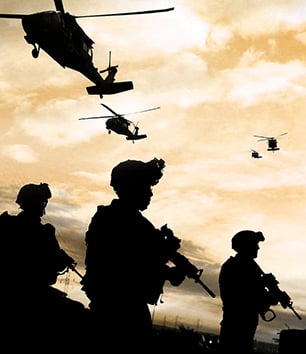
 As the United States briefly holds talks with Iran over the crisis in Iraq, President Obama has announced the deployment of 275 U.S. military personnel to protect U.S. personnel and facilities in Baghdad. The Obama administration is reportedly weighing other options in Iraq, including drone strikes and the deployment of special forces to train Iraqi troops. This comes as Sunni militants have launched a new offensive against the city of Baquba less than 40 miles from Baghdad. We speak to University of Michigan professor Juan Cole, author of several books, including the forthcoming "The New Arabs: How the Millennial Generation Is Changing the Middle East."
Image Credit: Reuters
Transcript
This is a rush transcript. Copy may not be in its final form.
AARON MATÉ: President Obama has announced plans to deploy about 275 U.S. military forces back to Iraq. In a letter to congressional leaders, Obama wrote, quote, "This force is deploying for the purpose of protecting U.S. citizens and property, if necessary, and is equipped for combat." The White House is also reportedly considering sending a contingent of special forces to train and advise Iraqi troops. This comes as it also weighs airstrikes, possibly drone strikes, inside Iraq to attack the Sunni militants who have seized large parts of the country.
AMY GOODMAN: On Monday, President Obama met with nearly 20 top advisers, including Secretary of State Kerry, Defense Secretary Chuck Hagel, CIA Director John Brennan and Chair of the Joint Chiefs of Staff Martin Dempsey. Meanwhile, the U.S. and Iran have briefly discussed the crisis in Iraq on the sidelines of the nuclear talks in Vienna. Speaking to Katie Couric of Yahoo News, Secretary of State John Kerry said the U.S. is open to working with Iran to confront Sunni militants in Iraq. Kerry did not rule out the possibility of military cooperation.
SECRETARY OF STATE JOHN KERRY: We’re open to discussions if there is something constructive that can be contributed by Iran, if Iran is prepared to do something that is going to respect the integrity and sovereignty of Iraq and the ability of the government to reform.
KATIE COURIC: Can you see cooperating with Iran militarily?
SECRETARY OF STATE JOHN KERRY: At this moment, I think we need to go step by step and see what in fact might be a reality, but I wouldn’t rule out anything that would be constructive to providing real stability, a respect for the constitution, a respect for the election process and a respect for the ability of the Iraqi people to form a government that represents all of the interests of Iraq.
AARON MATÉ: On the ground in Iraq, militants attacked and briefly took control of parts of the Iraqi city of Baquba, less than 40 miles from Baghdad. There are also reports 44 Sunni prisoners have died at a police station northeast of Baghdad. According to the Associated Press, Shiite militiamen killed the prisoners at close range after Sunni fighters attempted to overrun the jail. Operations at the country’s largest oil refinery in Baiji have been shut down after Sunni rebels advanced into the town and surrounded the refinery.
AMY GOODMAN: In political developments, Iraq’s former vice president, Tariq al-Hashemi, said the recent offensive by Sunni fighters is part of a broader revolt. Al-Hashemi, who is Sunni, told Reuters, quote, "What happened in my country ... is desperate people revolted. Simple as that. Arab Sunni communities over 11 years faced discrimination, injustice, corruption." Meanwhile, the prime minister of the Kurdistan region in Iraq has warned it will be "almost impossible" for Iraq to return to how it was before Sunni militants seized Mosul, Iraq’s second-largest city.
To talk more about Iraq, we’re joined by Juan Cole, professor of history at University of Michigan. His blog, "Informed Comment" is online at JuanCole.com. He’s the author of many books, including Engaging the Muslim World. His latest book, The New Arabs: How the Millennial Generation Is Changing the Middle East, will soon be out. His latest article is headlined "Don’t Trust the Bombers on Iraq: 'Shock and Awe' Never Works."
Welcome to Democracy Now!, Professor Cole. Can you start off by talking about President Obama saying he is deploying 275 U.S. military personnel back to Iraq? What about what is happening there today and what you feel the U.S. role should be?
JUAN COLE: Well, the way in which the Iraqi security forces collapsed in Mosul and elsewhere in the north of Iraq has clearly raised concerns in the U.S. government as to the safety of the personnel at the U.S. Embassy in Baghdad, given the long history of crises in the modern Middle East from the 1979 hostage crisis in Tehran to the attack on the consulate at Benghazi. There is real concern that the U.S. Embassy in the Green Zone in Baghdad may not be secure. It’s the responsibility of the local government to provide that security, but obviously there are some questions about whether it can and will.
AARON MATÉ: And, Juan Cole, how would you characterize this conflict right now? When we talk about ISIS, it’s generally referred to as this monolithic force, but of course there are many militant groups that comprise this pushback against the Iraqi government. So, your assessment of the overall picture right now?
JUAN COLE: I don’t believe that we can think about the—what has happened in Iraq as a series of military conquests. The Islamic State of Iraq and Syria is a small group, a few thousand fighters. It doesn’t have formations or brigades. And I think what really happened was that they have cells on the ground in the Sunni Arab cities, and they coordinated with other groups, including secular and socialist groups, like ex-Baathists, to stage urban uprisings against the al-Maliki regime and its security forces. So, I think that this is a very complex phenomenon and an expression of popular discontent, and not just a series of military advances.
AMY GOODMAN: Explain, Professor Cole, who the forces are. Who is ISIS? Who is ISIL? Where does al-Qaeda fit into all of this?
JUAN COLE: Well, the Islamic State of Iraq and Syria is also called the Islamic State of Iraq and the Levant in English. It’s just a matter of how you translate one of the words. So they’re the same organization. Their genealogy is in the Islamic State of Iraq, which was the main al-Qaeda vehicle, initially founded by a Jordanian named Zarqawi. And it has been active in the Sunni Arab areas of Iraq and in bombing the Shiite areas all along, since 2005 or so, in a big way. And so, you know, when we hear news reports of it advancing in Baquba, well, you could have gone back six or seven years, and the same thing would have been sure.
So, it is an al-Qaeda affiliate, although recently the core al-Qaeda has displayed discomfort with it because it attacks other al-Qaeda affiliates—it doesn’t play well with other children. It’s an extremely nasty organization. It blows up soft targets, children at ice cream shops. It’ll blow up a marriage and then come back and blow up the funeral that evening. It’s ruthless. And it’s the worst of the Sunni resistance groups. But it does represent a set of discontents within the Sunni Arab areas of northern Iraq, where the Sunnis are something like 20 percent of the Iraqi population. They were in power before the U.S. invaded in 2003, and they’ve been dethroned and made unemployed and marginalized, and so there is various kinds of discontent, civil and demonstrations, but also a turn to terrorism.
AARON MATÉ: Well, Juan Cole, on the issue of Sunni grievances, can you explain what the government of Nouri al-Maliki has done to fuel sectarianism, and now, of course, as it’s called upon to form a more inclusive government, what it could do now?
JUAN COLE: Well, al-Maliki, you know, was a conspirator. For 20 years, he was the bureau chief of the covert Dawa, or Islamic Call Party, which is a Shiite fundamentalist group aiming for a Shiite government, a Muslim fundamentalist government, in Iraq. And so, when he became prime minister, you know, he just continued to be a conspirator and doesn’t trust the Sunni Arabs, who were disproportionately powerful in the Baath Party that he was trying to overthrow. He doesn’t meet with his Sunni Arab political partners, when he had any. And his government doesn’t provide much in the way of services to the Sunni Arab cities. They don’t share in the oil wealth. They don’t have regular electricity. They don’t have services. And they were fired from their government jobs in favor of Shiite cronies of the ruling Shiite parties, with something called de-Baathification on the model of de-Nazification in postwar Germany. But it went way beyond even what de-Nazification did in Germany, so that even high school teachers were fired and so forth. You have unemployment. You have a lack of investment. You have a lack of services. And the Sunni Arabs in Parliament are given the message that, you know, they are a minority in Parliament, and they’re always going to be a minority in Parliament, and they’re always going to lose every vote in Parliament from here on into eternity. So they’re just not going to put up with that anymore.
AMY GOODMAN: I want to turn to comments made by Secretary of State John Kerry on the crisis unfolding in Iraq. He was speaking to Katie Couric on Yahoo News.
SECRETARY OF STATE JOHN KERRY: This is a challenge to the stability of the region. It is obviously an existential challenge to Iraq itself. This is a terrorist group. It has grown out of, frankly, illicit support that it has received from various places in the region, in the conflict in Syria. But there’s a much larger—a much larger design at play in their efforts. They want to establish a Sunni caliphate, fundamentally, but they also are trying to redress what happened a number of years ago when the balance flipped in Iraq between Shia and Sunni. So you have people who have a Sunni interest. You have people who have an extreme interest. You have people who have anti-Maliki interest. You have people who have anti-Iran, pro—I mean, there’s a whole lot of forces at play here. And that’s what makes it much more complicated than just "Gee, these are bad guys," and, you know, you react.
AMY GOODMAN: Juan Cole, can you respond to Secretary of State John Kerry and also talk about the Bush role in this, in fueling this kind of sectarianism, if you feel he did?
JUAN COLE: Well, the Bush administration very explicitly sided with the Shiites and wanted to create a Shiite-dominated government and enthusiastically cooperated in the de-Baathification or the firing of thousands and thousands of Sunni bureaucrats and teachers from their jobs. So this—this was a policy of the Bush administration, and it is, in some large part, responsible for the current crisis.
Mr. Kerry’s remarks show an understanding of the complexity of the situation on the ground and the way in which some of what’s going on in northern Iraq really has nothing to do with the advance of a terrorist organization but is a matter of civil protest against discrimination and marginalization. So I think they’re very judicious comments, and it’s wonderful to see, at the top of the U.S. government, officials who do have an understanding of international affairs. That wasn’t always the case in the previous administration.
But, you know, the question of what to do about all this is the one that weighs heavy on the U.S. government. And I just would urge an abundance of caution here. I think, you know, U.S. airstrikes that have been proposed on ISIS, or ISIL, targets would inevitably hit civilians. It’s a guerrilla group, so it doesn’t have formations or lines that would be easily targeted, and so you’ll end up with bombing urban areas. And it should be remembered that the United States intensively bombed Iraq all the time that it was there. Something on the order of 10 to 15 percent of the people who were killed in Iraq during the American occupation were killed by U.S. airstrikes, so this is an enormous number of people. And I think we should be very careful about thinking of starting that back up.
AMY GOODMAN: What about the talks the U.S. is having now with Iran? And can you talk about whether its interests, the U.S. government now, is—are allied when it comes to Iraq with Bashar al-Assad of Syria?
JUAN COLE: Well, I think the U.S. interests are in fighting this kind of extremist group. After all, it was this kind of hyper-Sunni extremism that hit the United States on 9/11. And so, the U.S. does have an interest in repressing it and working with others who are alarmed by it. The al-Qaeda kind of organizations in the Middle East typically despise Shiites as wretched heretics, and there have been many massacres of Shiites by the Taliban in Afghanistan, by al-Qaeda groups and their affiliates.
And so, you know, as a matter of statecraft, obviously, if you wanted to fight these groups, which have taken over parts of northern Syria and now northern Iraq, a Shiite power like Iran would be a natural ally. And so, I think it’s likely that the United States will develop some relationships with Iran in this regard on this issue. And I think it’s a good thing. I think it’s crazy that in 2001, when the Iranians were having candlelight vigils for the United States and sympathized with the U.S. as victims of this kind of terrorism that Iran had also suffered from, that suddenly the Bush administration and David Frum, the speechwriter for Bush, put Iran in an "axis of evil" with a country like North Korea and alienated Iran. I think there’s an opportunity now to repair some of that.
AARON MATÉ: I wanted to turn to comments made by former British Prime Minister Tony Blair over the weekend suggesting the current crisis is not linked to the 2003 U.S. and British invasion of Iraq. Blair was speaking to the BBC.
TONY BLAIR: So my point is very simple: Even if you left Saddam in place in 2003, then, when 2011 happened and you had the Arab revolutions going through Tunisia and Libya and Yemen and Bahrain and Egypt and Syria, you would have still had a major problem in Iraq. Indeed, you can see what happens when you leave the dictator in place, as has happened with Assad now. But if you say to me, would I prefer a situation where we’d left Saddam in place in 2003—do I think the region would be safer, more stable, if we’d done that—my answer to that is unhesitatingly no.
AARON MATÉ: Blair’s comments coincided with an essay on his website, where he writes, quote, "We have to liberate ourselves from the notion that 'we' have caused this. We haven’t." Blair’s comments drew widespread criticism, including from London Mayor Boris Johnson.
MAYOR BORIS JOHNSON: I think, you know, I can understand that he feels very, very shattered and guilty about the whole thing, but I think my general message would be just to put a sock in it, really, and in a paper-bag-on-head time.
AARON MATÉ: Juan Cole, as we wrap, your response to Tony Blair?
JUAN COLE: Well, Mr. Blair—you know, it would take hours and hours to refute everything that he said, all of which is false, but you should be—remember that he was perfectly willing to leave dictators in power. He took the British Petroleum officials to Libya to meet with Gaddafi, so it’s simply not true that he went around overthrowing dictators in the Middle East.
He did help to invade Iraq. And there, I mean, I think the outcomes are less of an indictment of him than the methods. Mr. Blair repeatedly lied to the public about this enterprise. He was advised by his attorney general that the whole thing was illegal in international law initially. He didn’t share that memo with his own Cabinet. He hid it from the British public. He said it wasn’t about oil, but we now know he was cooperating with BP officials to make sure that they got bids after the war was over. He just violated international law repeatedly, and British domestic law, in pursuing this war of aggression.
So, you know, it’s very unfortunate for him that the war of aggression turned into a quagmire and a disaster of various sorts, so that it’s very obvious that it was a bad idea, but I think the real problem here is that the United Nations Charter was enacted to stop aggressive warfare. We don’t want any more Germanys invading Poland. And there were no legitimate international legal grounds for a British invasion of Iraq in 2003. And that’s the real problem here: It’s illegal.
AMY GOODMAN: His question, if it would be better if Saddam Hussein was still in place, Juan Cole?
JUAN COLE: I mean, this is a purely hypothetical question, but one could imagine a scenario in which there was a no-fly zone, remember, over the Kurdish areas and over southern Iraq, and Saddam was still in power, and the Arab Spring comes along, and the Shiites and the Kurds would have risen up, and the no-fly zones would have prevented Saddam from deploying his armor, and it might well have been a Libya kind of situation in which the no-fly zone helped the population of Iraq overthrow their dictator, and things might have turned out very differently. Obviously, it would be a very fragile situation, but we wouldn’t have had this aggressive foreign intervention and years-long occupation in which a particular ethnic group, the Sunni Arabs, were targeted for reprisals. And so, I don’t agree with the hypothetical in the first place, but I don’t think that’s really the issue.
AMY GOODMAN: Juan Cole, we want to thank you for being with us, professor of history at University of Michigan. His blog, "Informed Comment," at JuanCole.com. He’s written many books. His most recent one is The New Arabs: How the Millennial Generation Is Changing the Middle East; it’ll be out July 1st.


No comments: