










Your Money at War Everywhere
Military strategy? Who needs it? The madness of funding the Pentagon to "cover the globe"
Military strategy? Who needs it? The madness of funding the Pentagon to "cover the globe"

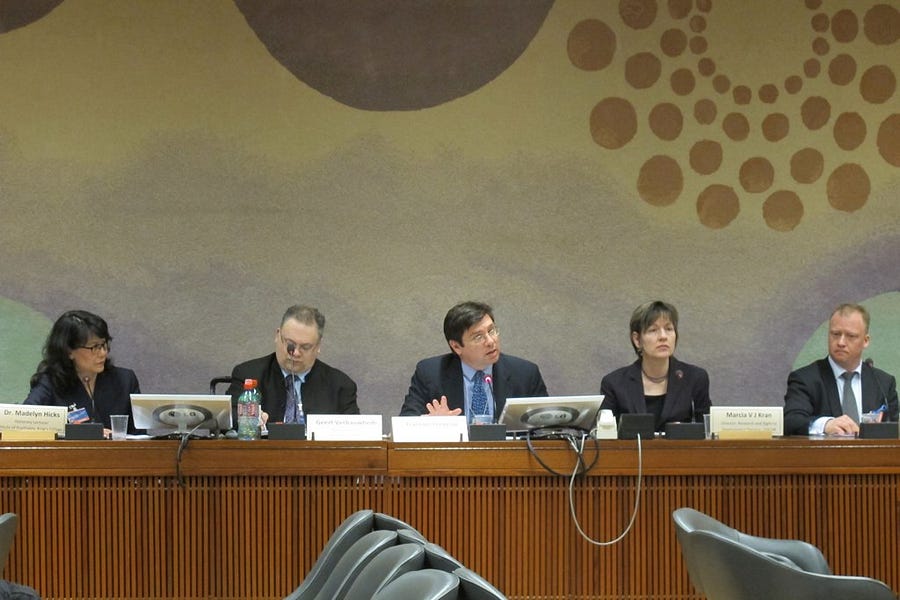
'Current levels of Pentagon spending may not be able to support current defense strategy,' admits Hartung, but the answer to this problem is the simple one right before our eyes: 'cut the money and change the strategy.' (Image: Hawaii Independent)
President Obama and Senator John McCain, who have clashed on almost every conceivable issue, do agree on one thing: the Pentagon needs more money. Obama wants to raise the Pentagon’s budget for fiscal year 2016 by $35 billion more than the caps that exist under current law allow. McCain wants to see Obama his $35 billion and raise him $17 billion more. Last week, the House and Senate Budget Committees attempted to meet Obama’s demands by pressing to pour tens of billions of additional dollars into the uncapped supplemental war budget.
What will this new avalanche of cash be used for? A major ground war in Iraq? Bombing the Assad regime in Syria? A permanent troop presence in Afghanistan? More likely, the bulk of the funds will be wielded simply to take pressure off the Pentagon’s base budget so it can continue to pay for staggeringly expensive projects like the F-35 combat aircraft and a new generation of ballistic missile submarines. Whether the enthusiastic budgeteers in the end succeed in this particular maneuver to create a massive Pentagon slush fund, the effort represents a troubling development for anyone who thinks that Pentagon spending is already out of hand.
Mind you, such funds would be added not just to a Pentagon budget already running at half-a-trillion dollars annually, but to the actual national security budget, which is undoubtedly close to twice that. It includes items like work on nuclear weapons tucked away at the Department of Energy, that Pentagon supplementary war budget, the black budget of the Intelligence Community, and war-related expenditures in the budgets of the Department of Veterans Affairs and the Department of Homeland Security.
Despite the jaw-dropping resources available to the national security state, Joint Chiefs of Staff Chair General Martin Dempsey recently claimed that, without significant additional infusions of cash, the U.S. military won’t be able to “execute the strategy” with which it has been tasked. As it happens, Dempsey’s remark unintentionally points the way to a dramatically different approach to what’s still called “defense spending.” Instead of seeking yet more of it, perhaps it’s time for the Pentagon to abandon its costly and counterproductive military strategy of “covering the globe.”
A Cold War Strategy for the Twenty-First Century
Even to begin discussing this subject means asking the obvious question: Does the U.S. military have a strategy worthy of the name? As President Dwight D. Eisenhower put it in his farewell address in 1961, defense requires a “balance between cost and hoped for advantage” and “between the clearly necessary and the comfortably desirable.” Eisenhower conveniently omitted a third category: things that shouldn’t have been done in the first place -- on his watch, for instance, the CIA’s coups in Iran and Guatemala that overthrew democratic governments or, in our century, the Bush administration’s invasion and occupation of Iraq. But Eisenhower’s underlying point holds. Strategy involves making choices. Bottom line: current U.S. strategy fails this test abysmally.
Despite the obvious changes that have occurred globally since the collapse of the Soviet Union and the end of the Cold War, the U.S. military is still expected to be ready to go anywhere on Earth and fight any battle. The authors of the Pentagon’s key 2014Quadrennial Defense Review (QDR), for instance, claimed that its supposedly “updated strategy” was focused on “twenty-first-century defense priorities.” Self-congratulatory rhetoric aside, however, the document outlined an all-encompassing global military blueprint whose goals would have been familiar to any Cold War strategist of the latter half of the previous century. With an utter inability to focus, the QDR claimed that the U.S. military needed to be prepared to act in Europe, the Middle East, North Africa, South Asia, the Asia-Pacific, and Latin America. In addition, plans are now well underway to beef up the Pentagon’s ability to project power into the melting Arctic as part of a global race for resources brewing there.
Being prepared to go to war on every continent but Antarctica means that significant reductions in the historically unprecedented, globe-spanning network of military bases Washington set up in the Cold War and after will be limited at best. Where changes happen, they will predictably be confined largely to smaller facilities rather than large operating bases. A planned pullout from three bases in the United Kingdom, for instance, will only mean sending most of the American personnel stationed on them to other British facilities. As the Associated Press noted recently, the Pentagon’s base closures in Europe involve mostly “smaller bases that were remnants of the Cold War.” While the U.S. lost almost all its bases in Iraq and has dismantled many of its bases in Afghanistan, the Pentagon’s base structure in the Greater Middle East is still remarkably strong and its ability to maintain or expand the U.S. troop presence in both Iraq and Afghanistan shouldn’t be underestimated.
In addition to maintaining its huge network of formal bases, the Pentagon is also planning to increase what it calls its “rotational” presence: training missions, port visits, and military exercises. In these areas, if anything, its profile is expanding, not shrinking. U.S. Special Forces operatives were, for instance, deployed to 134 nations, or almost 70% of the countries in the world, in fiscal year 2014. So even as the size and shape of the American military footprint undergoes some alteration, the Pentagon’s goal of global reach, of being at least theoretically more or less everywhere at once, is being maintained.
Meanwhile, the Obama administration has stepped up its use of drones, Special Forces, and “train and equip” programs that create proxy armies to enforce Washington’s wishes. In this way, it hopes to produce a new way of war designed to reduce the Pentagon’s reliance on large boots-on-the-ground operations, without affecting its strategic stretch.
This approach is, however, looking increasingly dubious. Barely a decade into its drone wars, for example, it’s already clear that a drone-heavy approach simply doesn’t work as planned. As Andrew Cockburn notes in his invaluable new book, Kill Chain: The Rise of the High-Tech Assassins, a study based on the U.S. military's own internal data found that targeted assassinations carried out by drones resulted in an increase in attacks on U.S. forces. As for the broader political backlash generated by such strikes in Pakistan, Yemen, and elsewhere, it’s clear enough by now that they act as effective recruitment tools for terror organizations among a fearful and traumatized population livingunder their constant presence.
At a theoretical level, the drone may seem the perfect weapon for a country committed to “covering the globe” and quite literally waging war anywhere on the planet at any time. In reality, it seems to have the effect of spreading chaos and conflict, not snuffing it out. In addition, drones are only effective in places where neither air defenses nor air forces are available; that is, the backlands of the planet. Otherwise, as weapons, they are sitting ducks.
A Pentagon for All Seasons
Washington’s strategy documents are filled with references to non-military approaches to security, but such polite rhetoric is belied in the real world by a striking over-investment in military capabilities at the expense of civilian institutions. The Pentagon budget is 12 times larger than the budgets for the State Department and the Agency for International Development combined. As former Secretary of Defense Robert Gates has noted, it takes roughly the same number of personnel to operate just one of the Navy’s 11 aircraft carrier task forces as there are trained diplomats in the State Department. Not surprisingly, such an imbalance only increases the likelihood that, in the face of any crisis anywhere, diplomatic alternatives will take a back seat, while a military response will be the option of choice, in fact, the only serious option considered.
In the twenty-first century, with its core budget still at historically high levels, the Pentagon has also been expanding into areas like “security assistance” -- the arming, training, and equipping of foreign military and police forces. In the post-9/11 years, for instance, the Pentagon has developed a striking range of military and police aid programs of the kind that have traditionally been funded and overseen by the State Department. According to data provided by the Security Assistance Monitor, a project designed to systematically track U.S. military and police aid, the Pentagon now delivers arms and training through 18 separate programs that provide assistance to the vast majority of the world’s armed forces.
Having so many ways to deliver aid is handy for the Pentagon, but a nightmare for members of Congress or the public trying to keep track of them all. Seven of the programs are new initiatives authorized last year alone. More than 160 nations, or 82% of all countries, now receive some form of arms and training from the United States.
In a similar fashion, in these years the Pentagon has moved with increasing aggressiveness into the field of humanitarian aid. In their new book Mission Creep, Gordon Adams and Shoon Murray describe the range of non-military activities it now routinely carries out. These include “drilling wells, building roads, constructing schools and clinics, advising national and local governments, and supplying mobile services of optometrists, dentists, doctors, and veterinarians overseas.” The specific examples they cite underscore the point: “Army National Guardsmen drilling wells in Djibouti; the U.S. Army Corps of Engineers building school houses in Azerbaijan; and U.S. Navy Seabees building a post-natal care facility in Cambodia.”
If one were to choose a single phrase to explain why General Dempsey thinks the Pentagon is starved for funds, it would be “too many missions.” No amount of funding could effectively deal with the almost endless shopping list of global challenges the U.S. military has mandated itself to address, most of which do not have military solutions in any case.
The answer is not more money (though that may not stop Congress and the president from dumping billions more into the Pentagon’s slush fund). It’s a far more realistic strategy -- or put another way, maybe it’s a strategy of any sort in which the only operative word is not “more.”
The Pentagon’s promotion of an open-ended strategy isn’t just a paper tiger of a problem. It has life-and-death consequences and monetary ones, too. When President Obama’s critics urge him to bomb Syria, or put more ground troops in Iraq, or arm and train the security forces in Ukraine, they are fully in line with the Pentagon’s expansive view of the military’s role in the world, a role that would involve taxpayer dollars in even more staggering quantities.
Attempting to maintain a genuine global reach will, in the end, prove far more expensive than the wars the United States is currently fighting. This year’s administration request for Iraq War 3.0 and Syria War 1.0, both against the Islamic State (IS), was a relatively modest $5.8 billion, or roughly 1% of the resources currently available to the Department of Defense. As yet not even John McCain is suggesting anything on the scale of the Bush administration’s intervention in Iraq, which peaked at over 160,000 troops and costsignificantly more than a trillion dollars. By comparison, the Obama administration’s bombing campaign against IS, supplemented by the dispatch of roughly 3,000 troops, remains, as American operations of the twenty-first century go, a relatively modest undertaking -- at least by Pentagon standards. There are reasons to oppose U.S. military intervention in Iraq and Syria based on the likely outcomes, but so far intervention in those nations has not strained the Pentagon’s massive budget.
As for Ukraine, even if the administration were to change course and decide to provide weapons to the government there, it would still not make a dent in its proposed $50 billion war budget, much less in the Pentagon’s proposed $534 billion base budget.
Using the crises in Ukraine, Iraq, and Syria as arguments for pumping up Pentagon spending is a political tactic of the moment, not a strategic necessity. The only real reason to bust the present already expansive budget caps -- besides pleasing the arms industry and its allies in Congress -- is to attempt to entrench the sort of ad hoc military-first global policy being promoted as the American way for decades to come. Every crisis, every development not pleasing to Washington anywhere on Earth is, according to this school of thought, what the Pentagon must be “capable” of dealing with. What’s needed, but completely dismissed in Washington, is of course a radical rethinking of American priorities.
General Dempsey and his colleagues may be right. Current levels of Pentagon spending may not be able to support current defense strategy. The answer to this problem is right before our eyes: cut the money and change the strategy. That would be acting in the name of a conception of national security that was truly strategic.
© 2014 TomDispatch.com


No comments: